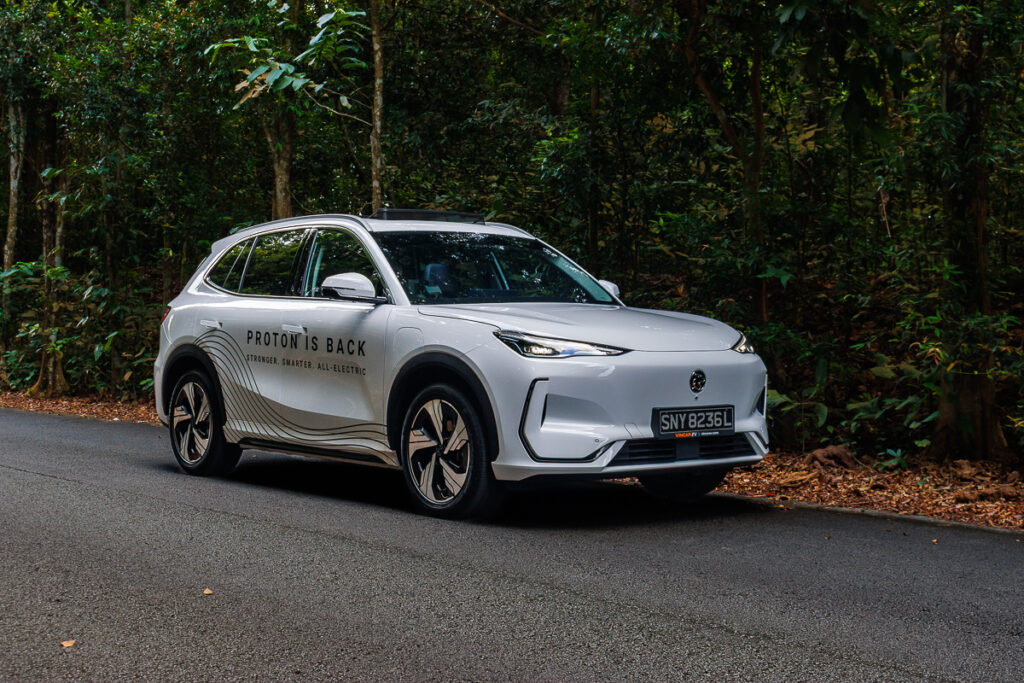
Proton marked their return after a decade, with the e.MAS 7 electric SUV. Lots has changed with the Malaysian automaker, and we think things are looking positive
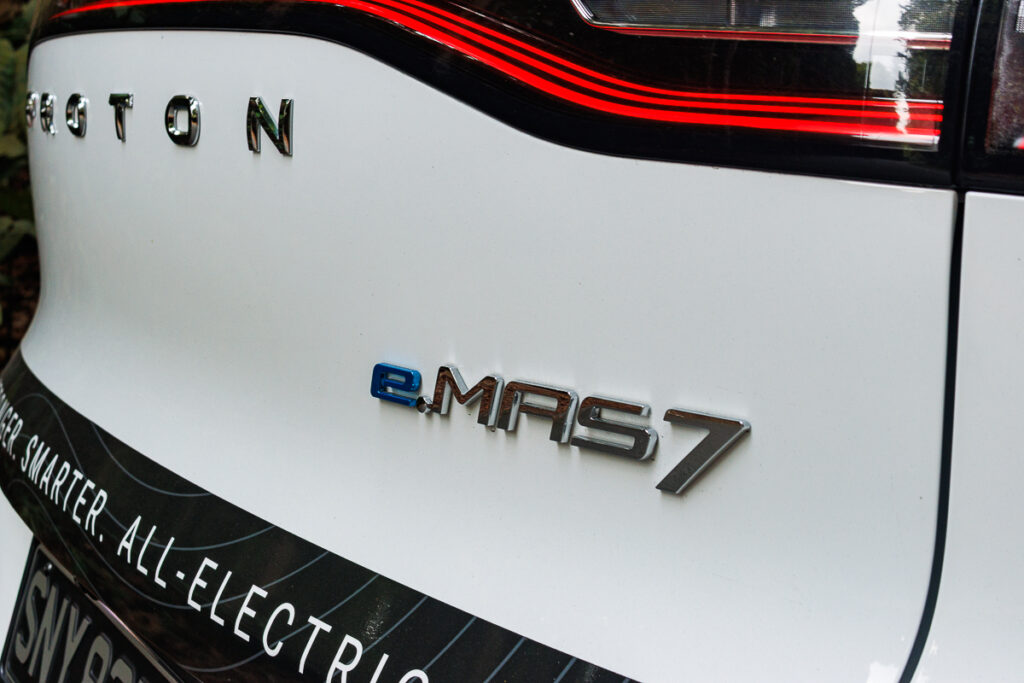
Singapore – Gone are the days when Proton were known to build pocket-friendly “Mitsubishis”. Their return with the e.MAS 7 Electric SUV is a clear signal that plenty of good has come with change for the Malaysian automaker.
So, if you didn’t know, the Malaysian national car brand has long parted ways with their Mitsubishi founding partner, and are now part-owned by Geely (the guys who also own Volvo, Polestar and Lotus). The e.MAS 7 SUV is a literal clone of the Geely EX5 SUV, and today’s example is also built in the same Chinese factory.
All that said, Proton’s first vehicle in Singapore after 11 years shows lots of promise. Over the course of this year, you can expect them to drop more vehicles into the showroom.
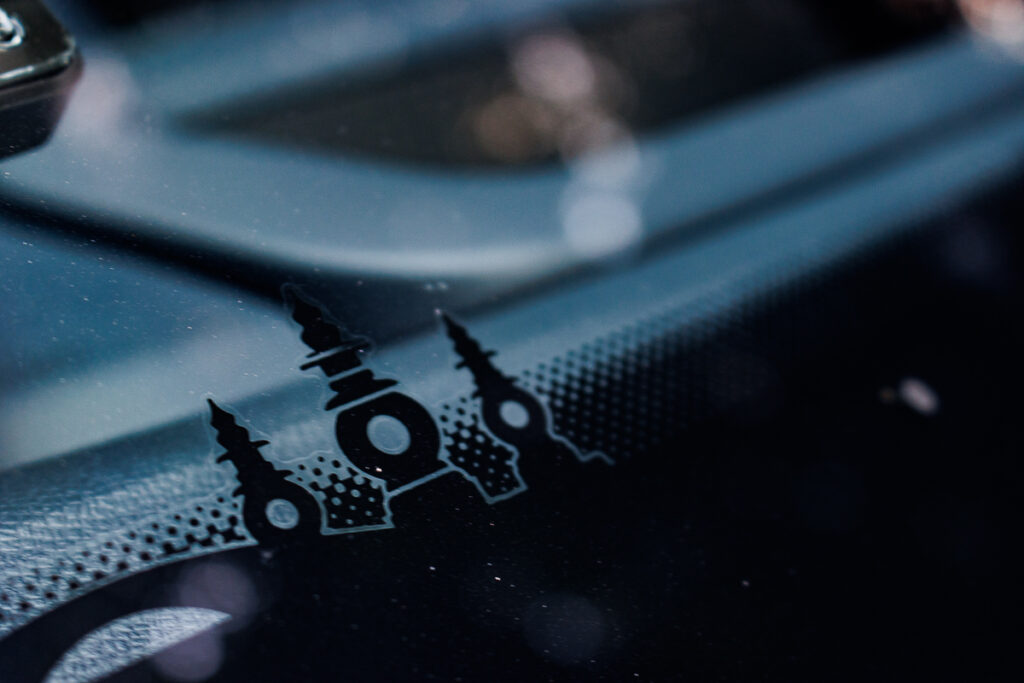
Build quality that’s not bad at all
In a segment saturated with competing compact EVs of nearly every shape the e.MAS 7 holds its own. There is one thing I note, and that is it does not suffer from what I term “Chinese overkill”, therefore the e.MAS 7 is inoffensive and easy on the eyes.
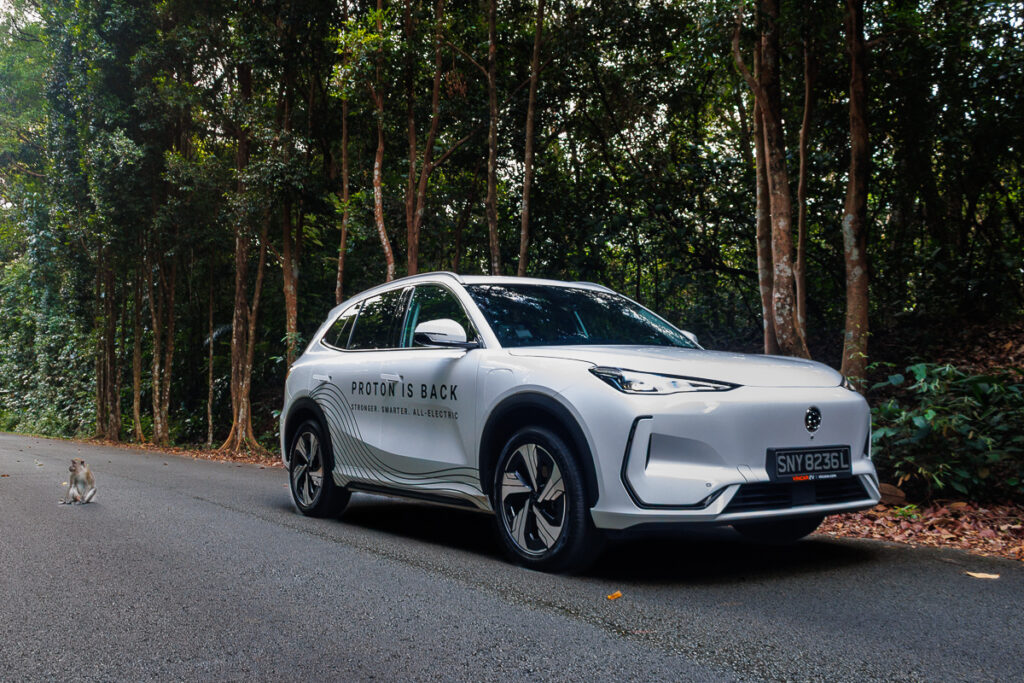
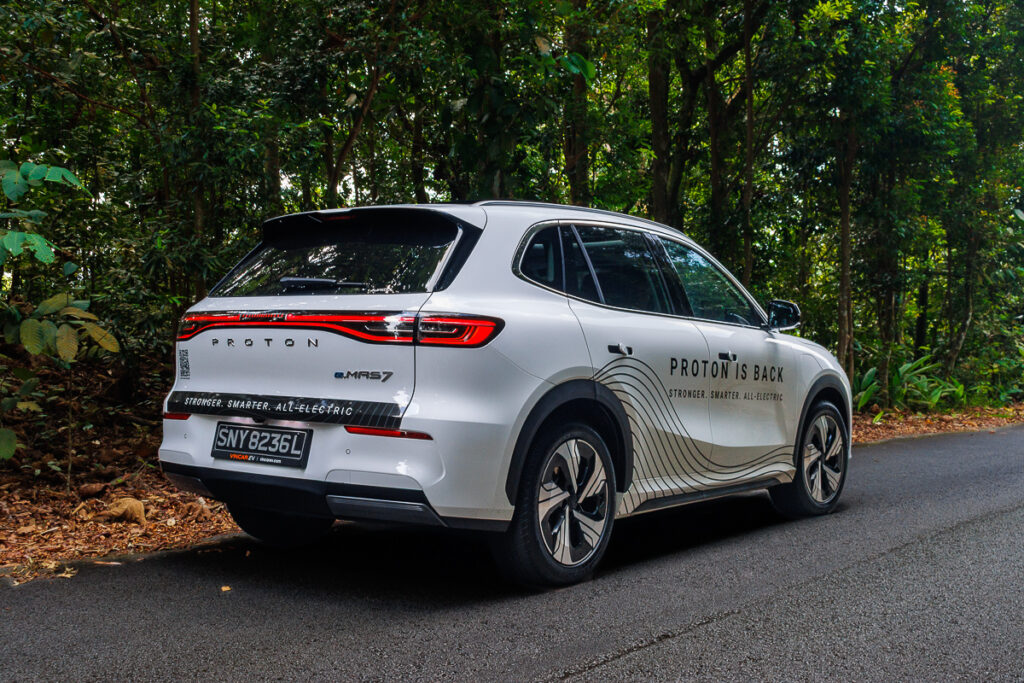
If you were to squint a little, the electric SUV’s hind quarters seem to pay homage to the Mercedes-Benz GLC. But aping aside, I give Proton-slash-Geely props for building a car that has pretty consistent shutlines.
What is consistent with many of today’s EVs, would be that they are designed to be as “slippery” as possible. The Proton here boasts a low 0.275Cd, which is considerably low. Some of the SUV’s effective wind-cheating ability comes from its underbody guard plates, optimised wheel design and an Active Grille Shutter which closes to reduce drag, when additional cooling is not required.
Good on features, and without gimmicks… not bad
Maybe it’s just me, but the e.MAS 7’s interior material quality does have a slight edge over the similar sized MG S5 and Jaecoo J6. If you were to poke around, you’d find that some of the e.MAS 7’s plastics seem to imitate textures of those found in its distant cousin, the Volvo EX30.
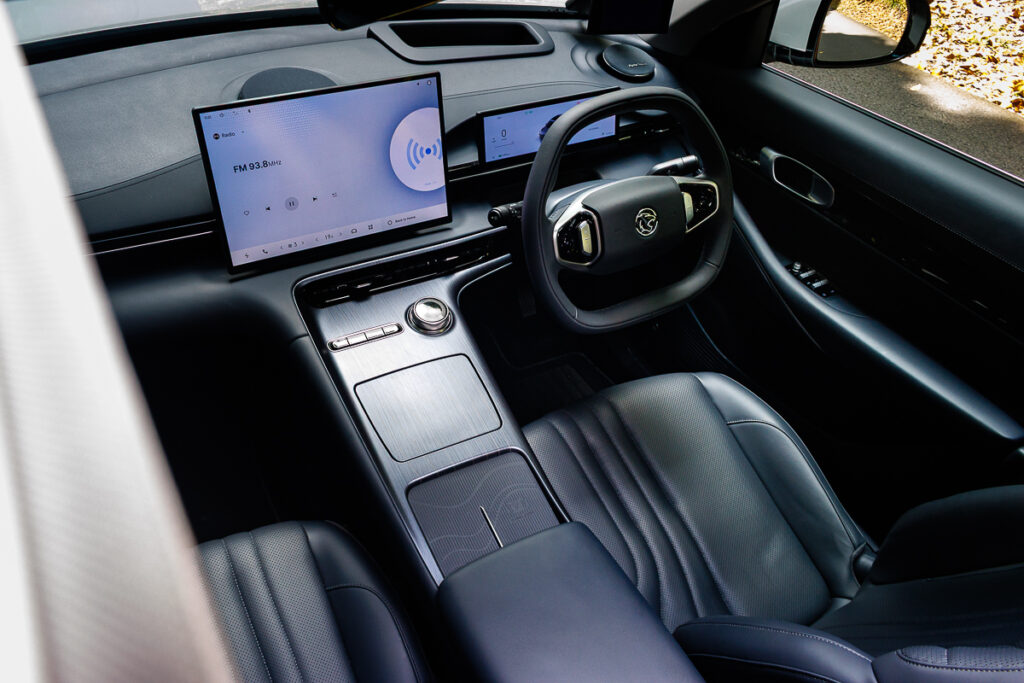
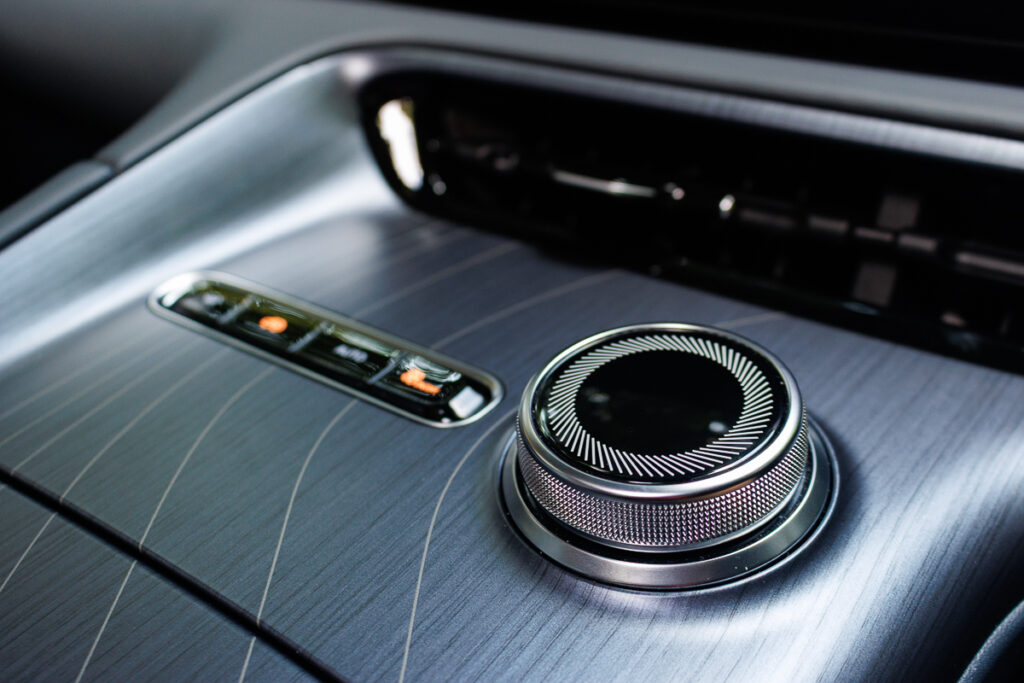
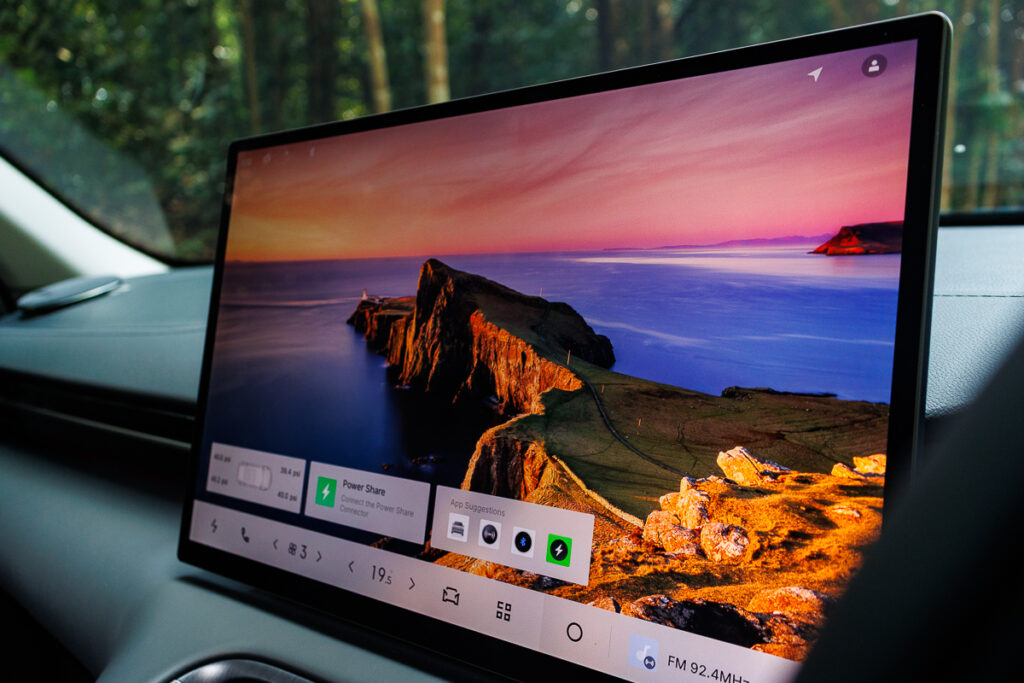
The dashboard is a minimalist affair. The centre console is devoid of unnecessary distractions, and features a simple but tidy set of four buttons and a rotary knob, all of which help with the navigating of the 2.5k resolution 15.4-inch infotainment screen. Wireless connectivity for both Apple CarPlay and Android Auto are standard, therefore you’d not need to fumble with cables. The infotainment also features the “Hello, Proton” voice assistant, which while is still a far cry from say… something that BMW has, it lets you control some of the car’s functions. Knowing that the system permits OTA updates, it is safe to say that the voice recognition would likely improve over time.
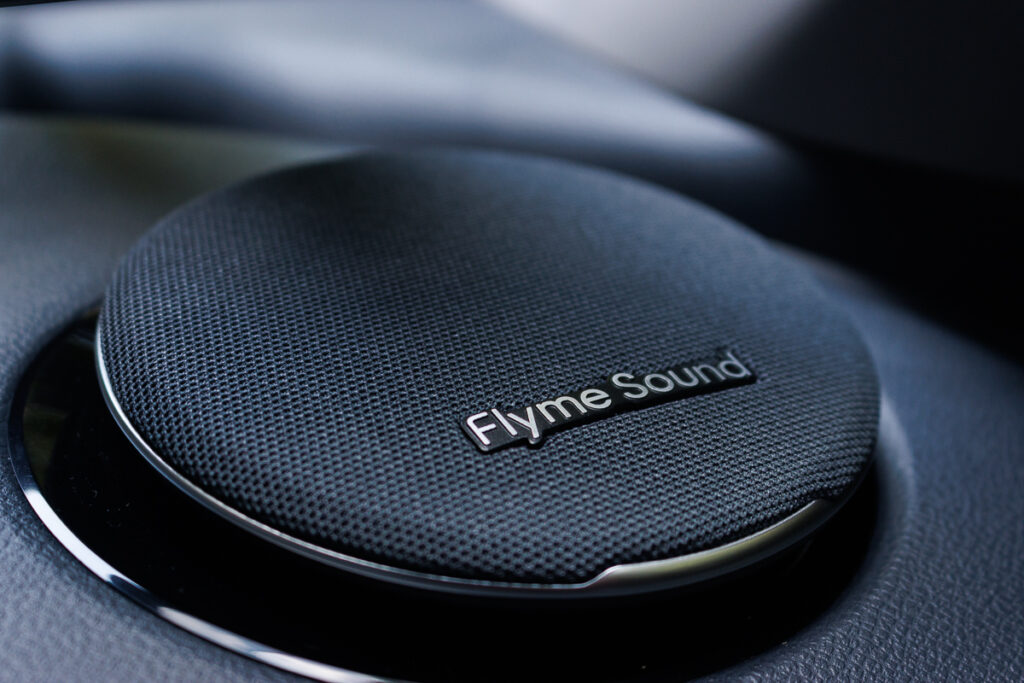
The part where I mentioned “Chinese overkill” earlier on, I feel in this case, the approach on loading a car with features is carefully measured, and not gimmicky. Possibly one of the more extravagant features on this bread-and-butter compact, is a 16-speaker premium Flyme Sound system. This includes a woofer for bass frequencies and a pair of speakers embedded into the driver’s side headrest – which are great when making phone calls.
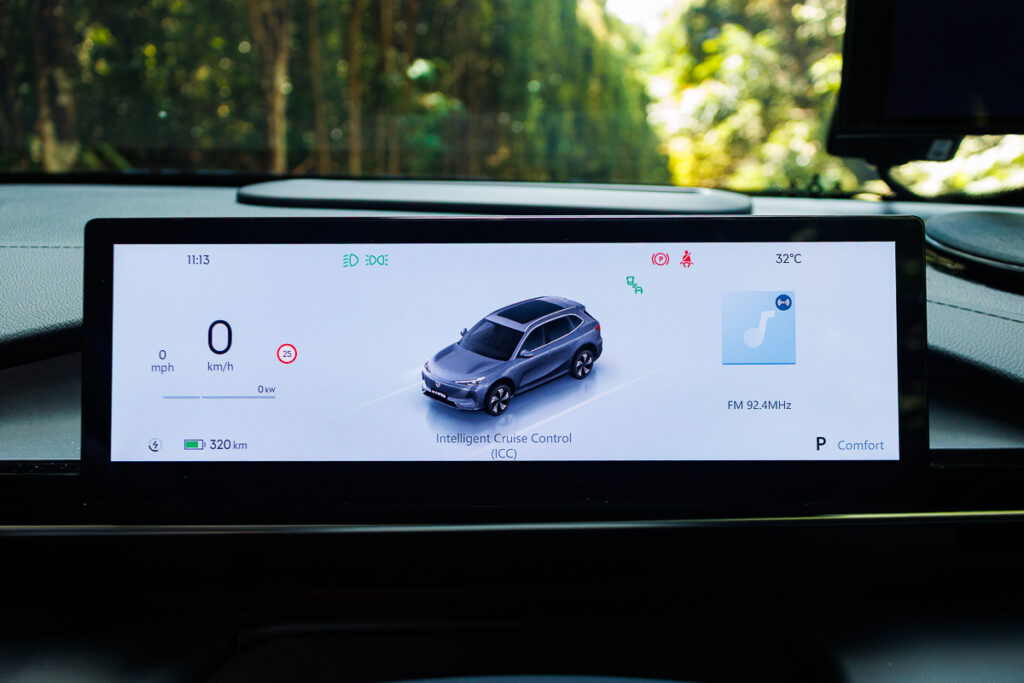
For the driver, the e.MAS 7’s cockpit receives a 10.2-inch LCD instrument display, and a 13.8-inch adjustable windshield-projected Head-Up Display.
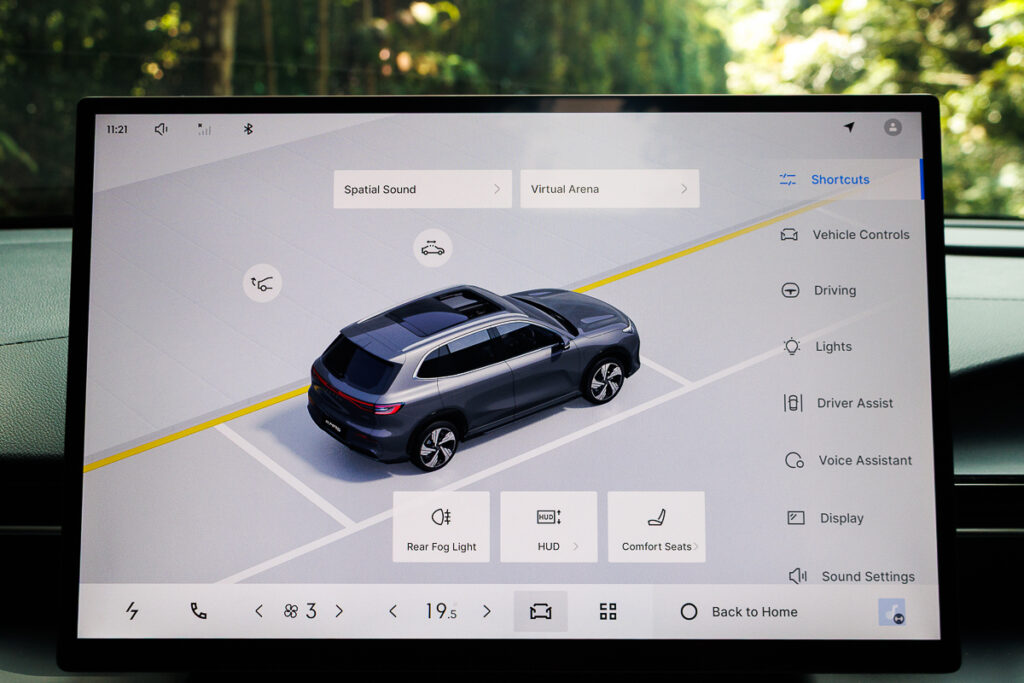
Designers have also attempted to make the most of the e.MAS7’s interior. The front seats can recline flat, converting the car into a sort-of mini bedroom. As this car is the Premium variant, the front seats are ventilated, which complements the comfort provided by their five layers of cushions.
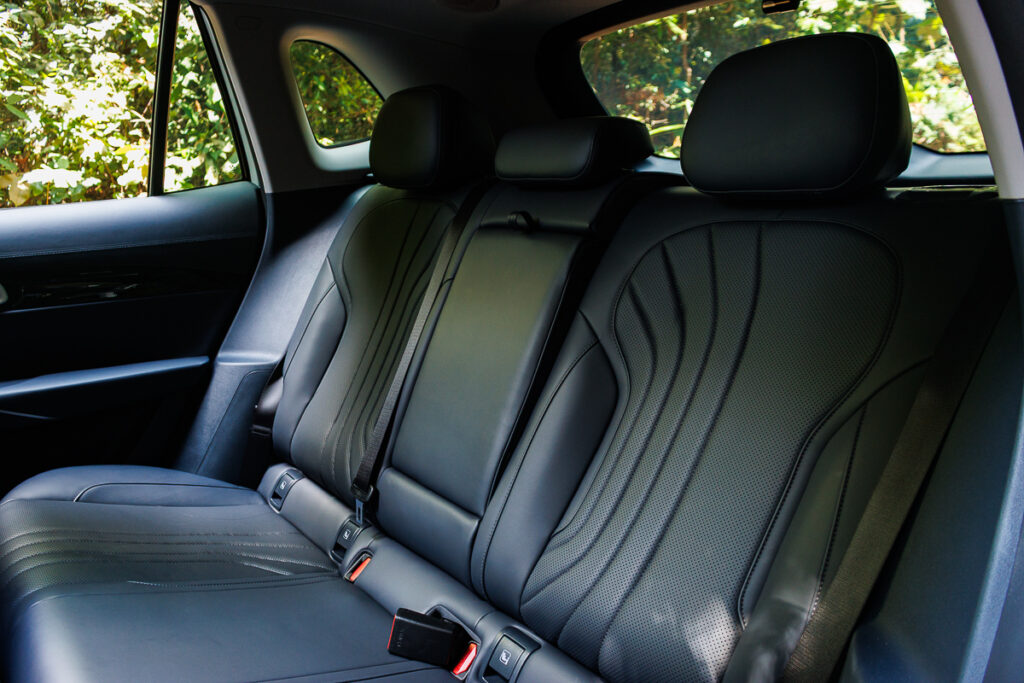
For the rear, the seatbacks recline two stages. However, I would wish that the adjusters for this function were not placed at the default top of the seat, but rather near hip level à la Aion V.
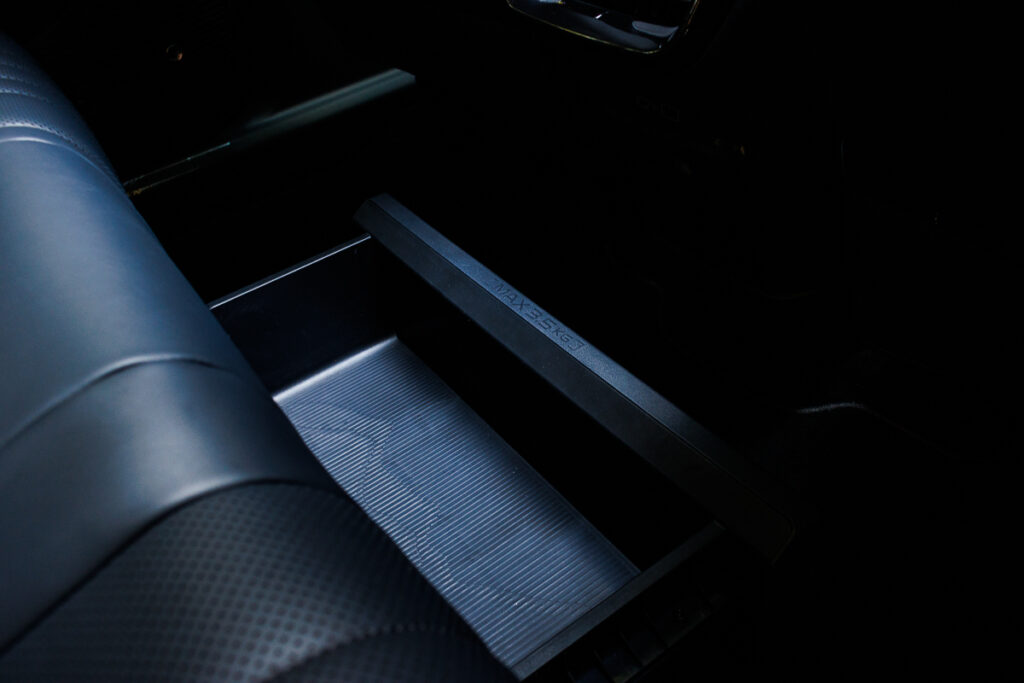
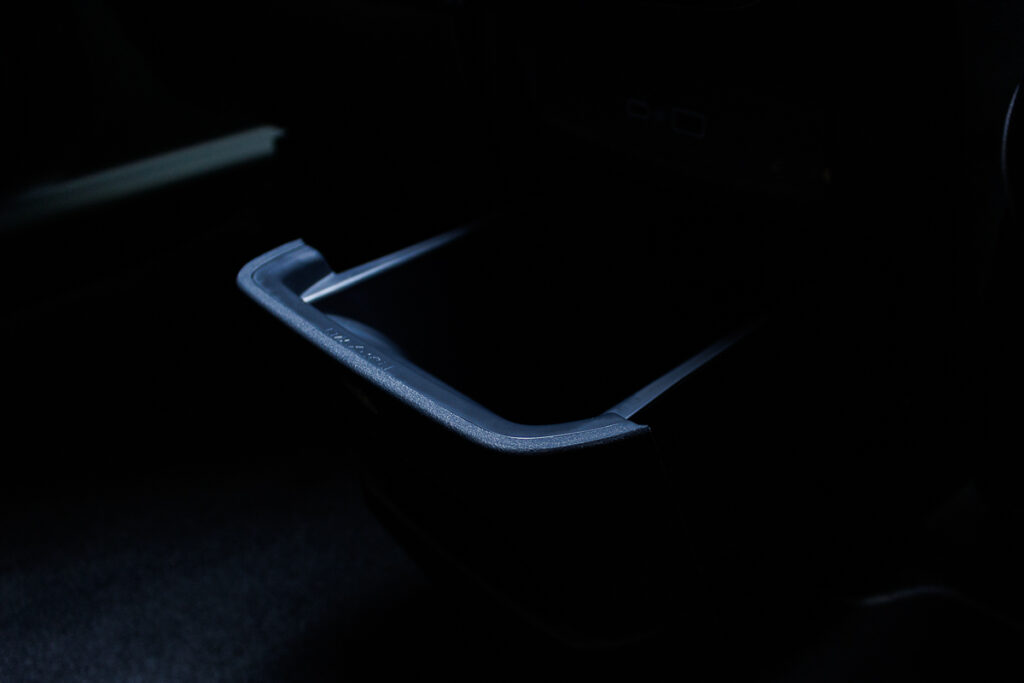
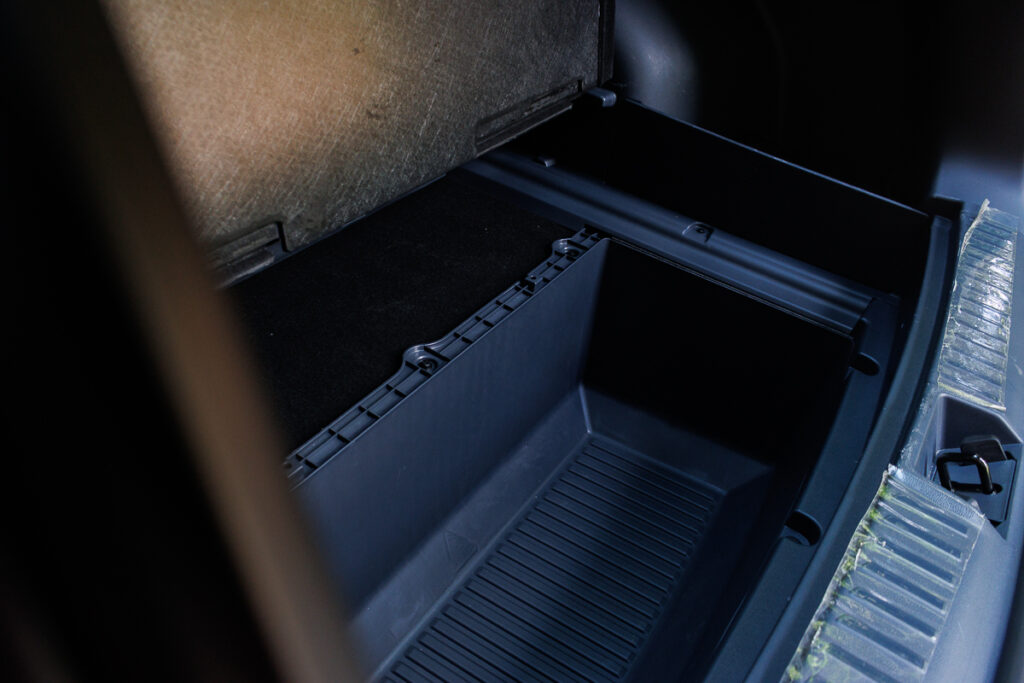
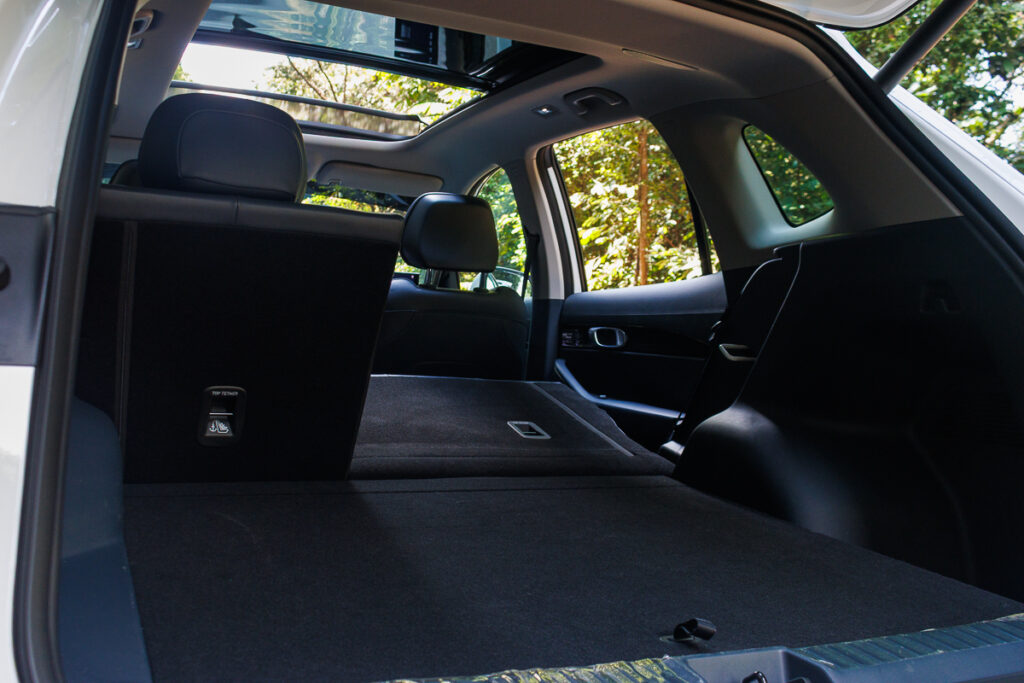
In all, there are 33 storage spaces within the e.MAS 7. Aside from the spacious 461 litre boot, with its additional 51 litre under-trunk storage, I am quite impressed with the 14 litre storage drawer under the rear bench, which looks like it is designed for carrying a pair of shoes. Perhaps one major drawback I can see, is the lack of a factory cargo cover over the boot, to keep prying eyes away.
Cat B power for Cat A money
The e.MAS 7’s single front mounted motor puts out 215hp and 320Nm, which makes this a Category B COE car. You do get some tyre squeal if you were to floor the throttle from a standstill, but that would get the Proton SUV to 100km/h in 7.1 seconds.
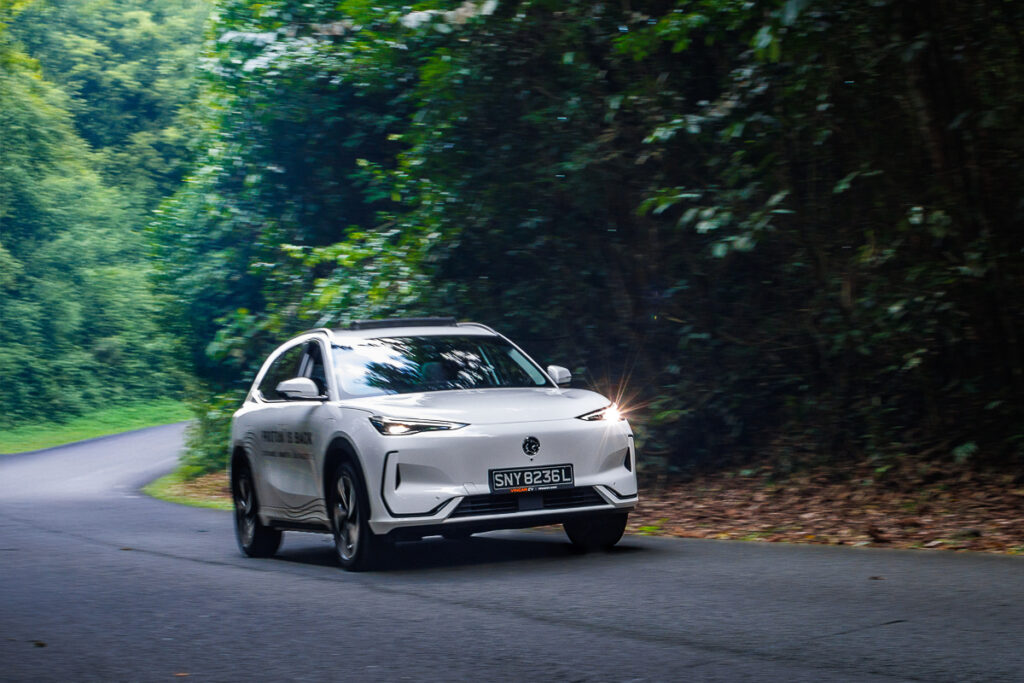
While there is plenty on-tap, I wouldn’t encourage punching the e.MAS 7 around a bowl of spaghetti bends, as you’d quickly find that it won’t at all be a happy camper. The lightness of the steering also means that you would lack crucial feel for a spirited drive. Instead, the e.MAS 7 rewards with a more relaxed approach. After all, it is designed to be a family car right?
As for regenerative braking, you get four levels of intensity, and something that Proton calls CST (Comfort Stop Technology). The latter significantly reduces nod while braking by adjusting braking pressure, which contributes to drive comfort. However, I am one of those who loves to coast my EVs, therefore I would wish that the regenerative braking could be fully turned-off altogether, so that I can take advantage of all that built-up momentum. Additionally, it would be great if the car retains your drive settings, instead of resetting each time you leave the vehicle.
Energy things
Proton claims a range of 410km with the 60.22kWh battery this Premium variant e.MAS 7. The battery is rated for a maximum 100kW DC charge, which the automaker says is able to charge the battery from 30 percent to 100 percent in all of 20 minutes. The lower-tier e.MAS 7 Prime variant on the other hand, utilises a smaller 49.52kWh battery, which provides it a range of 345km.
Conclusion
Proton’s first car in Singapore in over a decade shows plenty of promise. If you are thinking of switching to a family EV, I can say that the e.MAS 7 is incredibly easy to live with… that is if you do have easy access to a charging network.
What truly makes the e.MAS 7 attractive for me, is in how comfortable a drive it delivers, paired with versatile family-friendly features.
But to make the e.MAS 7 even more compelling, it currently retails at $175,988*, which places it in a similar price bracket as size-equivalent competing Category A COE SUVs. Not bad at all!

*correct at time of publication
Text & Photos: Clifford Chow
| Pros | Cons |
|---|---|
| Lots of storage and features | No factory cargo cover |
| Comfortable drive | Steering too light |
| Attractive price (given today’s COEs) | Drive settings reset each time you get into the car |
Proton e.MAS 7 Electric Premium 60.22kWh
| Drivetrain | Full Electric |
| Layout | Single Motor, Front-wheel Drive |
| Motor power / torque | 215hp / 320Nm |
| Battery capacity | 60.22kWh |
| Efficiency | 16.7kWh/100km |
| Electric Range | 410km |
| 0-100km/h | 7.1 seconds |
| Top Speed | 175km/h |
| VES Band | A1 |
| Dealer | Proton e.MAS Singapore |
| Price | S$175,988 with COE and VES |
| Verdict | With good build quality, and a sweet list of features and storage, Proton’s first car in Singapore in over a decade, shows plenty of promise. |
- iCAUR V23 59.93kWh Review: A Little Box of Military-Inspired Quirks
- Mercedes-Benz CLA 200 AMG Line Hybrid Review: Clever Tech, Unconvincing Powertrain
- Audi A6 Sedan 2.0 Advanced TFSI S T tronic Review: The Smooth Executive
- 2026 BMW iX3 50 xDrive M Sport First Drive: Mind-Blowingly Good!

- Mazda Singapore Opens New EV Studio — With a Sneak Preview of the CX-6e