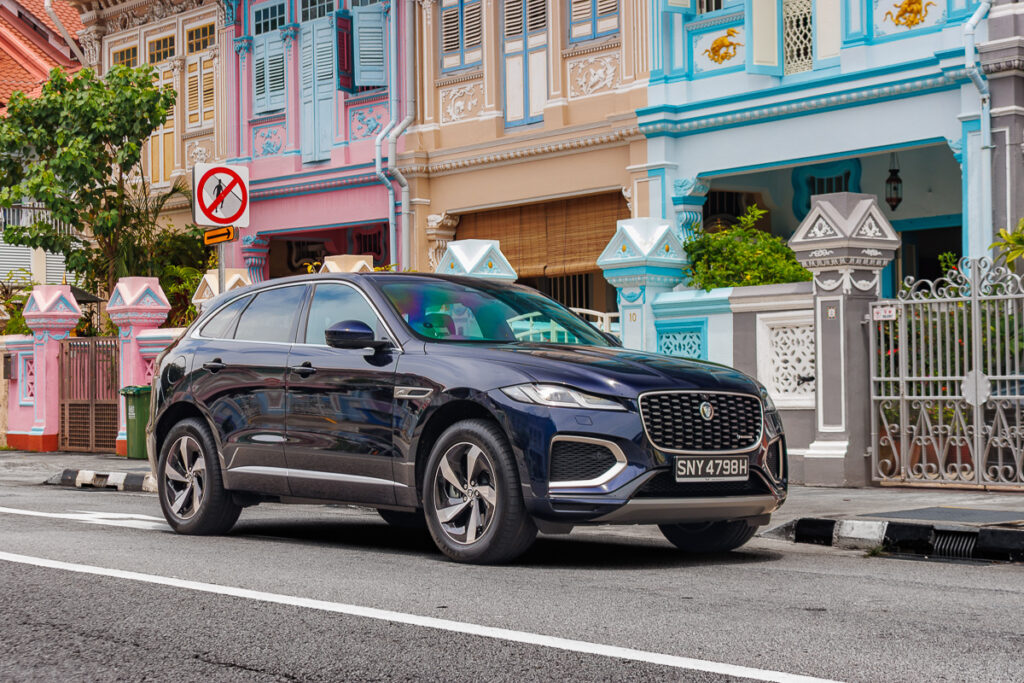
We cannot believe that the Jaguar F-PACE is about ten years old already. But before it makes a dignified exit, the British automaker brings us this last hoorah
Singapore – Perhaps time has passed too quickly. The Jaguar F-PACE is already in its 10th year, and I remember as bright as day, picking the SUV up back in 2016, where I found it refreshingly different from its German counterparts.
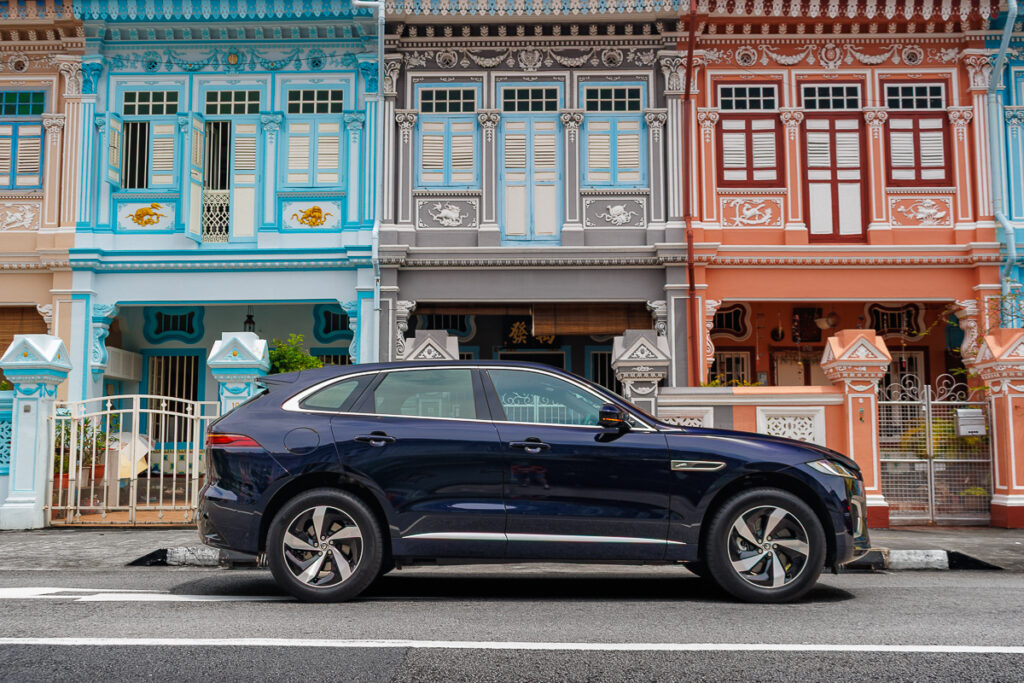
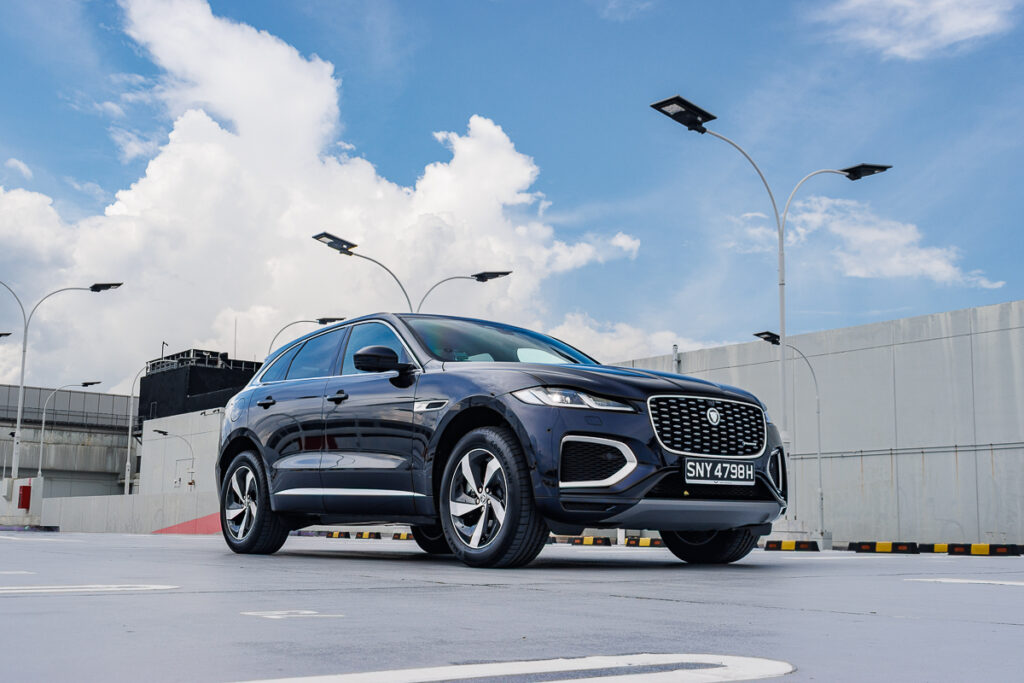
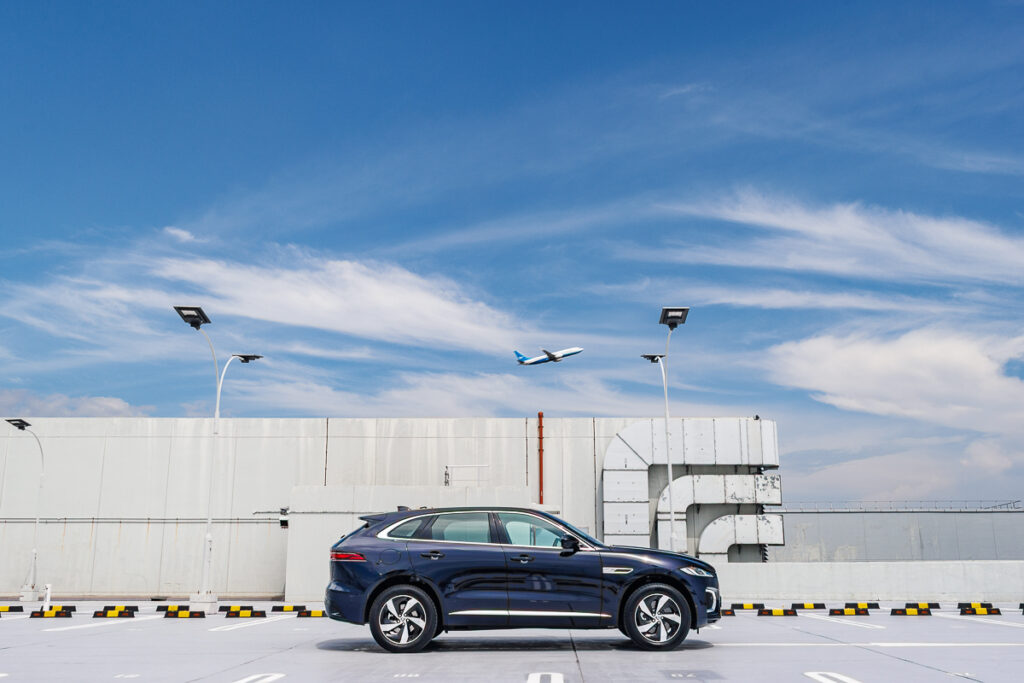
I quickly took a liking to Jaguar’s first SUV. It boasted muscular lines, and a glorious splash of chrome work – the latter which I found just typical of British automobiles.
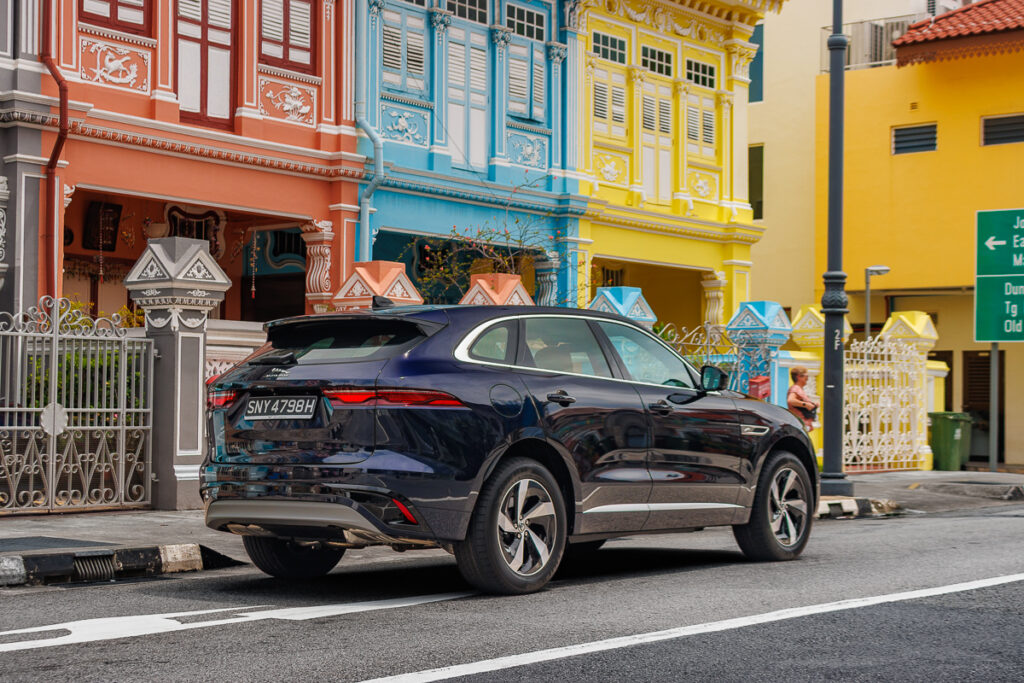
Jaguar’s then design chief, Ian Callum ensured that the F-PACE was homogeneous with the rest of the period Jaguar range – after all, he had his hand in those cars as well. With a few minor exterior tweaks done a few short years ago, the F-PACE looks just as fresh as when it was first introduced. My favourite design change would be the “chicane” graphic at the rear, which replaced the round brakelight element.
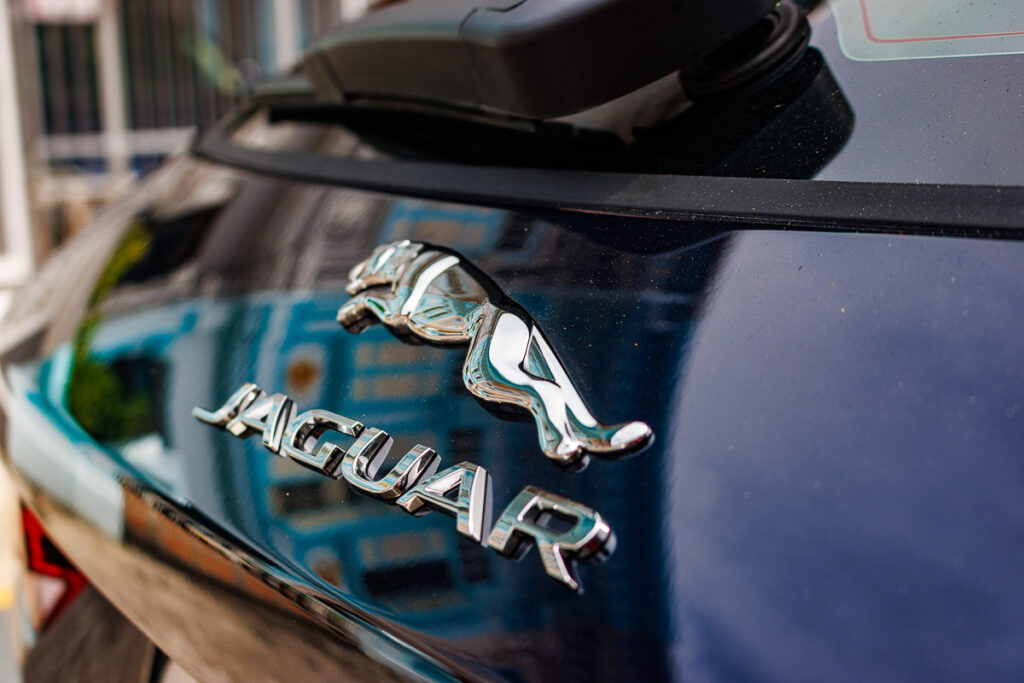
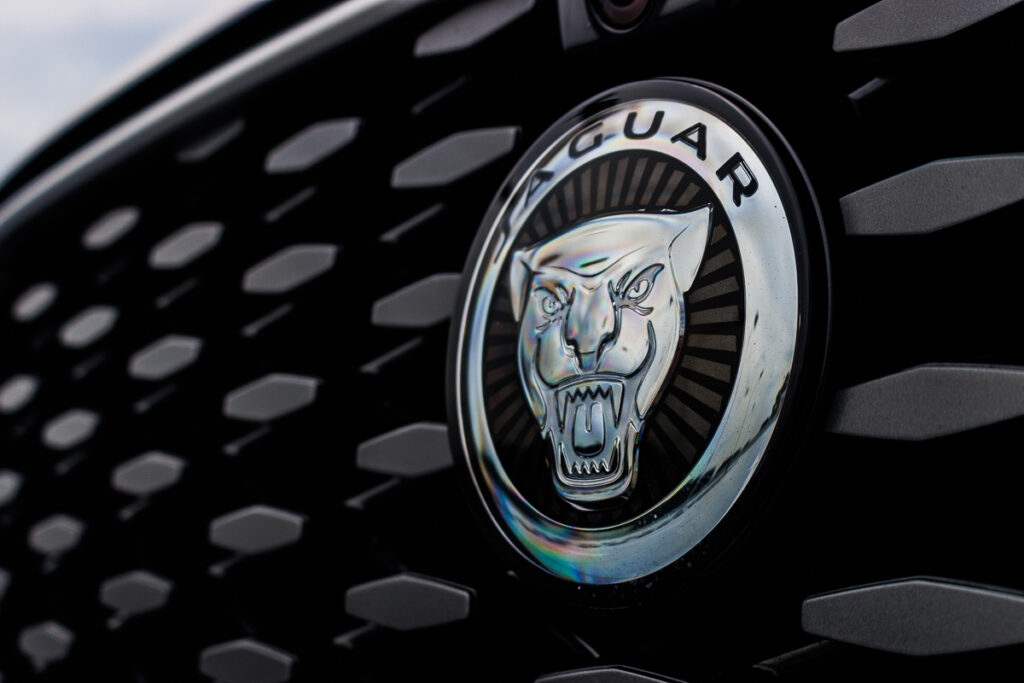
But the F-PACE, which started Jaguar on the SUV path, could also mark the end of an era, as Jaguar’s recent controversial branding exercise saw them retire the Growler, and put the Leaper on a BBQ grill…
No prizes that I am not a fan of their woke rebranding.
Proper interior
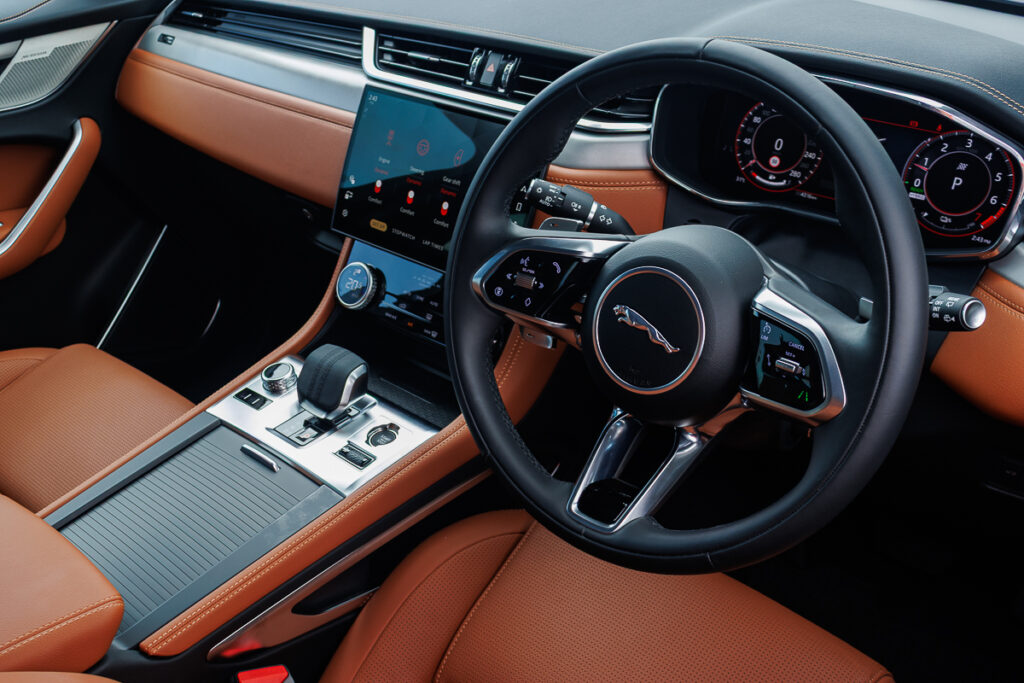
A mid-life design refresh ensures F-PACE’s dashboard remains up to date. There are two notable things that Jaguar did to the F-PACE, since it was launched.
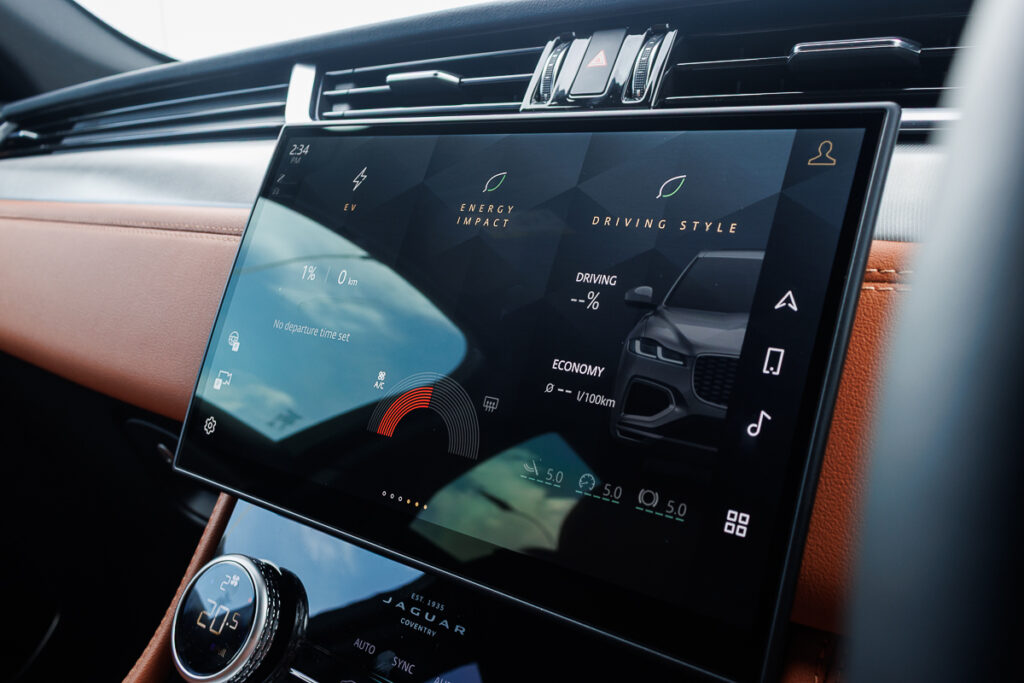
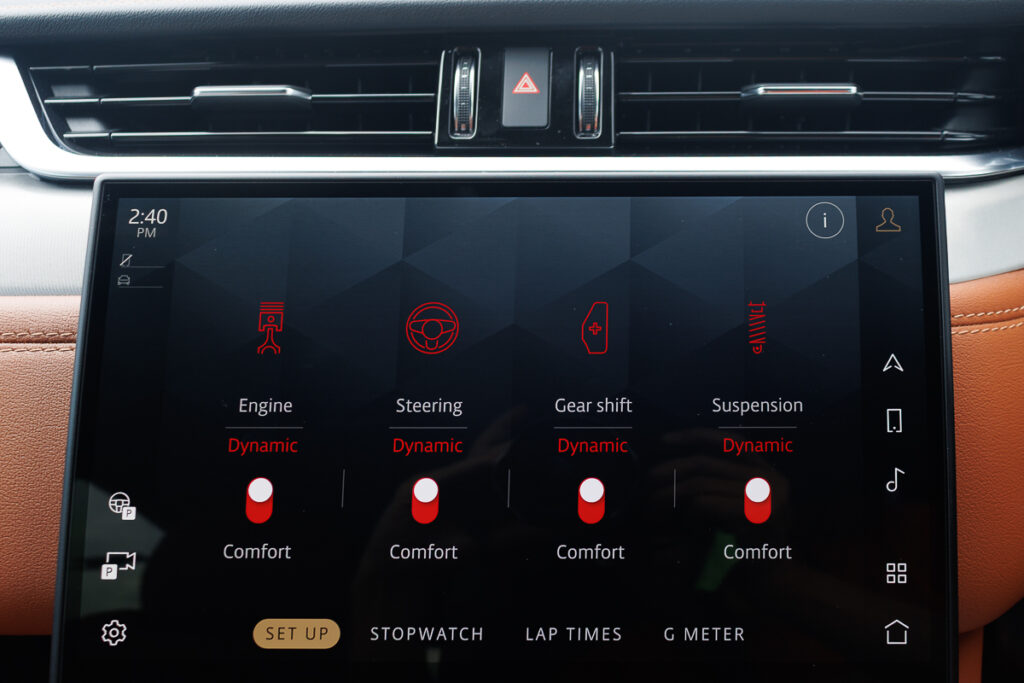
The first, was to replace that deep-set InControl Touch Pro infotainment unit with an elegant advanced, curved and floating 11.4-inch Pivi Pro touchscreen. The system connects wirelessly via both Apple CarPlay and Android Auto. The most crucial functions on the screen are just two touches away, which means you’d not need to overly hunt.
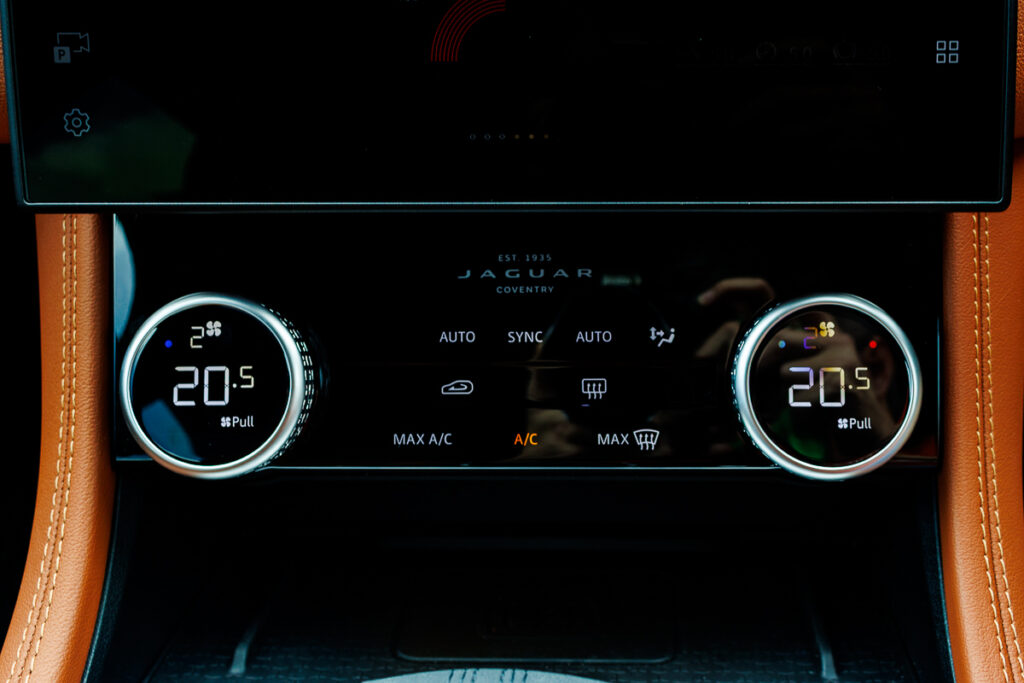
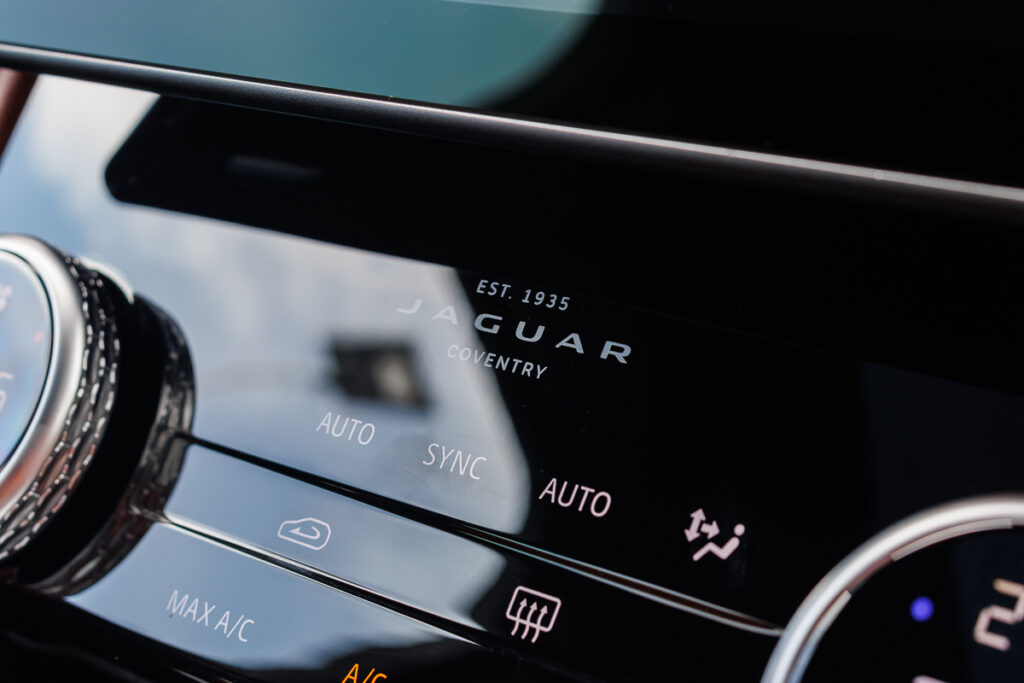
In a time where manufacturers are cost cutting by reducing their button counts; which would usually mean that air-conditioning controls end up being embedded within the infotainment screen, the F-PACE’s push-pull-and-turn knobs, set on a piano black panel are a refreshing change. This would be one feature which I hope that Jaguar would retain in one form or another, when it comes to their future vehicles.
The other notable change was the replacing of that fussy knob-style gearshift with a conventional lever. I like that the stitching on the shift knob resembles those you’d find on a Cricket ball.
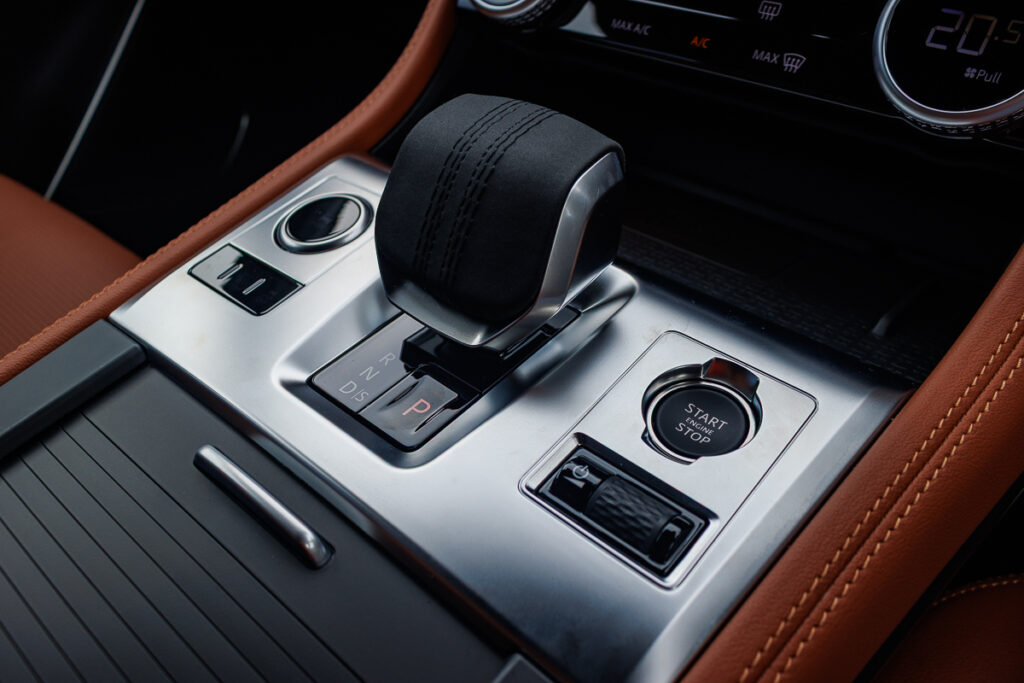
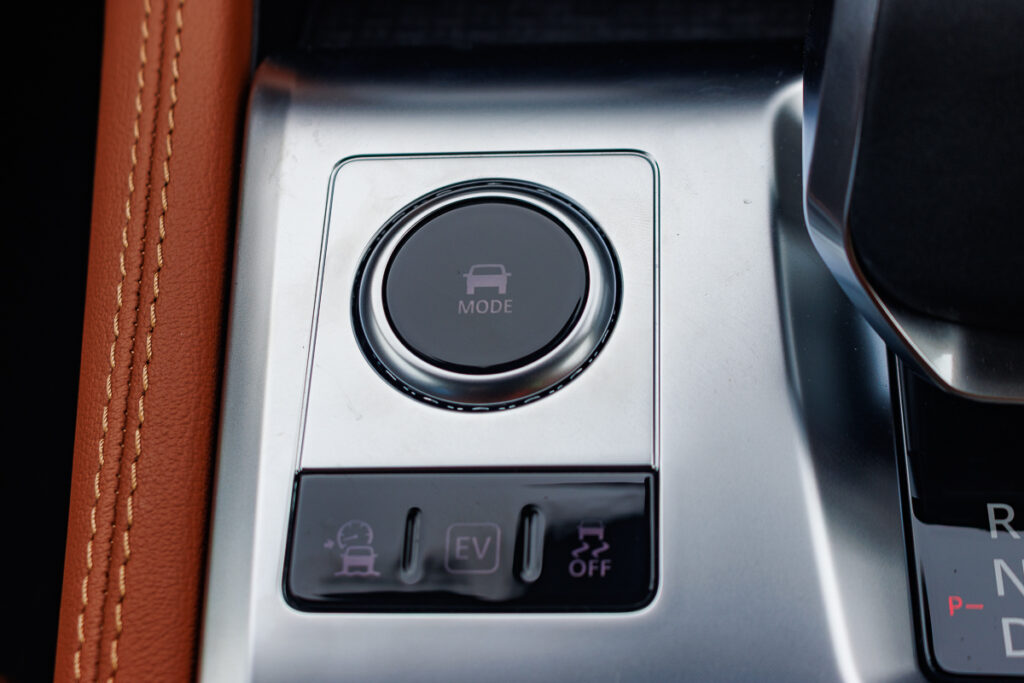
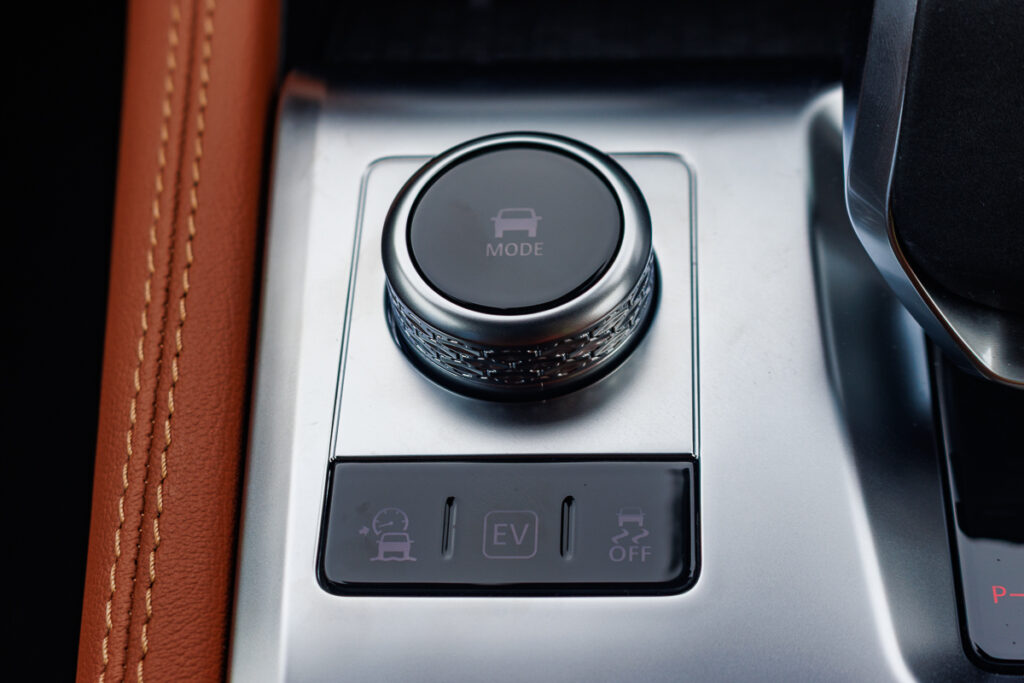
While the F-PACE’s interior quality is comparable to what the Germans and Japanese offer, the one thing that I appreciate is that Jaguar has not cut its corners with the rear door card, where the chrome trim design on the front is carried over to the rear. Just so that you know, some of the German carmakers actually cut costs by simplifying their rear door trim.
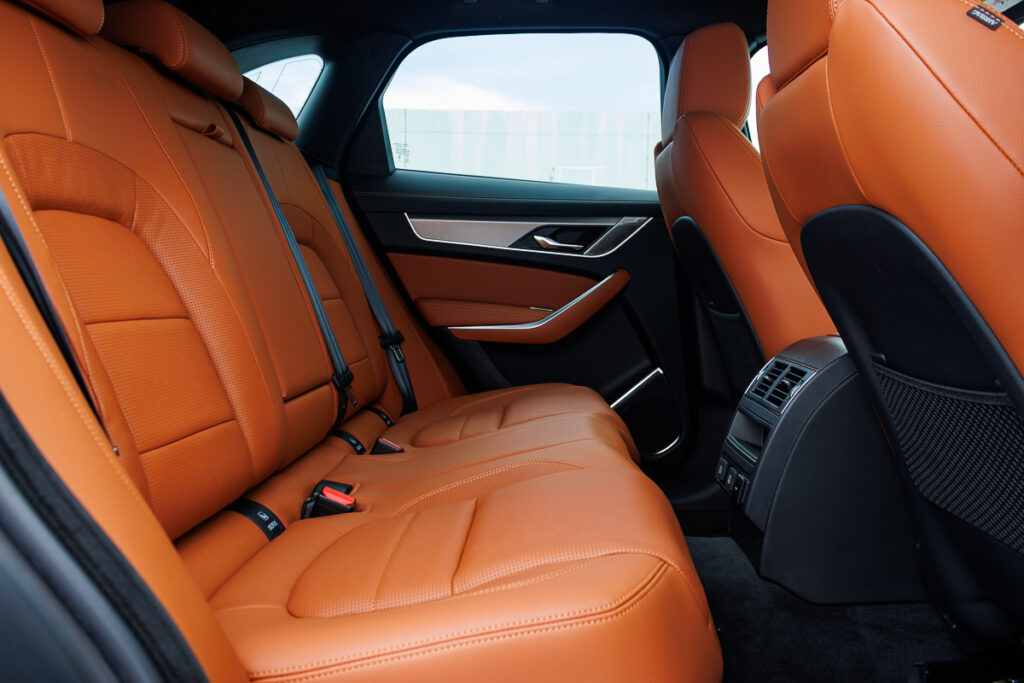
Adult passengers at the rear will also have no trouble climbing into the F-PACE. There is plenty of legroom in the footwell, and I like that Jaguar has designed the SUV with a rather straight roofline, which translates to a healthy amount of headroom.
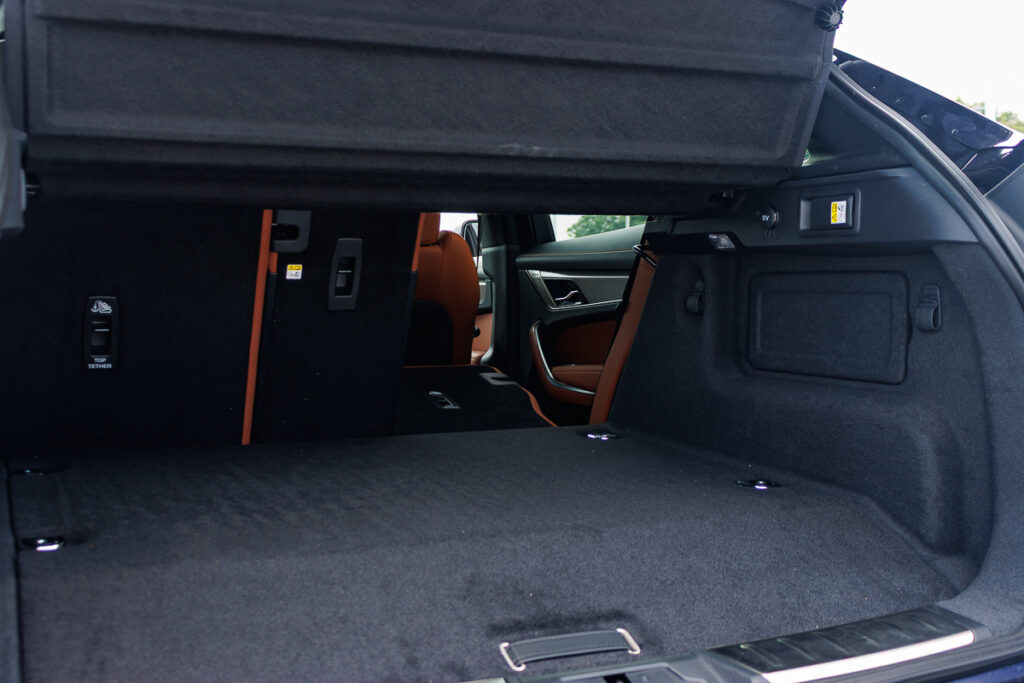
As this example is a PHEV, Jaguar has loaded a 17.1kWh battery in the boot. Therefore cargo space has been reduced from 650 litres to 613 litres. But with that said, the F-PACE’s boot still trumps the current BMW X3’s 570 litres.
Drives beautifully
Power comes from JLR’s proven 2.0 litre Ingenium four-cylinder engine, which is paired with the industry-familiar 8-speed ZF 8HP family gearbox. The hybrid electric motor is located between the engine and transmission. Combined output here is rated at 392hp and 640Nm. On its own, the motor delivers 139hp and 275Nm. All of this gets the F-PACE to 100km/h in 5.3 seconds, which is rapid.
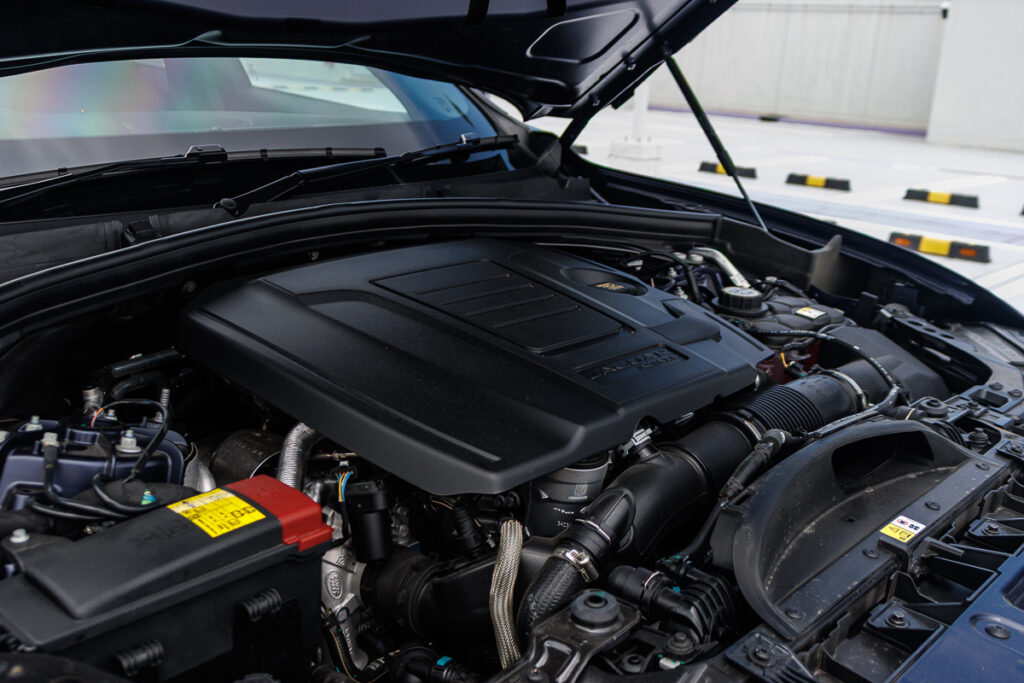
The Jaguar SUV starts off very much like an EV, where the electric motor does the heavy lifting when taking off. The engine chimes in later to pick up where the motor has left off. Oddly though, the Plug-in Hybrid system does not self-charge, hence you’re left to deal with that added deadweight of the battery, once it is depleted.
According to Jaguar, the battery is good for around 53km of pure electric driving; which I found out was about a day and a half to two of normal driving, before you are left with the engine alone. On its own, the four-cyl is adequate enough to get you around. But punch the Ingenium past 3,000rpm, and you’d be gladly rewarded with a throaty engine note, to accompany its F-ing PACE.
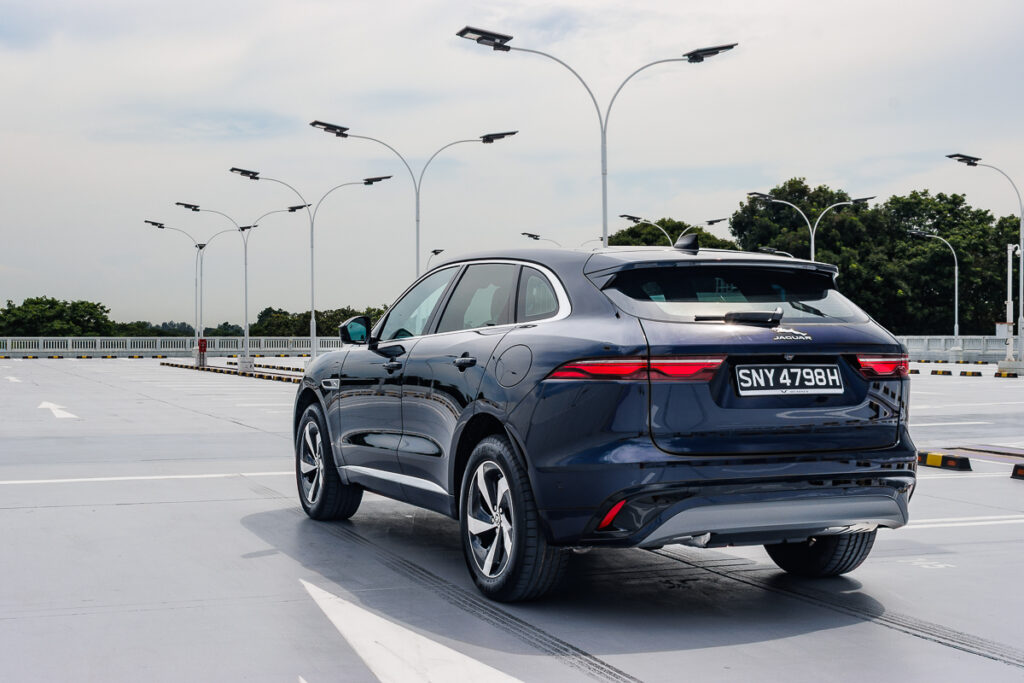
Despite its battery adding weight to the rear, you’d largely not feel the added inertia it brings with it, even as you take the F-PACE through a series of bends. Jaguar has pulled off all the stops for this final hurrah, as they have added an adjustable adaptive suspension for improved road holding. I also like that it doesn’t wallow as you pick through your turns.
But while the F-PACE can be heaps of fun to drive, I do note that it is not as efficient as its German counterparts. With a flat battery and without the assistance from that motor, I struggled to squeeze 10.8km/l… Not good if you are not in the habit of topping that battery up.
Not the most advanced tool in the shop, but it is pretty sharp
For some reason, Jaguar has not looked into updating its automated park assist system. This wouldn’t bother me, since I tend to manually park all the cars I drive, but for those who may rely on such automation for convenience (or lack of skill), the system does not identify the lots, but rather it measures the space between vehicles. Therefore you’re not going to be able to auto park the car without your “guides”.
The market is a very different one from the time the Jaguar F-PACE was first introduced. Competition has gotten stiffer, and the Germans have also cycled a generation on. That said, the F-PACE’s timeless design has served it well.
Text & Photos: Clifford Chow
| Pros | Cons |
|---|---|
| Small fuel bill (when the battery has juice) | Getting (quite) long in the tooth |
| Pivi Pro infotainment system is very good | Drivetrain could be a little more refined |
| Drives well | Some older tech does not help to sell the car |
Jaguar F-PACE Plug-in Hybrid 2.0 R-Dynamic S
| Drivetrain | Petrol-electric plug-in hybrid |
| Layout | 1,997cc, 4-cylinder |
| Power / torque | 392hp / 640Nm |
| Transmission | 8-Speed |
| Efficiency | 52.6km/l |
| Fuel Capacity | 69 Litres |
| 0-100km/h | 5.3 Seconds |
| Top Speed | 240km/h |
| VES Band | B |
| Dealer | Wearnes Automotive |
| Price | S$244,888 without COE, with VES |
| Verdict | Good handling, timeless design. Getting old |
- Mercedes-AMG GLC 53 4MATIC+ Arrives in Singapore from S$475,888

- McLaren Golf Tees Off in Singapore with Leonian
- Rolls-Royce Project Nightingale Begins Global Road Testing. Includes 15,000 Cycles of Opening and Closing its Piano Boot

- Deepal S05 68.82kWh Review: Above Expectations

- Maserati Grecale Gets Colourful with Devil Orange and Verde Royale