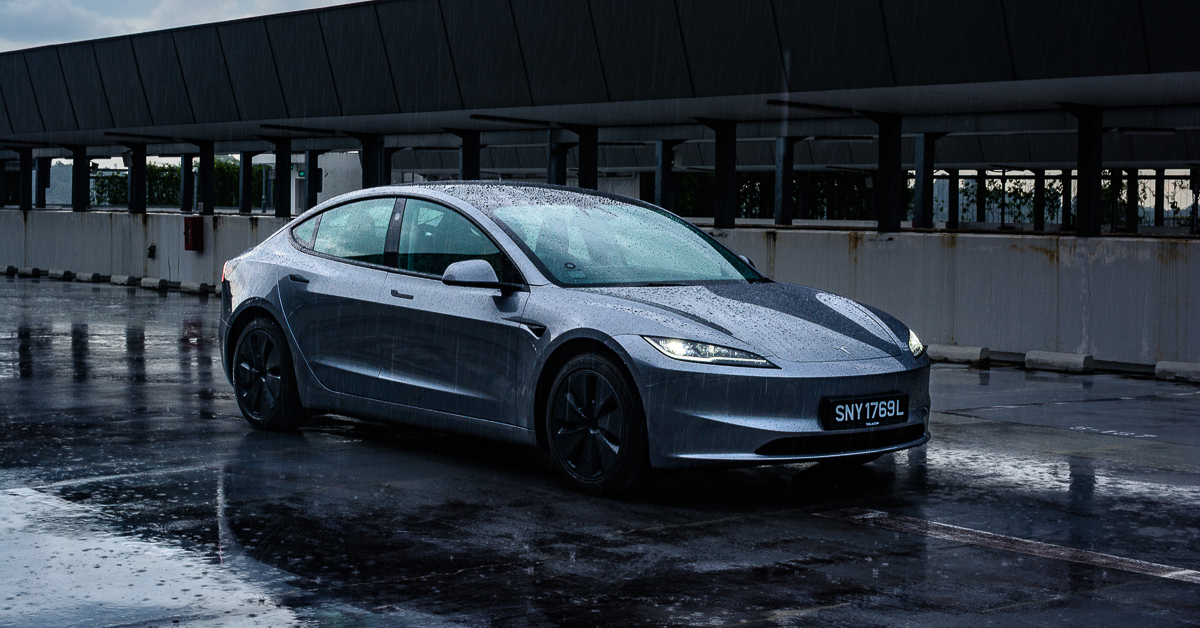


In the sea of eclectic choices of electric vehicles, Tesla’s brand proposition hasn’t changed much. Its offerings continue showing what an EV should look like – chasing a kind of uniqueness but overall neatly put-together
Singapore – In the car market as we know it today, Tesla’s name has been around for a while. However, that doesn’t mean we should only continuously look forward to whoever and whatever new hyped-up car brand is coming to Singapore next.
Tesla’s relevance to the EV scene hasn’t waned. On the contrary, their presence remains strong by keeping themselves relevant and updated. Especially with cars like this Model 3 RWD 110kW, offering maximum output while still qualifying for a Cat A COE, essentially tailoring itself for Singapore’s market needs.
Perhaps Tesla’s standout point is the exclusivity of their ecosystem, be it the network of superchargers, gimmicks that other brands try to emulate, the idea of “minimalism” in cars, or changes to how we approach driving (which is what we’ll get to).
An iPhone-esque “clean”
The Model 3 RWD 110 is essentially the same deal as the slightly pricier Model 3 RWD, since it was just detuned to qualify for Cat A COE.
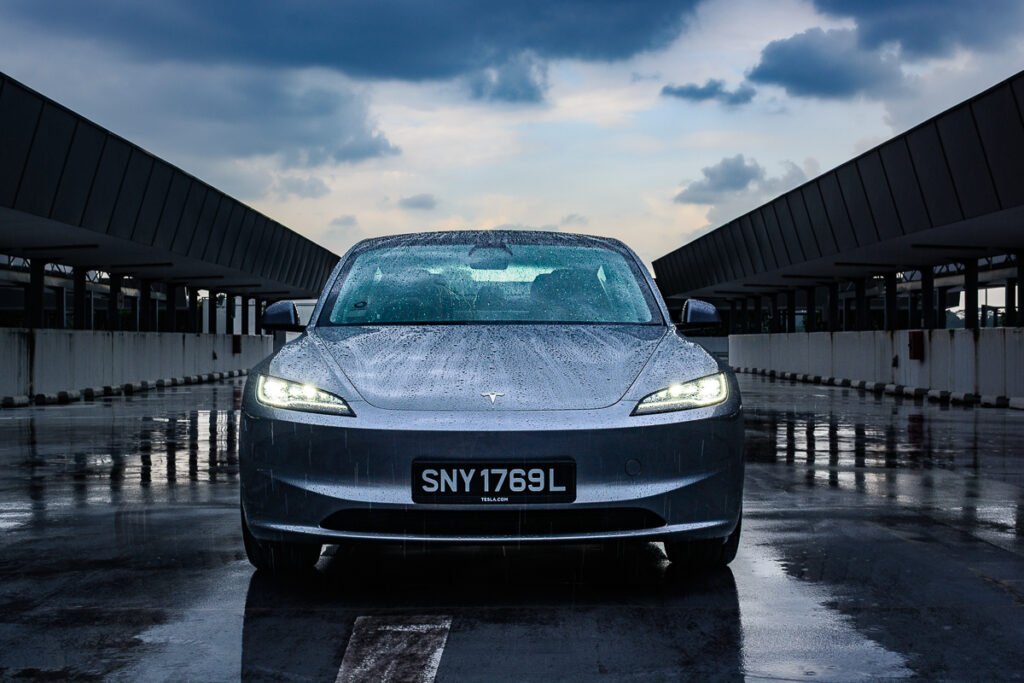
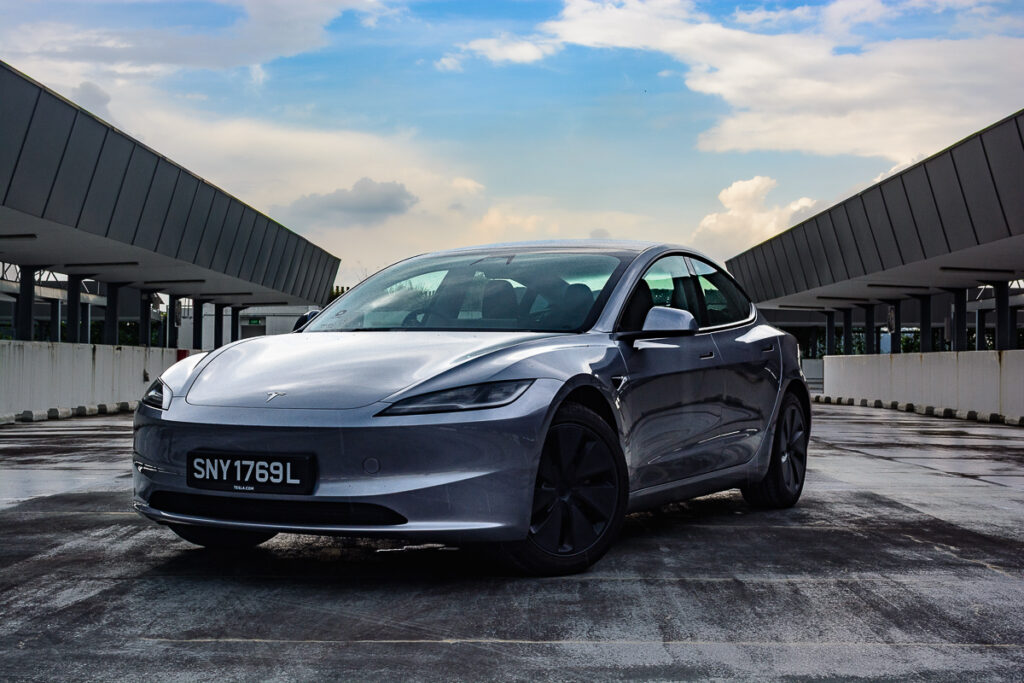
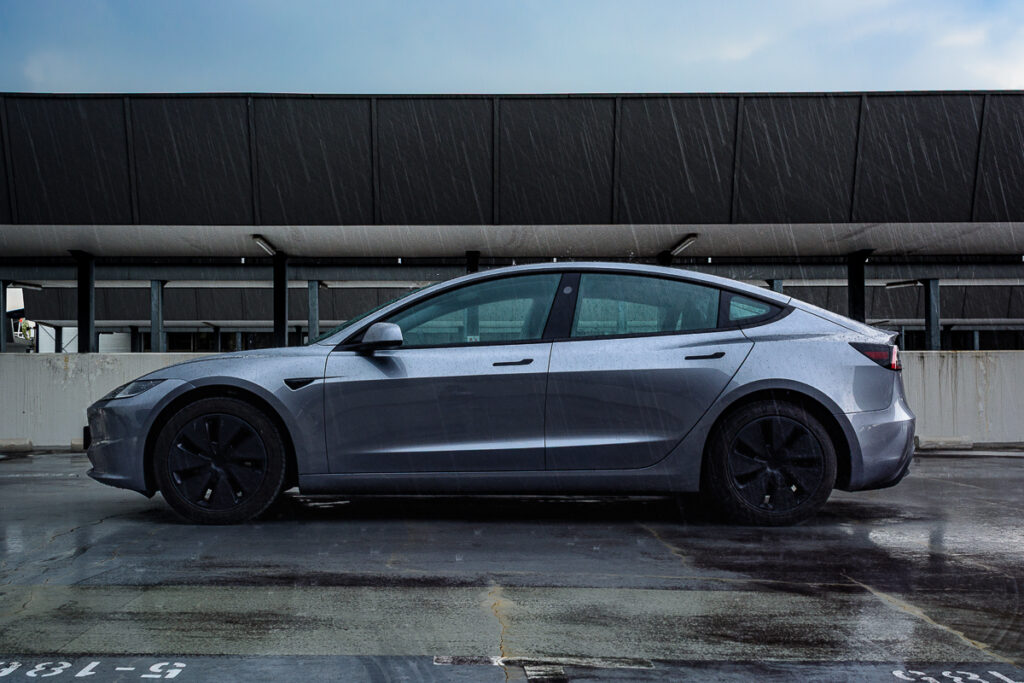
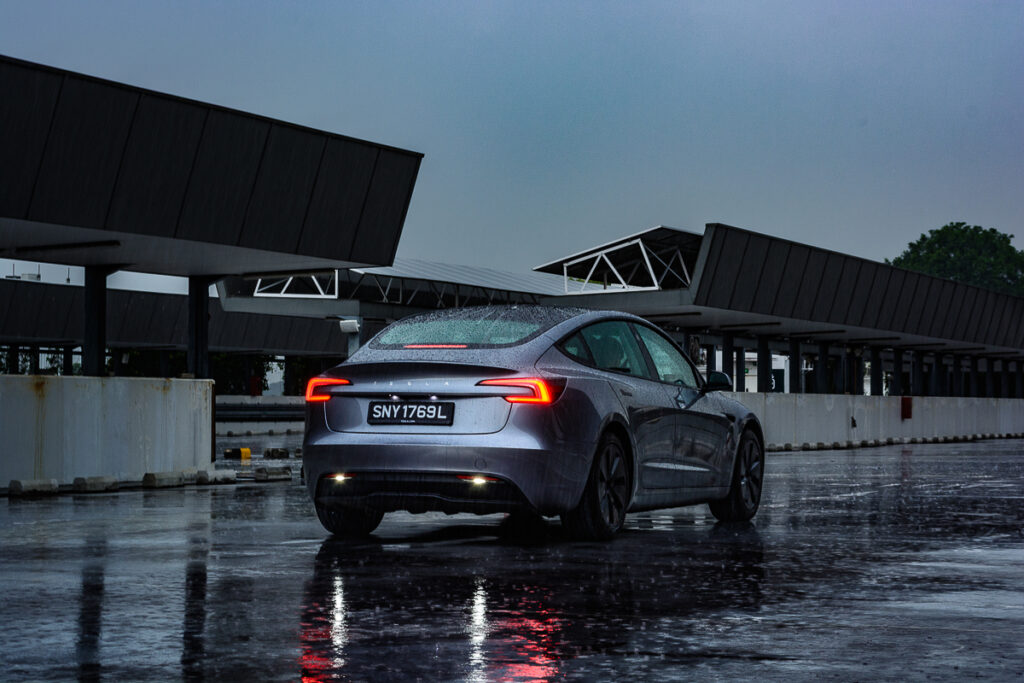
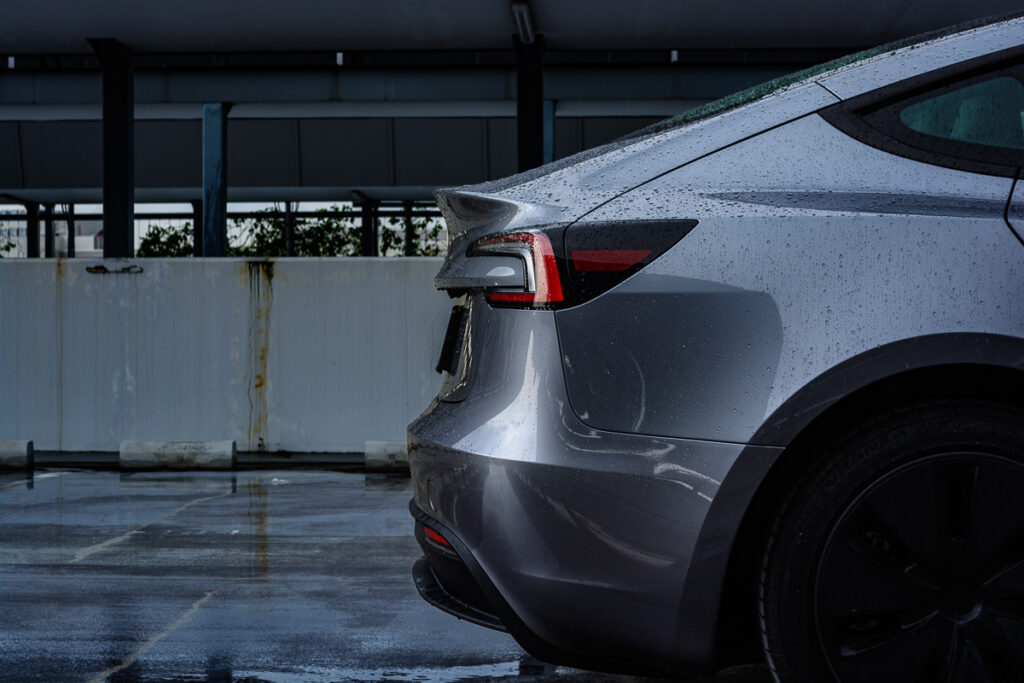
While the Model 3’s latest looks offer slimmer headlights and refreshed taillights, its body style remains unmistakable, retaining Tesla’s familiar design DNA. Smooth lines create a no-frills impression that, while it keeps looks clean, might not be that eye-catching or pretty plain-jane to most people. This might leave one thinking, if the outside looks like this, what does the inside look like?
The funny part is, if you find yourself wanting to look past its exterior and take a peek at what’s inside, the same sense of ultra-minimalism is carried into the entire interior of the car as well.
All at your fingertips
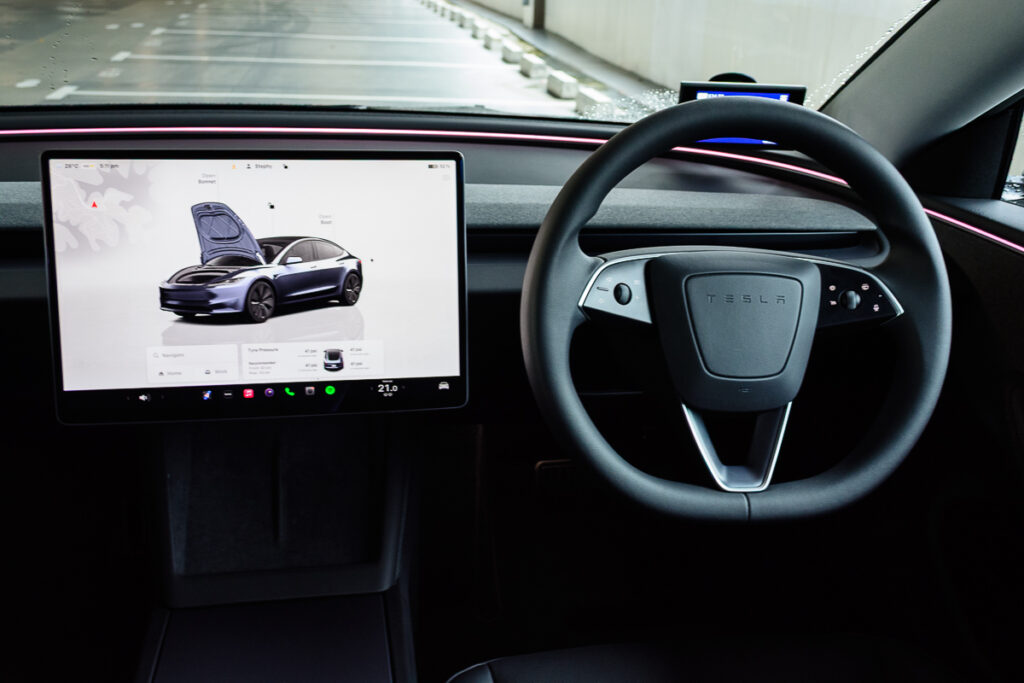
The ultra-minimalism means everything we know of conventional cars with their buttons and stalks, have been erased. Nearly everything is controlled via a 15.4-inch central infotainment screen. Adjusting your steering column or fiddling with air-conditioning, all done through menus on the screen to access the full list of controls. Even changing gears is done by swiping your finger up and down the top-right corner of the screen to get into drive or reverse gear (they even have their Auto Shift on Beta trials, which shifts the car between “D” and “R” for you while you’re parking). It’s something to get accustomed to if Tesla is a car buying option for you.
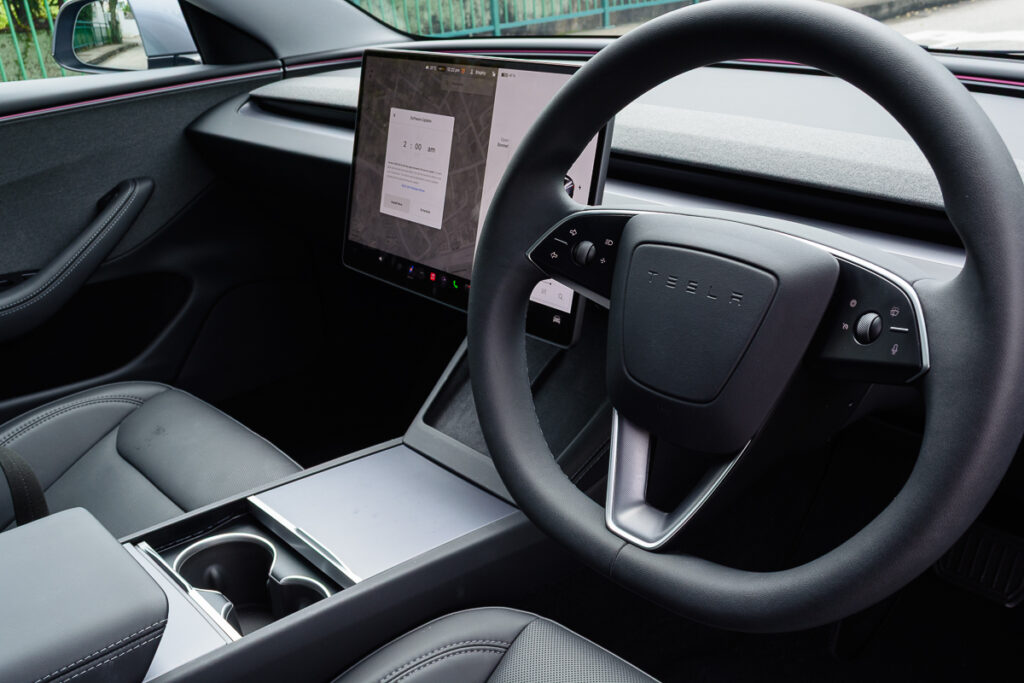
Everything else is controlled by buttons on a steering wheel. Indicating lane changes, windshield wipers, are all done by the push of a few buttons. I do hear though that Tesla has made a revision to the indicator controls, and have now added a conventional stalk.
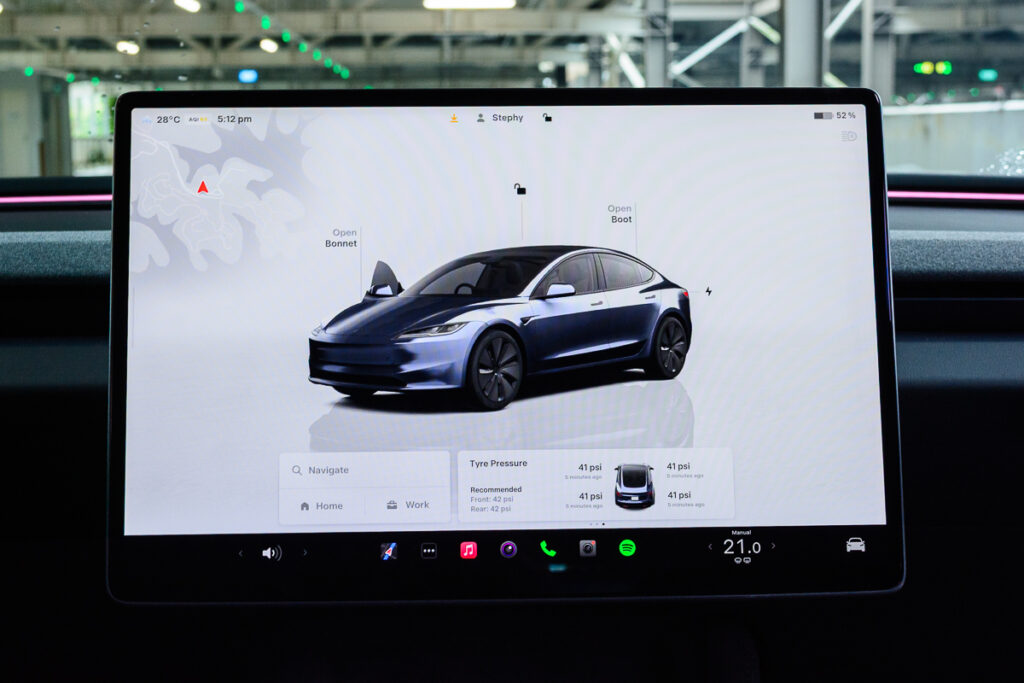
Speaking of changing lanes, the live feed from the blind spot cameras on either side of the car show up on the screen when you hit the left or right arrow, which is pretty useful for reliable checking without needing to crane your neck. Thankfully it didn’t turn me into a lazy driver once I went back to driving other cars without such a feature.
How does the Model 3 catwalk?
The Model 3’s one-pedal driving is handy for city traffic like Singapore’s. A slight downside is that you can’t customise the regenerative braking strength to your preference, so it might need some getting used to if you’re not familiar with one-pedal driving.
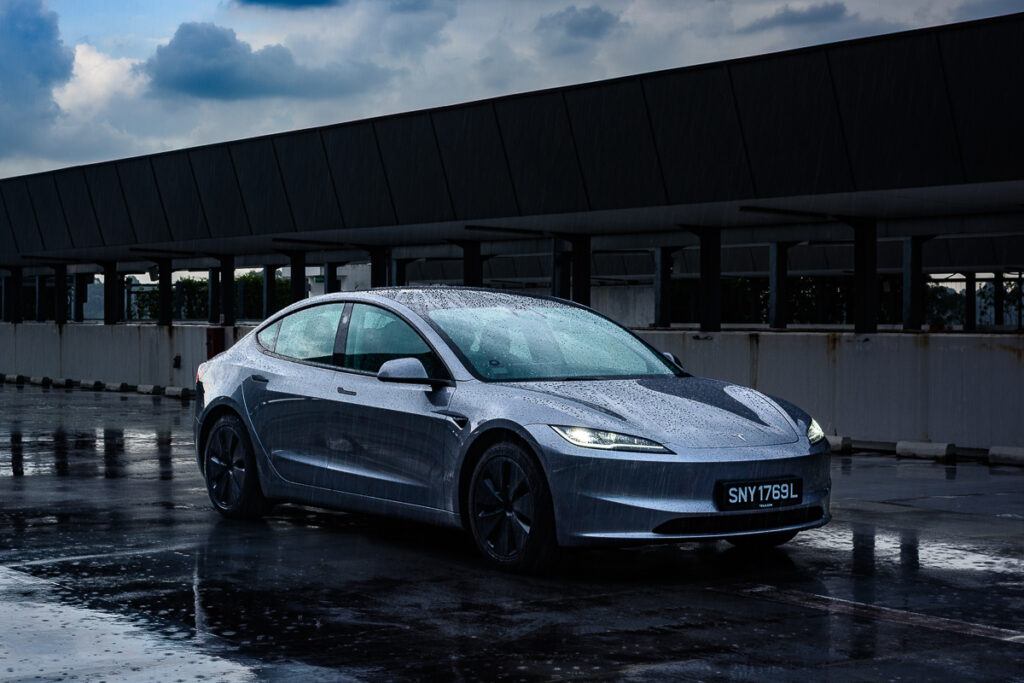
The power difference to qualify for Cat A COE is noticeable, almost feeling like it’s been forced to hold itself back (I mean, it has). However, for urban driving set-ups where you don’t need all that power anyway, it’s sufficiently responsive and still cooperative to be pushed when you ask it to.
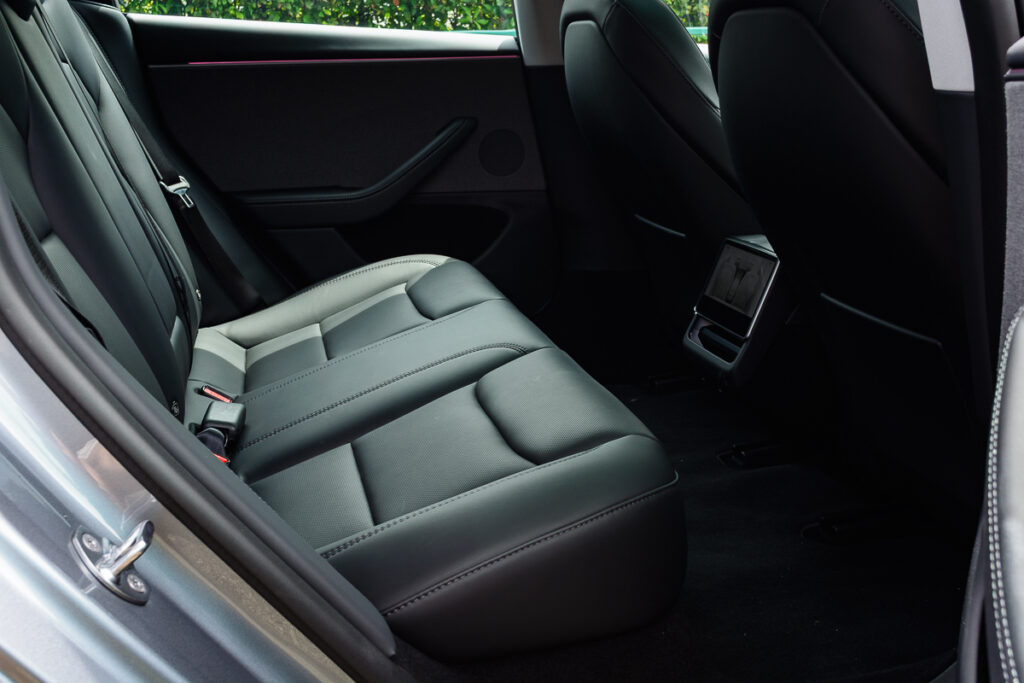
Driving comfort is worthy of compliments. Ventilated seats, comfortable legroom and headroom at the back, and good noise insulation complemented by wraparound ambient lighting, all create a cohesive and luxuriously calm ride experience for both the driver and passengers.
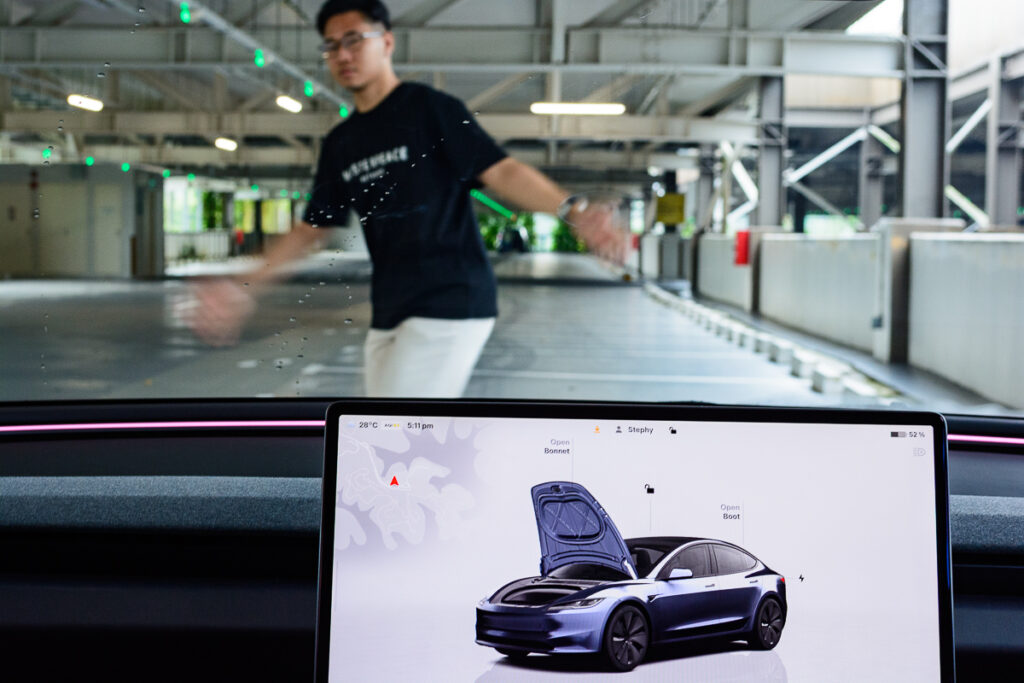
Overall, its vibes and capabilities match this model’s positioning well. I mean, that statement is putting aside the existence of fart indicators which are more meant for entertaining 8-year olds, or those who are just mentally 8 like me.
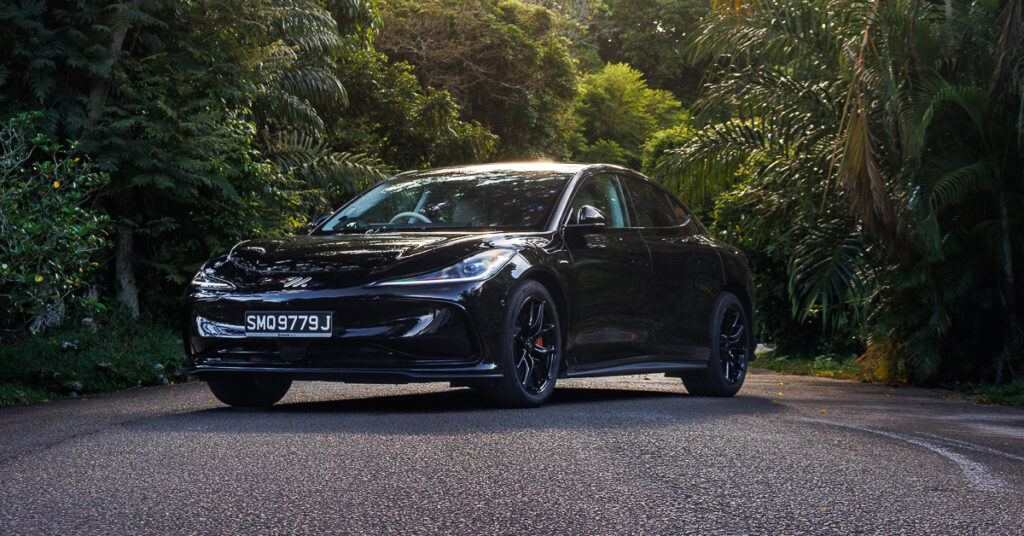
iTesla? Kind of…?
Thinking of Tesla, you might think of the earlier days of Apple products. With their special charging cable, hopping on their iOS, iCloud, using iTunes, then computers and the iPad followed. Faithful customers might say “I can’t imagine using any other phone, I’m so used to their system”.
Driving a Tesla gives that kind of feeling, where being part of that group means inserting yourself into a unique ecosystem. It might not be that pompous or elitist like a Postmodernist book club (sorry but right now it’s the reading genre I least enjoy), but you still separate yourself from the main bunch. Is that good or bad? That’s up to where your appreciation lies.
If you asked me if I would recommend a Tesla, the most neutral answer is that if you appreciate their tech, driving feel, and overall approach to EVs, then go for it.
But specific to this Model 3 review? I got used to it relatively fast, so that’s pretty good.
Text: Titus Tang
Photos: Kalani
Edits for Both: Clifford Chow
| Pros | Cons |
|---|---|
| RWD means its entertaining to drive | Could use a few buttons |
| Plenty of features… and some gimmicks | Unable to adjust the intensity of the regenerative braking |
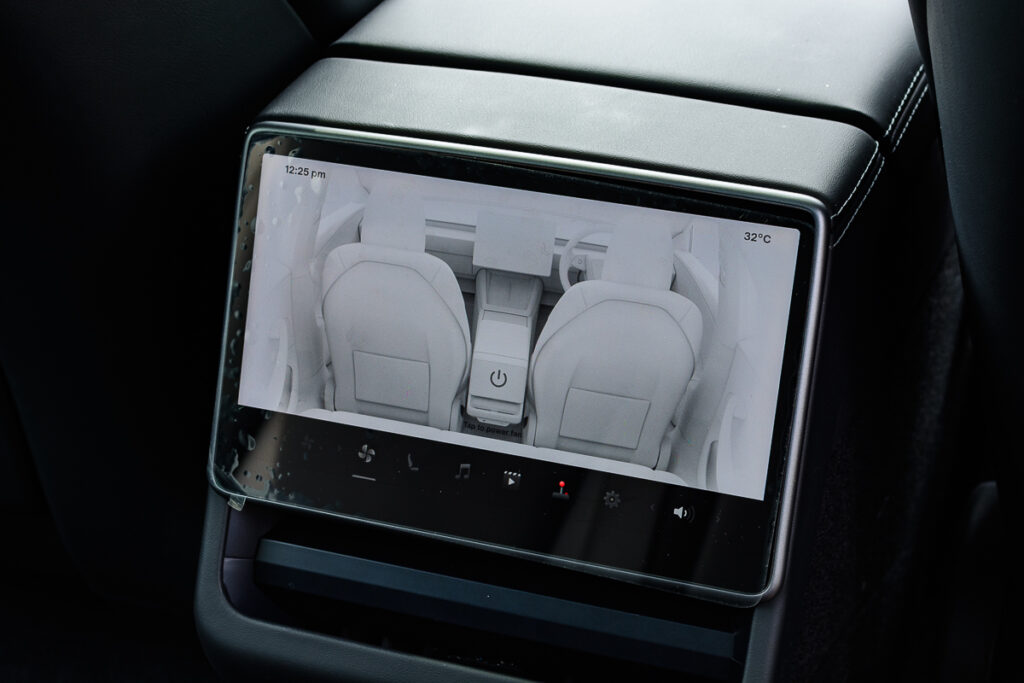
| Screen at the rear keeps the kids distracted/makes the kids carsick | Can come across as “white goods-ish” |
Tesla Model 3 RWD 110
| Drivetrain | Full Electric |
| Layout | Single Motor, Rear Drive |
| Motor power / torque | 150hp / 350Nm |
| Battery capacity | 62.5kWh |
| Efficiency | 13.7kWh/100km |
| Electric Range | 520km |
| 0-100km/h | 8.6 seconds |
| Top Speed | 201km/h |
| VES Band | A1 |
| Dealer | Tesla Singapore |
| Price | S$199,888 with COE and VES |
| Verdict | Sweet handling, lots of features, plenty of gimmicks |
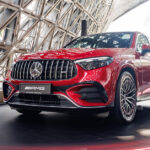
- Mercedes-AMG GLC 53 4MATIC+ Arrives in Singapore from S$475,888
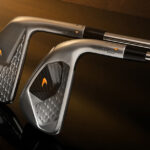
- McLaren Golf Tees Off in Singapore with Leonian
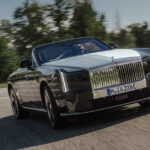
- Rolls-Royce Project Nightingale Begins Global Road Testing. Includes 15,000 Cycles of Opening and Closing its Piano Boot
- Deepal S05 68.82kWh Review: Above Expectations

- Maserati Grecale Gets Colourful with Devil Orange and Verde Royale