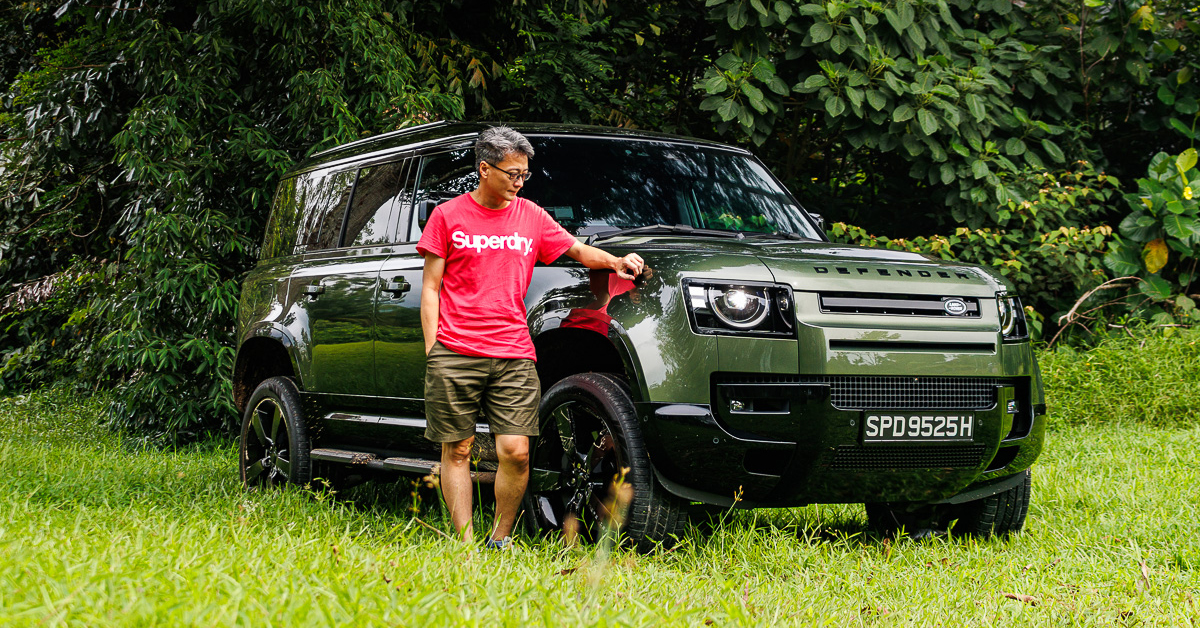


Land Rover stuffs its savage supercharged AJ133 V8 into the updated Defender. They know there’s still that primal instinct in some of us, and they know exactly how to tap into it
Singapore – I thought my hearing was off when I heard that Land Rover had decided to stuff its older, in-house-produced Five-Point-Oh into the Defender. I mean, JLR already has access to BMW’s 4.4-litre twin-turbocharged V8, so why bother?
I’ll get to that later. But first, this is the facelifted Land Rover Defender 110… or should I say, Defender 110?
So Land Rover has recently undergone a rebranding exercise, though one unlike that of its sister brand, Jaguar. The group’s ‘House of Brands’ strategy sees each Land Rover model become its own sub-brand. Confusing as it might be, here we are today.
Defender… Land Rover Defender. But you can call me Defender.
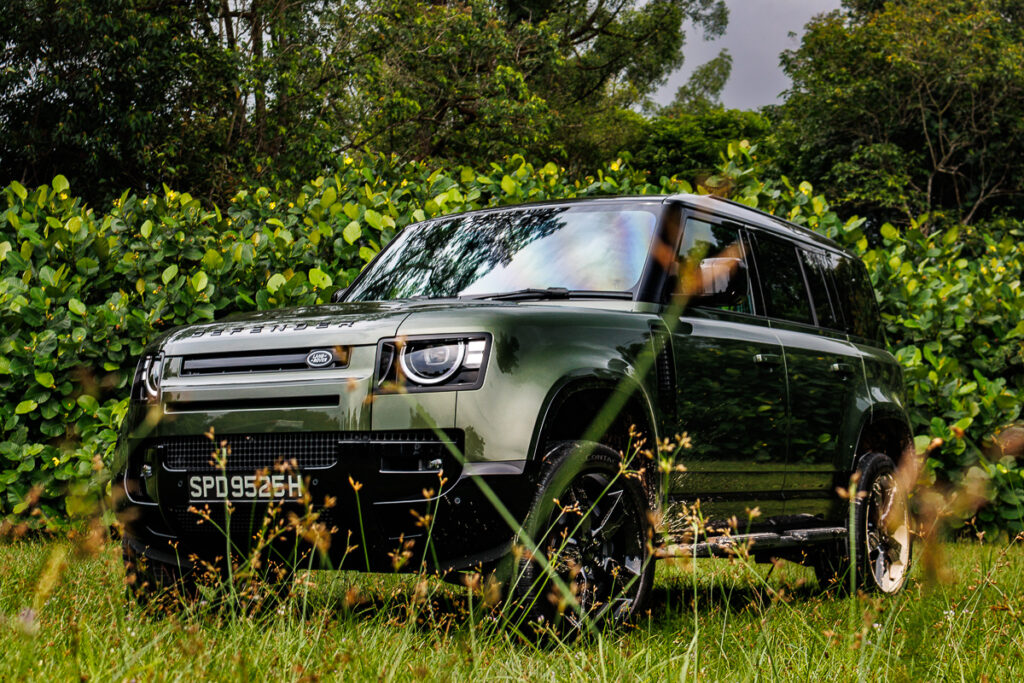
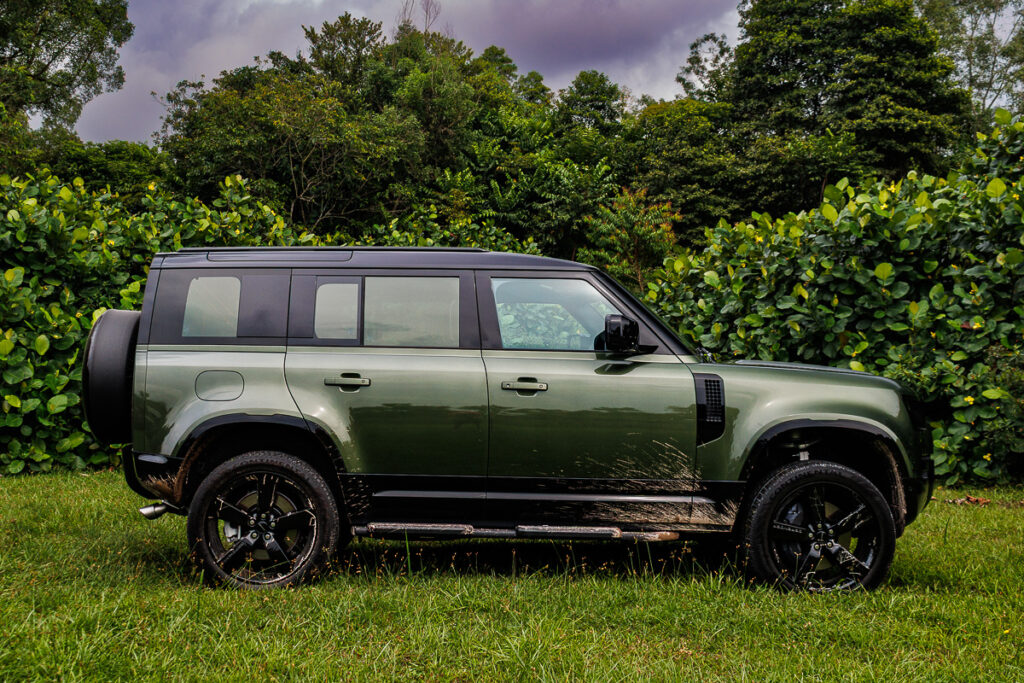
Most people probably wouldn’t be able to tell the difference between the pre-facelift Defender and the current SUV. And I think that’s actually a good thing, because it helps to keep the iconic SUV’s styling timeless.
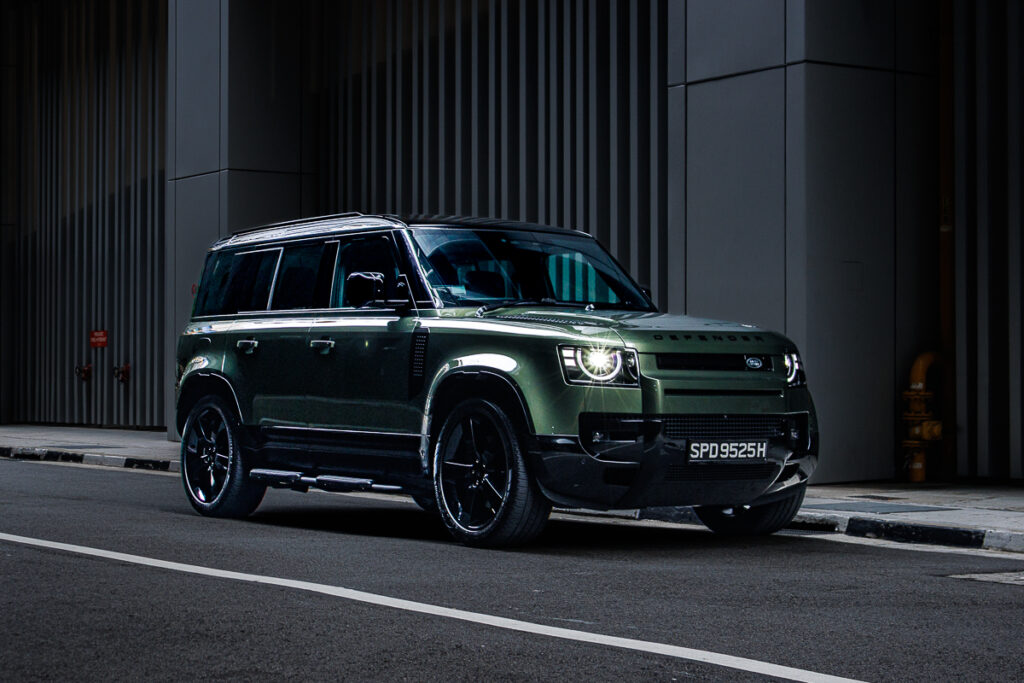
The new look includes reworked headlamps featuring filled-in position lights. At the rear, the tail lamps are now largely flush with the bodywork. Land Rover claims this design reduces the chance of mud building up around the light clusters.
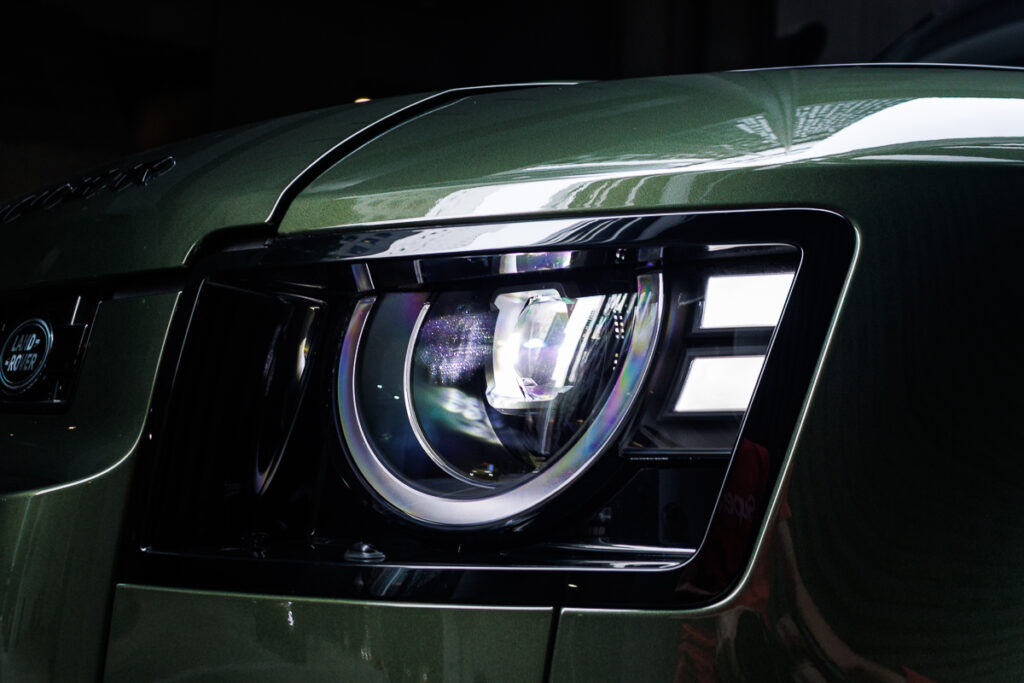
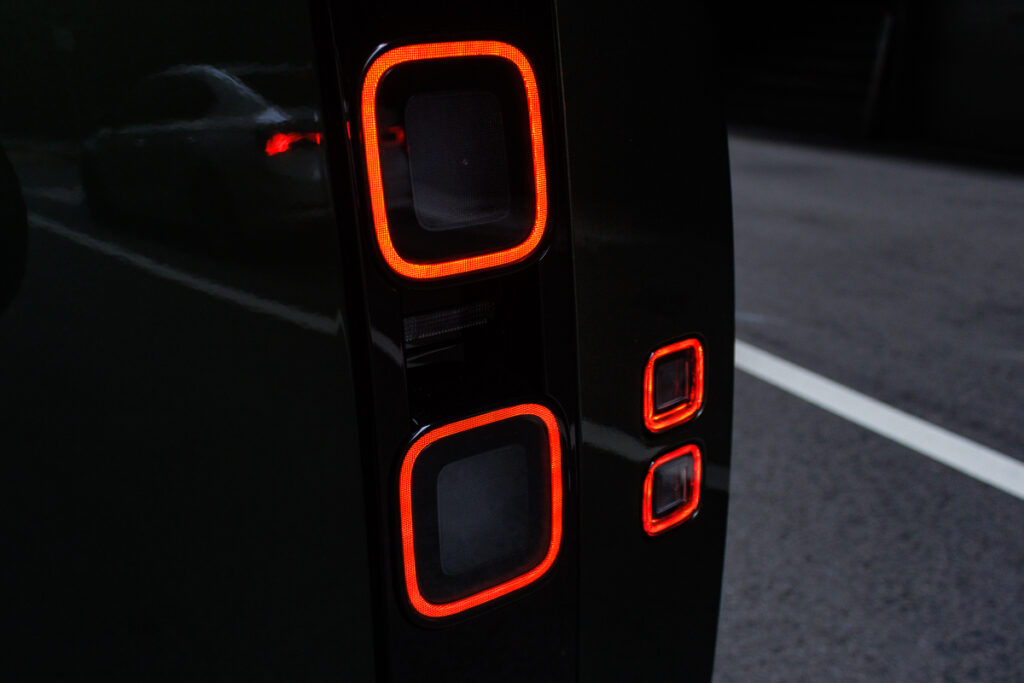
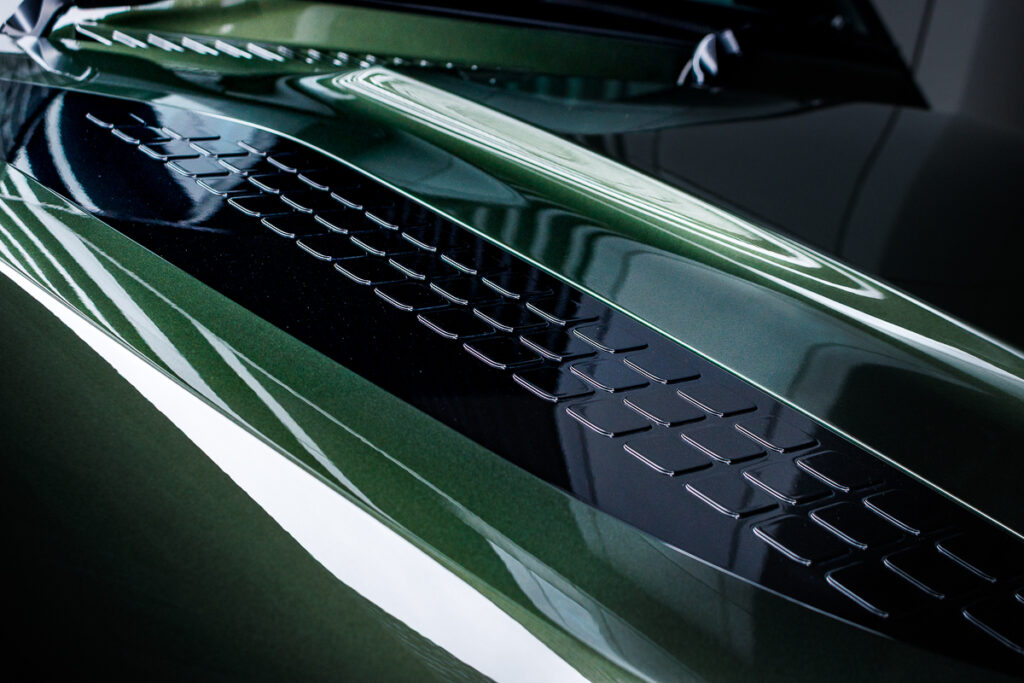
One subtle change is the omission of the third accent colour that previously lined the grille, the lower half of the front bumper and much of the rear bumper. In its place, gloss-black and matt-black trim brings a more unified appearance to the Defender’s lower half.
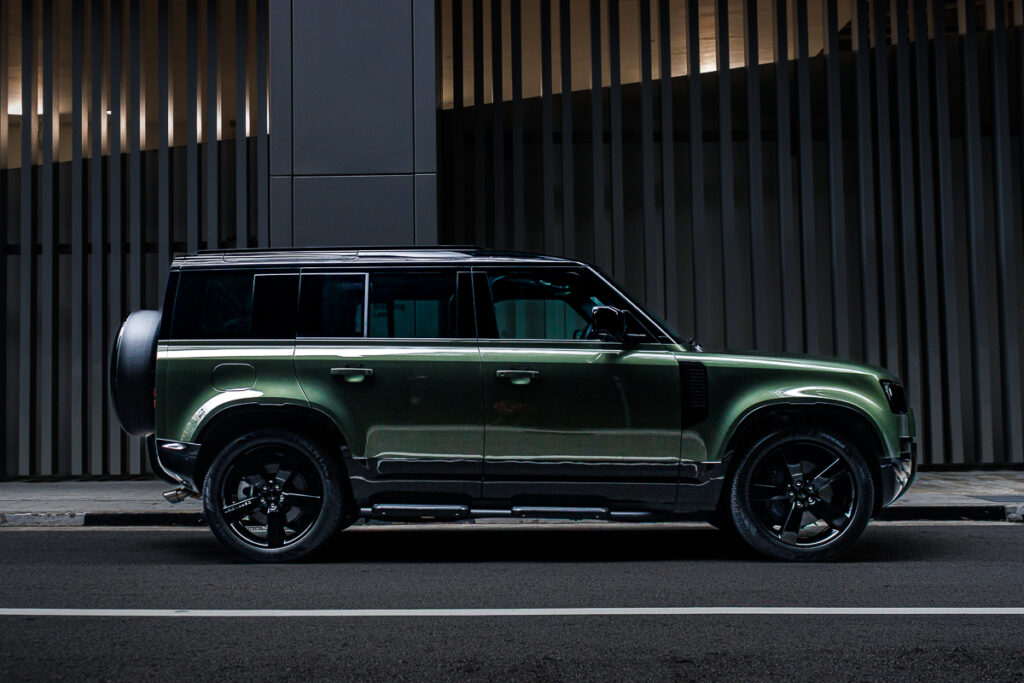
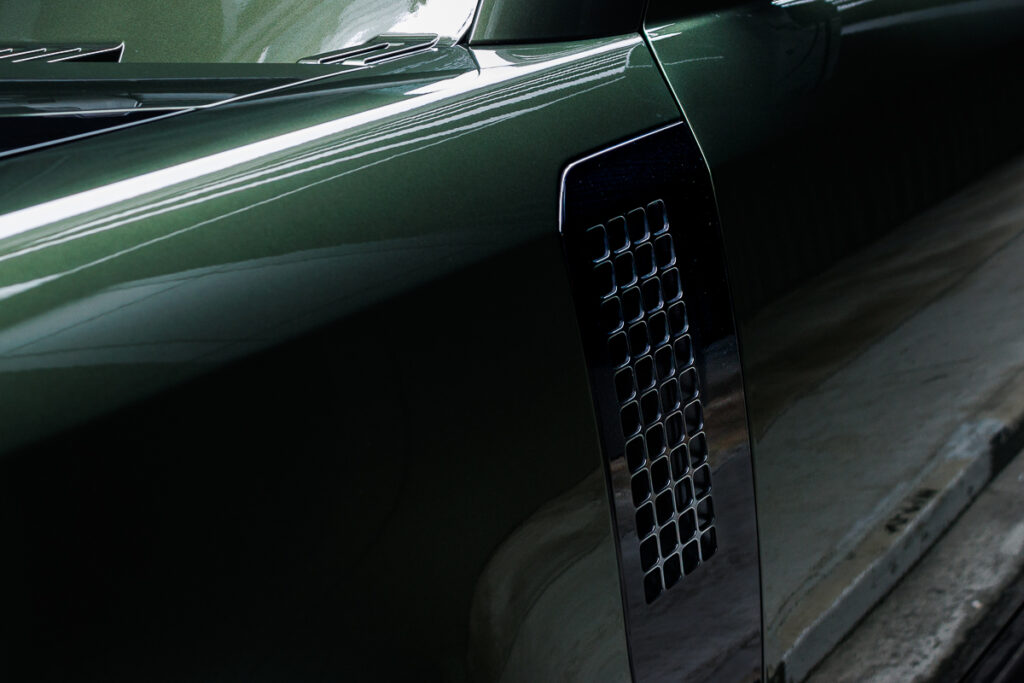
There’s also a new rounded-square, or “squircle”, design theme found on the Defender’s air vents, replacing the previous diamond-plate motif on the bonnet tread plate.
Change is a constant. But keep it small.
Inside, the Defender retains almost everything that made it so appealing in the first place.
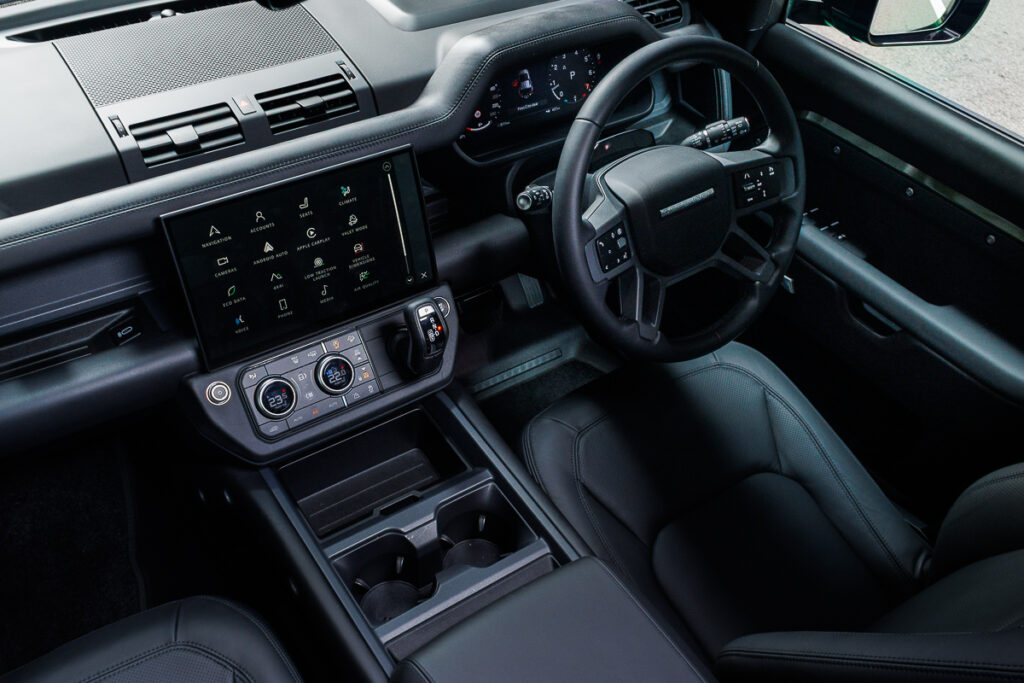
Over here, it sells the idea of luxury far less than its stablemates. Instead, the Defender’s cabin reinforces the notion that you can put it through some serious rough-and-tumble. From hard-wearing materials in areas where mud and sand are likely to end up, to padded touchpoints that take the sting out of a rock climb, everything feels purpose-built.
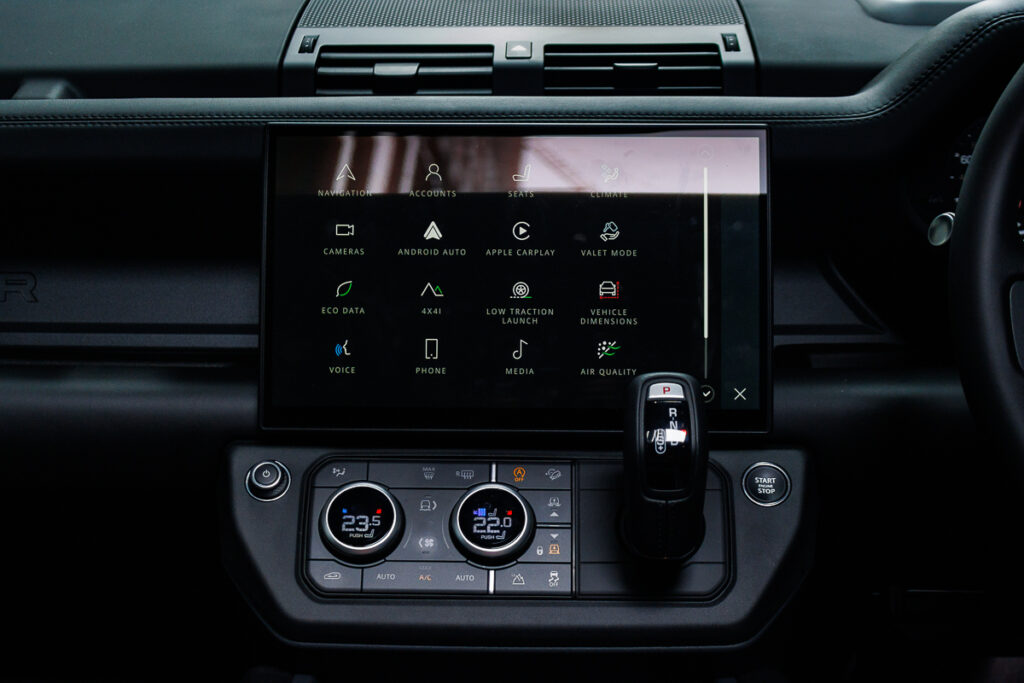
In the middle of the dashboard, the curved infotainment screen has grown from 11.4-inches to 13.1-inches, giving you more screen real estate to prod with your finger. To accommodate the larger display, Defender revised the positioning of the gear selector. The updated Pivi Pro system is noticeably quicker to respond and, as before, most functions are only a button or two away. Apple CarPlay and Android Auto both connect wirelessly.
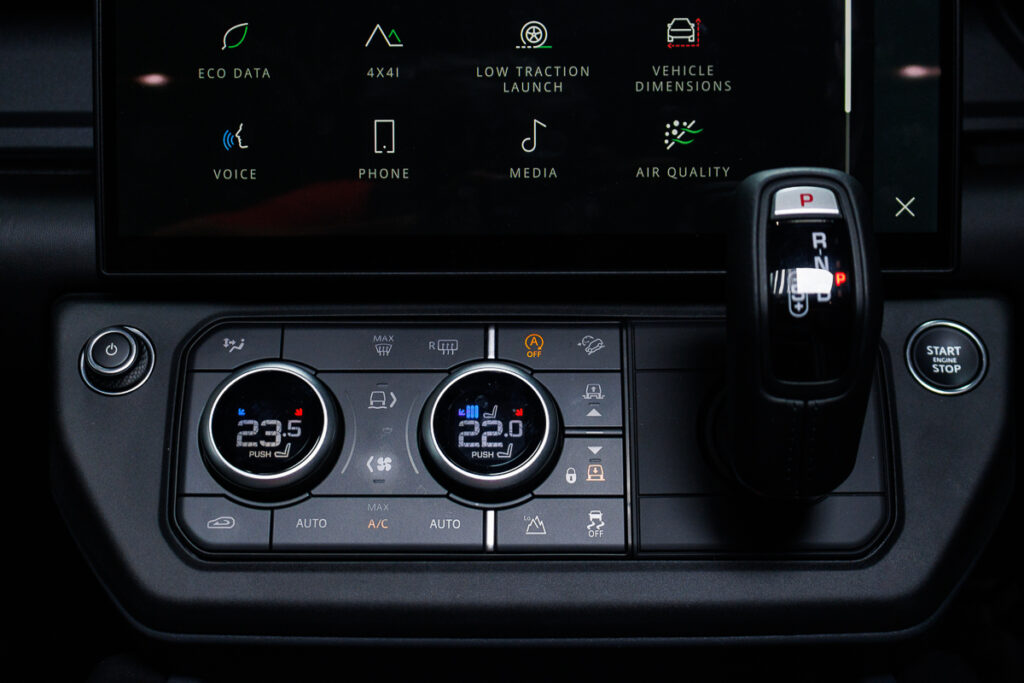
My absolute favourite feature inside the Defender remains the pair of rotary dials beside the gear selector, allowing you to adjust the climate control and seat ventilation. Better still, they double up as controls for Terrain Response and the various drive modes, saving you from digging through infotainment menus every time the terrain changes.
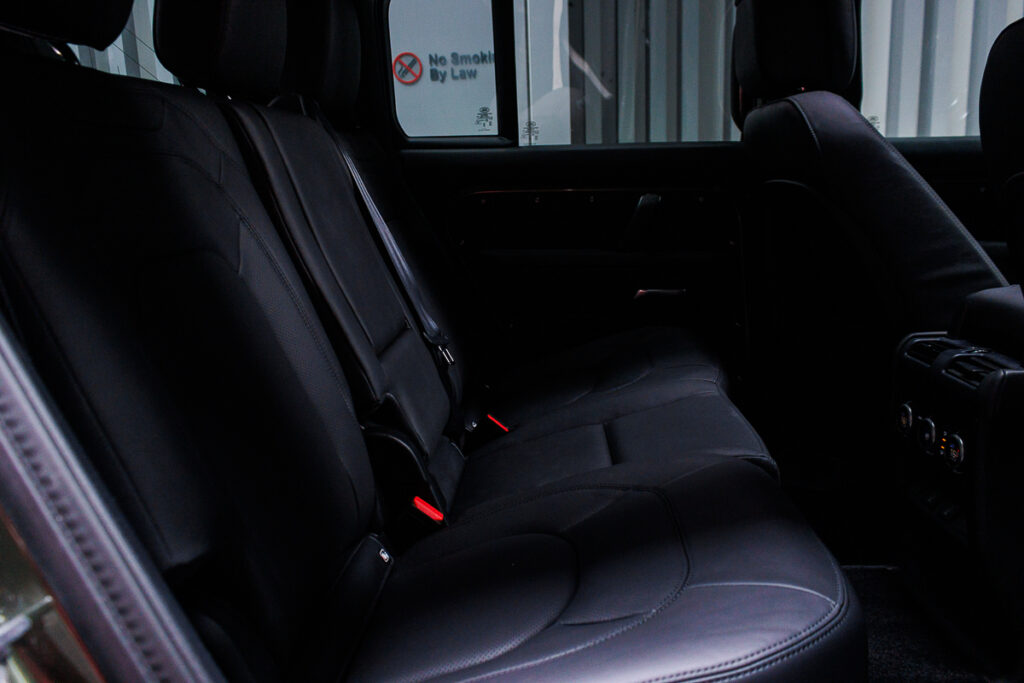
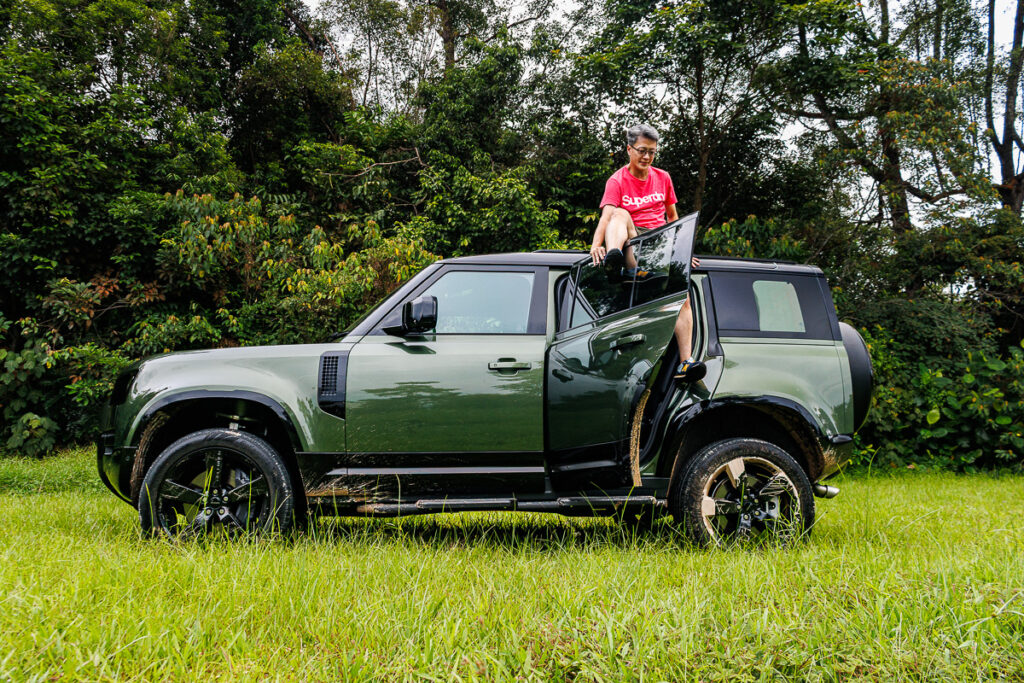
Although Defender added two extra seats to this very 110 I am behind the wheel of, legroom is best described as adequate only for children or very short journeys. If you’re after a proper three-row Defender, the 130 offers a far more convincing setup.
Crossplane V8 rumble. No questions about your masculinity here
This may well be one of the last opportunities to enjoy JLR’s supercharged AJ133 V8 engine. For the Defender, they have tuned output down to 414hp and 550Nm, compared with the 550hp and 680Nm produced by the same engine in the Jaguar F-PACE SVR – a car I had the absolute pleasure of driving a few years ago.
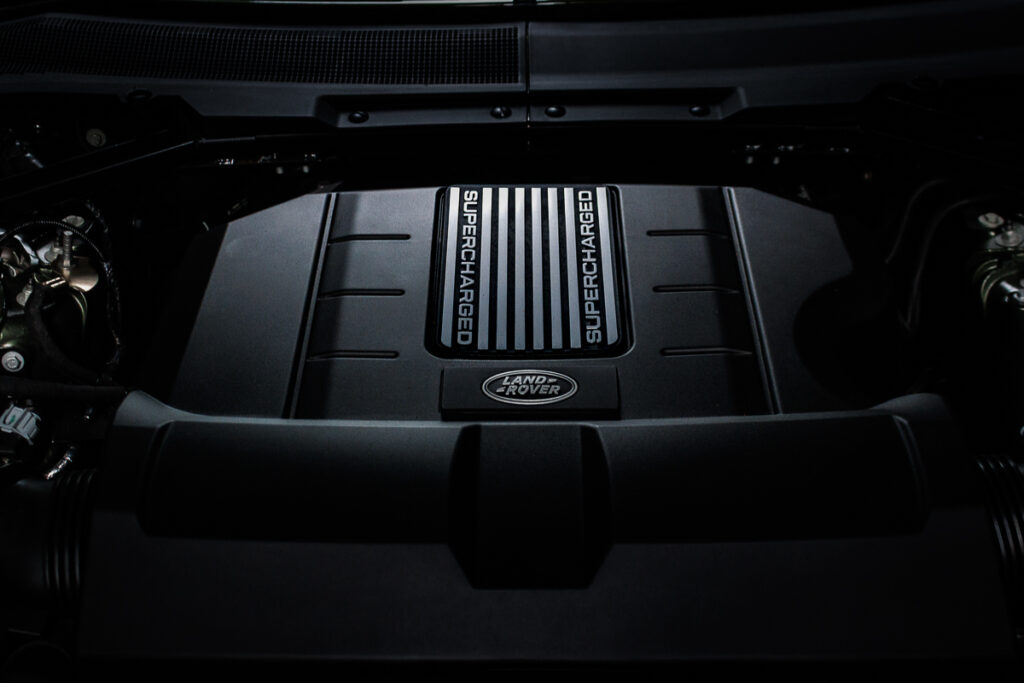
It might sound strange, but fitting the 5.0-litre V8 is more a matter of circumstance than sentiment. In selected markets like ours, where the 3.0-litre inline-six Ingenium engine doesn’t meet emissions requirements, we’re the lucky ones.
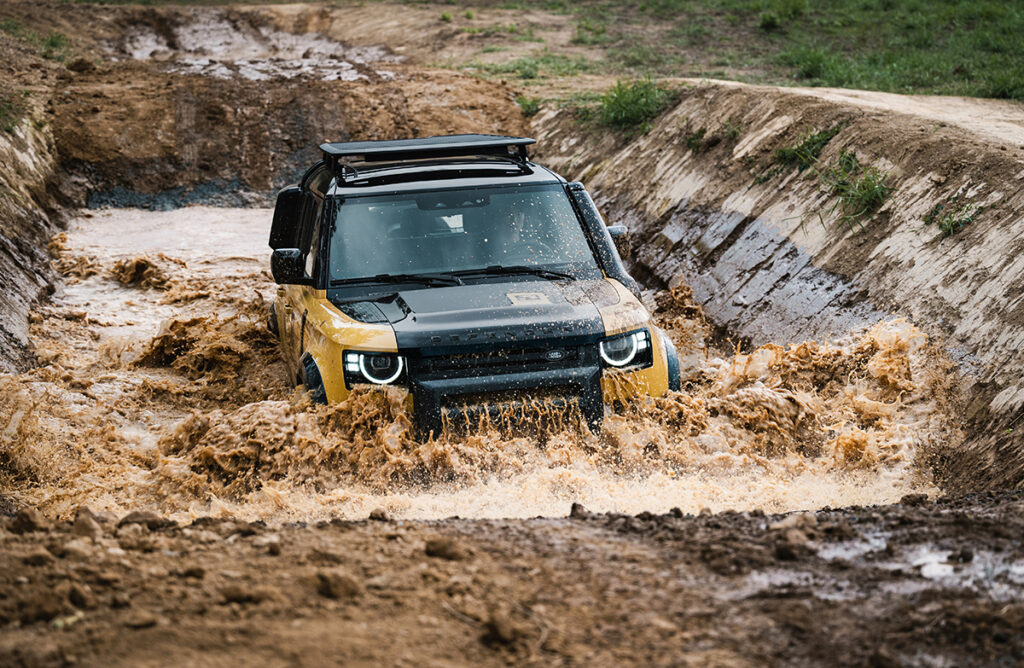
Plant your right foot and you’re rewarded with the soulful growl of the Defender’s crossplane V8, accompanied by the faint whine of the supercharger. It may not be remotely as quick as the F-PACE SVR, but the Defender V8 still dispatches the century sprint in a more than respectable 5.8 seconds.
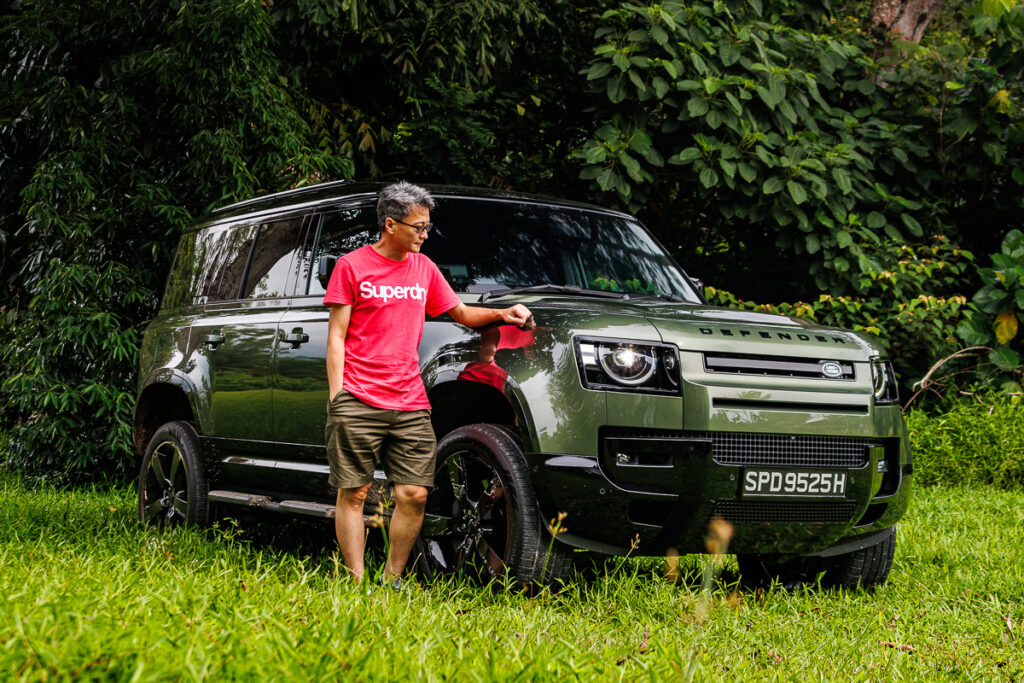
That familiar V8 snarl occasionally makes me forget that the Defender isn’t going to behave like the F-PACE SVR on the road. Here, the air suspension earns its keep with an exceptionally cushioned ride. This isn’t a vehicle you’ll want to hustle through corners, because you’ll soon find yourself approaching the limits of its considerable mass.
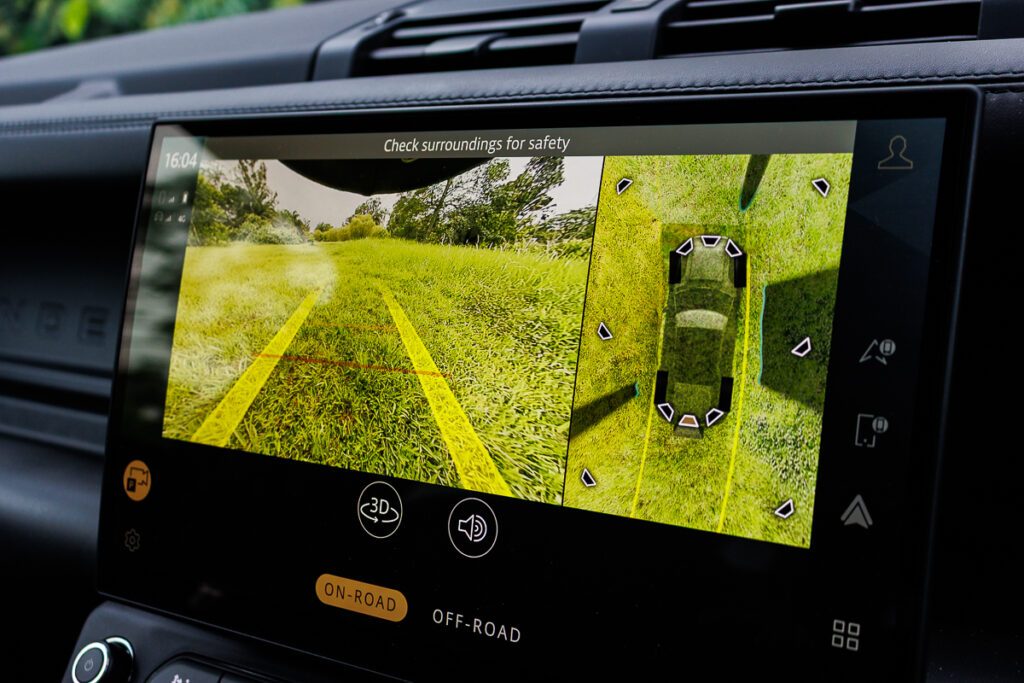
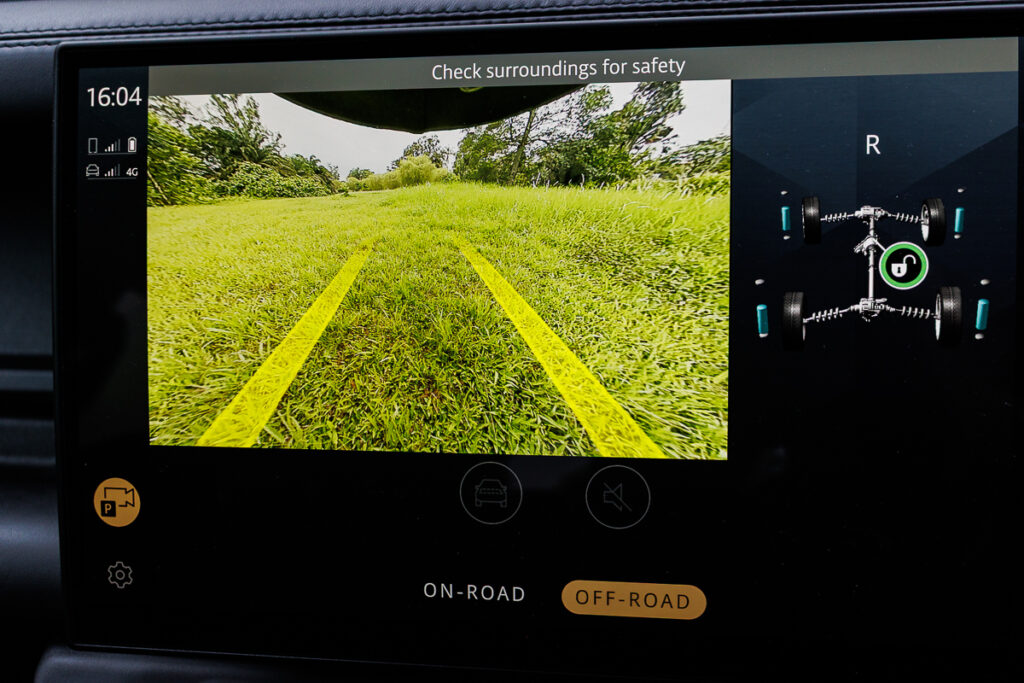
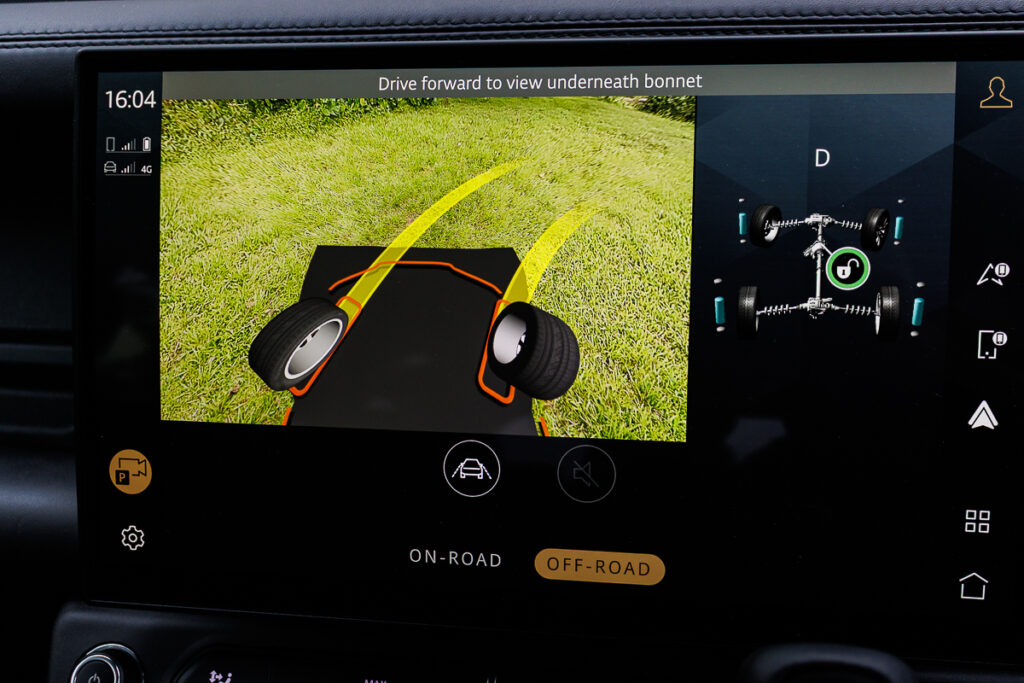
Even so, the Defender is surprisingly easy to manoeuvre around our tighter city streets. Visibility is excellent, thanks to the generous glasshouse and large wing mirrors, while the ClearSight Ground View cameras prove invaluable whenever things get particularly tight.
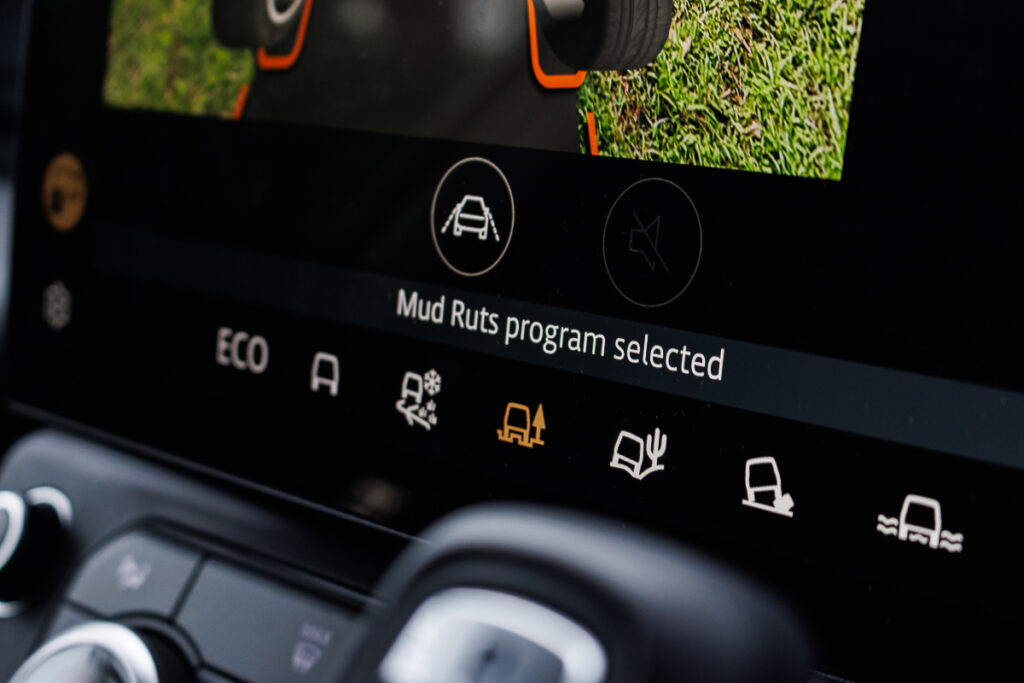
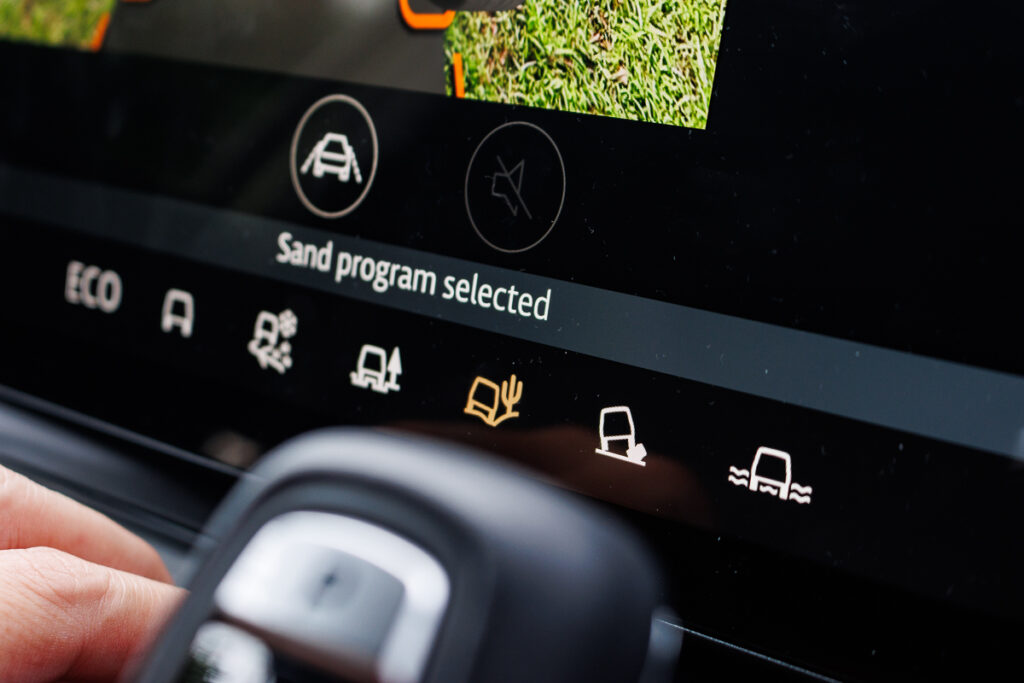
For something this robust, the steering is surprisingly light and accurate. It makes perfect sense, especially considering you wouldn’t want to wrestle with the wheel if you spent prolonged periods exploring trails. A while back, I had the opportunity to do exactly that in the forests of Taiwan’s Pingtung County, where the Defender’s light steering and impressive wheel articulation worked wonders.
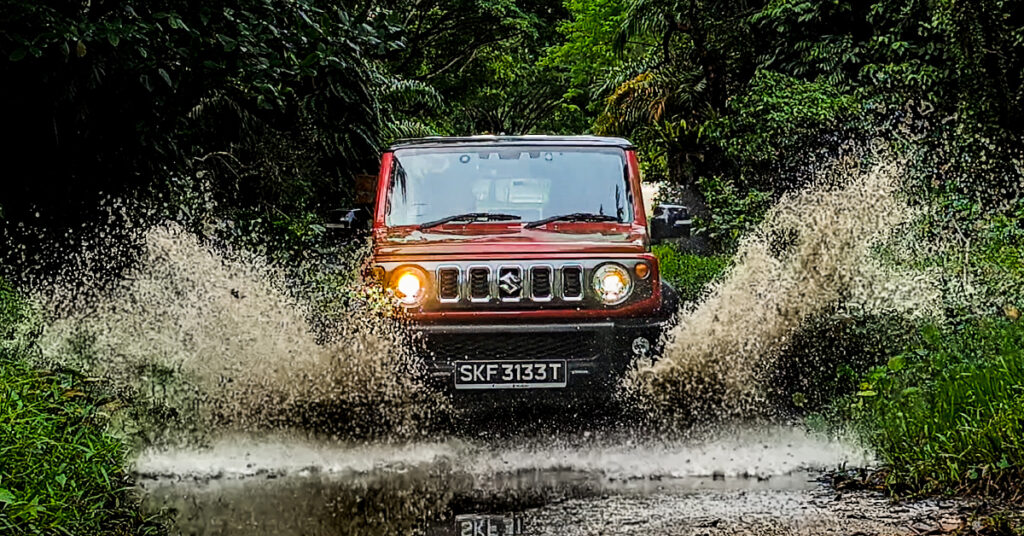
Made to do a lot more than just haul your troops
There’s no hiding the fact that the Defender’s V8 is a thirsty engine. Even when driven gently, I struggled to better an average of 8km/l. Then again, if you’re considering one, the pleasure of owning what is likely Land Rover’s last home-grown V8 probably outweighs the cost of filling the tank.
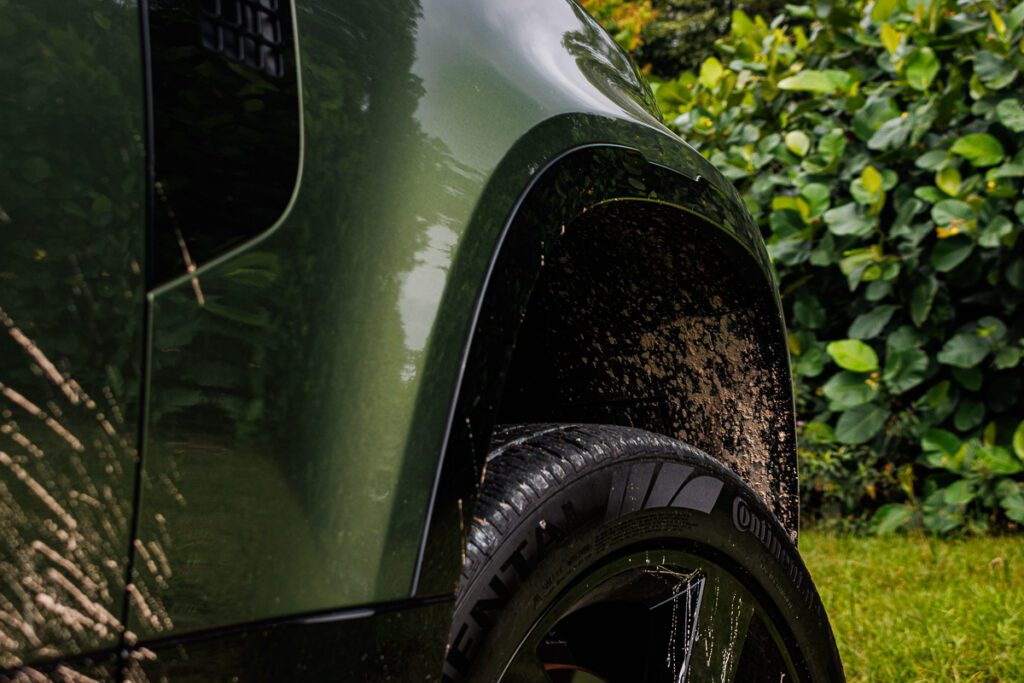
It would also be a terrible waste of such a magnificent V8 if it spent its entire life in the city. Not only would that squander everything that makes a Defender special, but the V8’s greater low-end torque and effortless delivery make it a far better companion than the 2.0-litre plug-in hybrid once the tarmac disappears. Besides, you’ll never have to think about finding somewhere to plug it in.
The Defender is undoubtedly a rare breed, even more so now that electrification has taken centre stage. While the carrot-and-stick approach makes an EV the sensible choice for many, I’d argue the Defender remains the choice for those who truly understand what Land Rover’s most iconic SUV is capable of delivering.
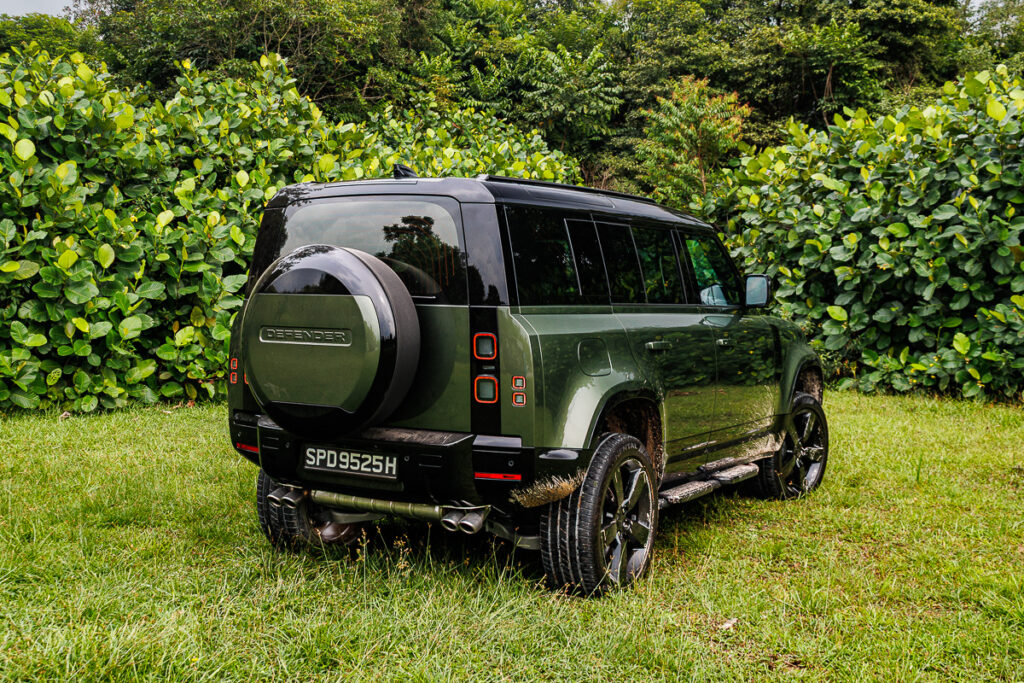
But I still want a muscular, go-faster V8 Defender!
I think Defender’s answer to that was simply, “Why not?”
The Defender OCTA is powered by BMW’s 4.4-litre twin-turbocharged V8 – the same engine found in the M5 and Range Rover. Here, it produces 617hp and 750Nm, paired with uprated suspension to match its formidable performance.
Text & Photos: Clifford Chow
| Pros | Cons |
|---|---|
| V8 has personality | Expensive |
| Pivi Pro infotainment system is very good | Drinks! |
| Off-roading prowess | We’d like to have that fridge in the middle compartment back please |
Land Rover Defender 110 V8
| Drivetrain | Petrol Supercharged |
| Layout | 1,997cc, V8 |
| Power / torque | 414hp / 550Nm |
| Transmission | 8-Speed |
| Efficiency | 7.9km/l |
| Fuel Capacity | 90 Litres |
| 0-100km/h | 5.8 Seconds |
| Top Speed | 240km/h |
| VES Band | C2 |
| Dealer | Wearnes Automotive |
| Verdict | Perhaps the last of its kind for JLR. The Defender V8 is a dying breed. |
- Lexus Expands Singapore Electrification Line-up With New ES and RZ

- Leapmotor C10 Electric 69.9kWh Review: Midsize Value
- Mazda CX Golf Day 2026: A Day of Golf, Cars and One Elusive Hole-in-One

- PUMA Launches Southeast Asia-Exclusive Motorsport Jerseys Ahead of Singapore Grand Prix 2026

- MINI Paul Smith Edition arrives in Singapore