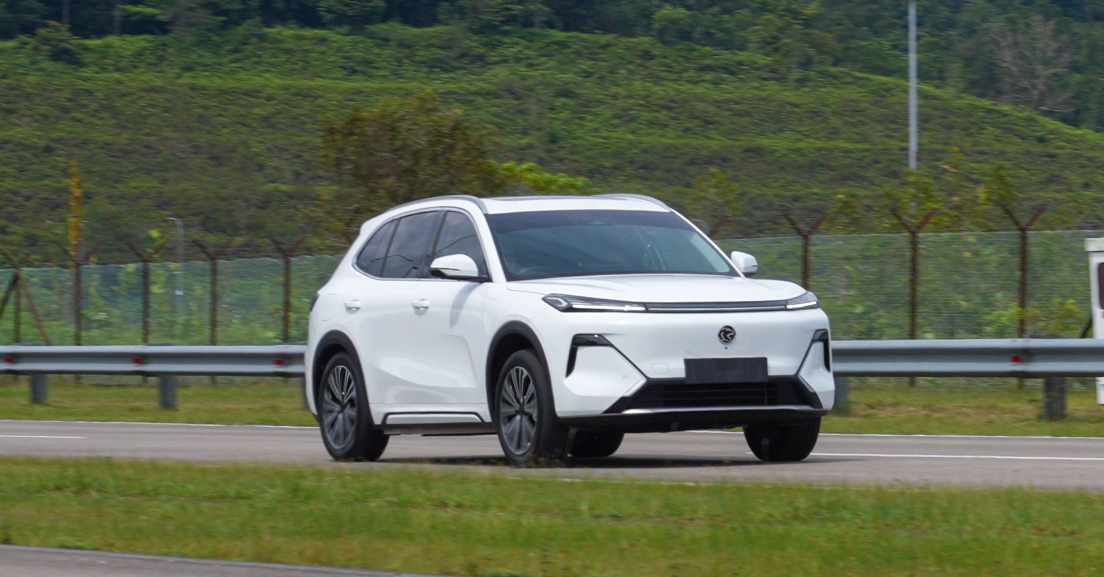


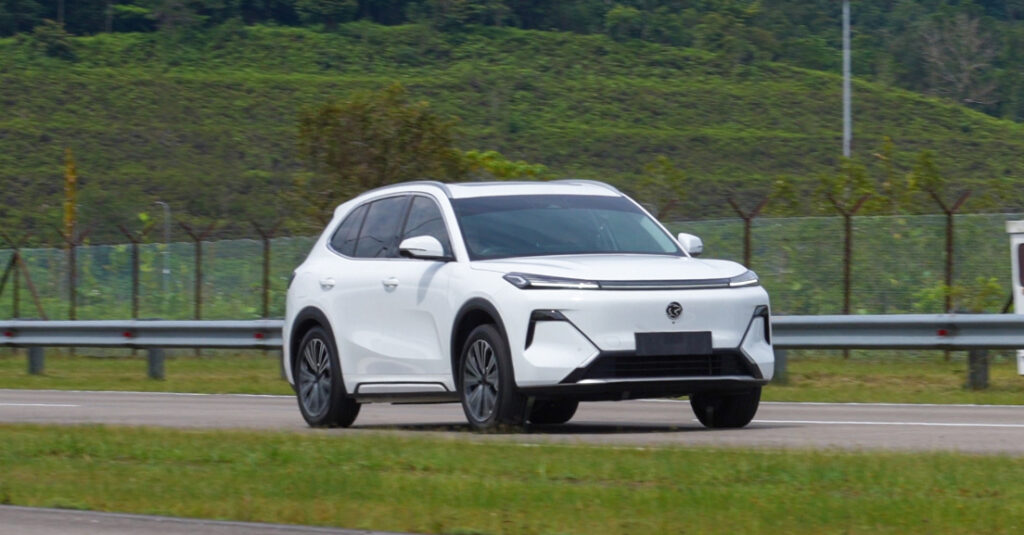
We got our first driving impressions of the new Proton e.MAS 7 PHEV. Smooth driving, electric-first, and better than we thought
A short while ago, we were invited to pay a visit to Proton City, in Tanjung Malim, Malaysia, where we got ourselves acquainted with two of Proton’s new electrified models. We had a first drive of the B-Segment Proton e.MAS 5, which we wrote about earlier.
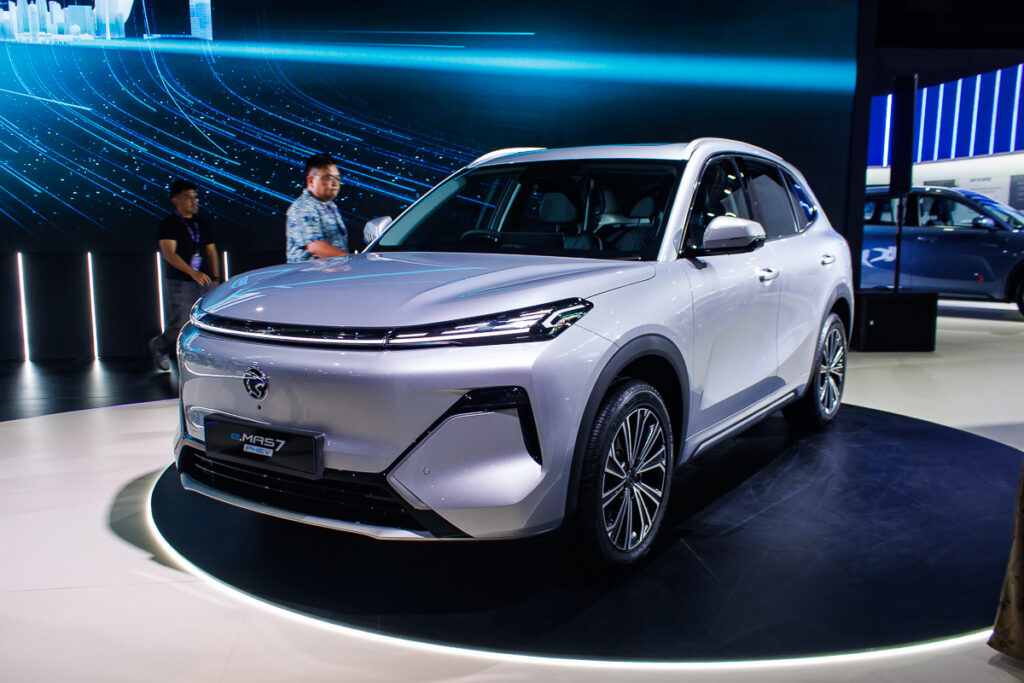
The second car that Proton unveiled to us was the e.MAS 7 PHEV – The Malaysian carmaker’s first-ever plug-in hybrid electric vehicle (PHEV)… well, I mean hence the name…
Slated to arrive this second half of 2026, we were quick to learn that the plug-in hybrid version of the e.MAS 7 is actually slightly longer than its EV sibling. The slight difference in body length means that the Proton e.MAS 7 PHEV’s 528 litre boot is 67 litres larger than its EV sibling. However, due to the placement of its battery, the hybridised SUV lacks that huge under-boot storage.
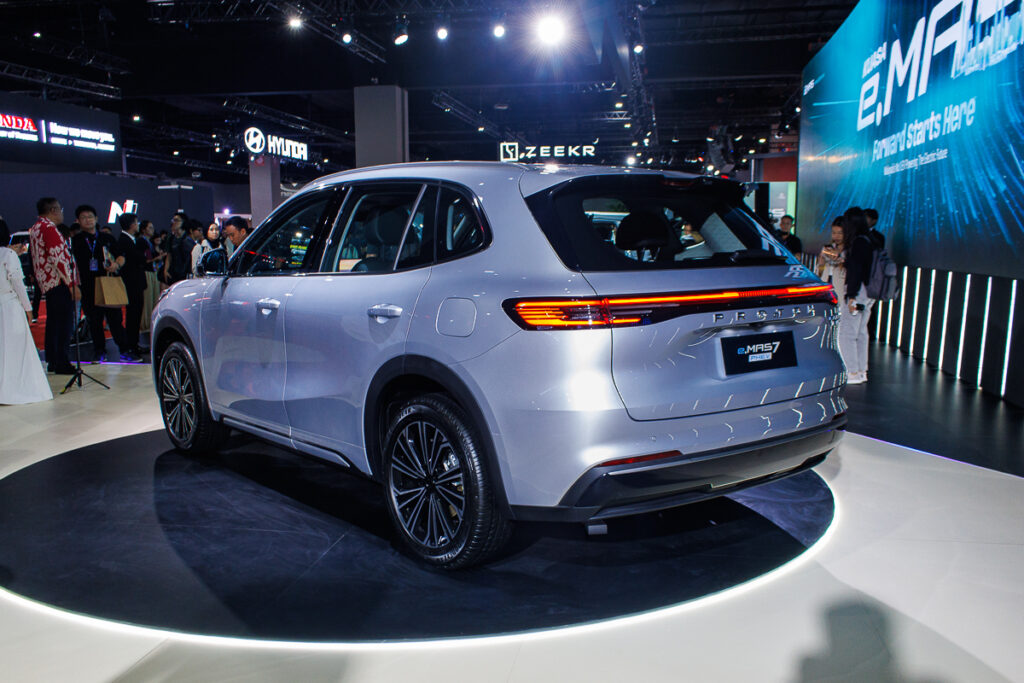
Other key visual differences include a light bar in the front, a different headlamp design and the omission of that “Salvador Dalí” moustache. At the rear, the license plate holder sits below the ‘PROTON’ nameplate, rather than on the bumper.
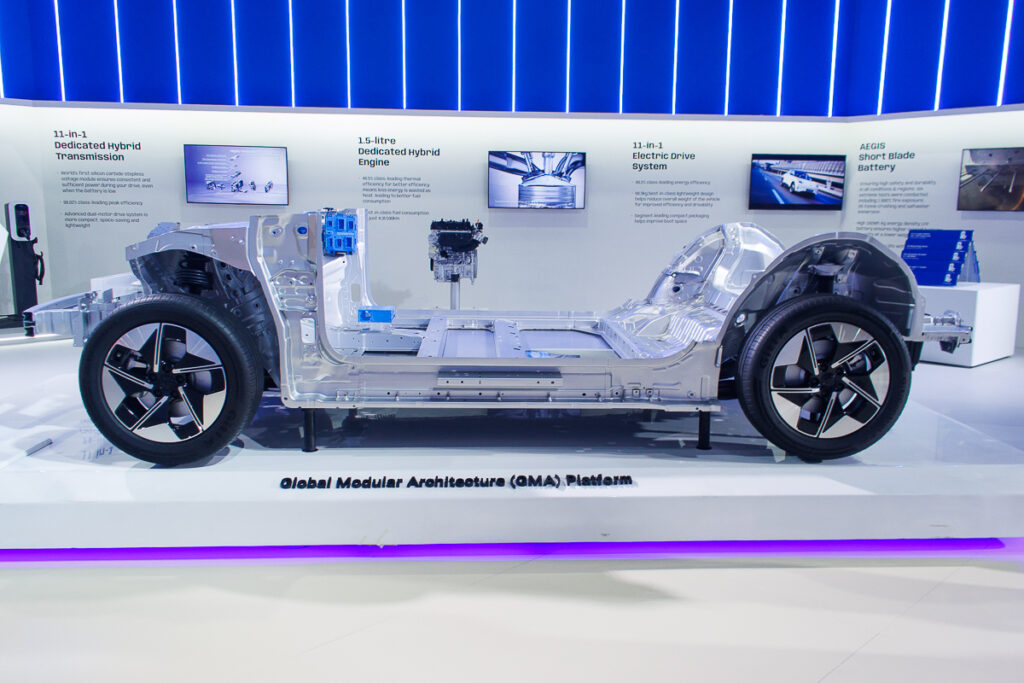
In its home country, there are three variants of the e.MAS 7 PHEV on sale – the Prime, Premium and Premium Plus. For Singapore, we hear that only the Premium Plus will be made available. This will come equipped with the larger 29.8kWh LFP battery.
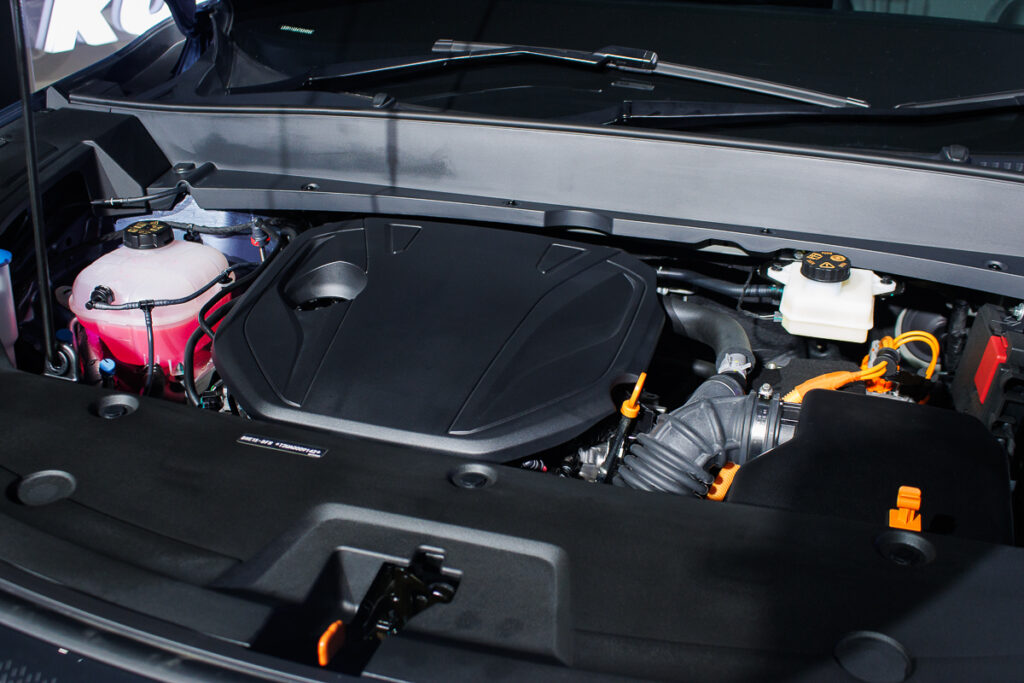
The e.MAS 7 PHEV is powered by a 1.5 litre four-cylinder Dedicated Hybrid Engine (DHE), paired with an 11-in-1 Dedicated Hybrid Transmission (DHT). The naturally-aspirated Atkinson cycle engine is intended for efficiency rather than power delivery. Here, it produces 98hp (73kW) and 155Nm. The transmission houses the generator motor and traction motor, the latter which drives the car. The traction motor puts out a healthy 215hp (160kW) and 262Nm of torque. In all, the e.MAS 7 produces a system output of 259hp (193kW) and 262Nm.
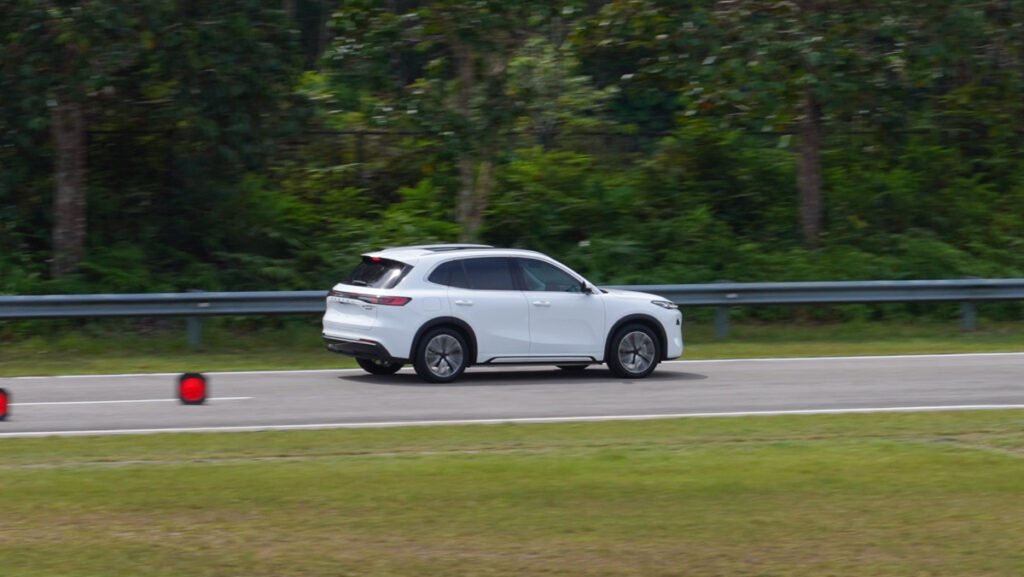
The transmission delivers smoothness similar to that of a CVT, but without the need for mitigation for belt slip, since it runs on a planetary gear setup. Depending on driving inputs and conditions, e.MAS 7 PHEV decides the best course of output, be it in Series or Parallel Hybrid modes, or even in pure EV mode.
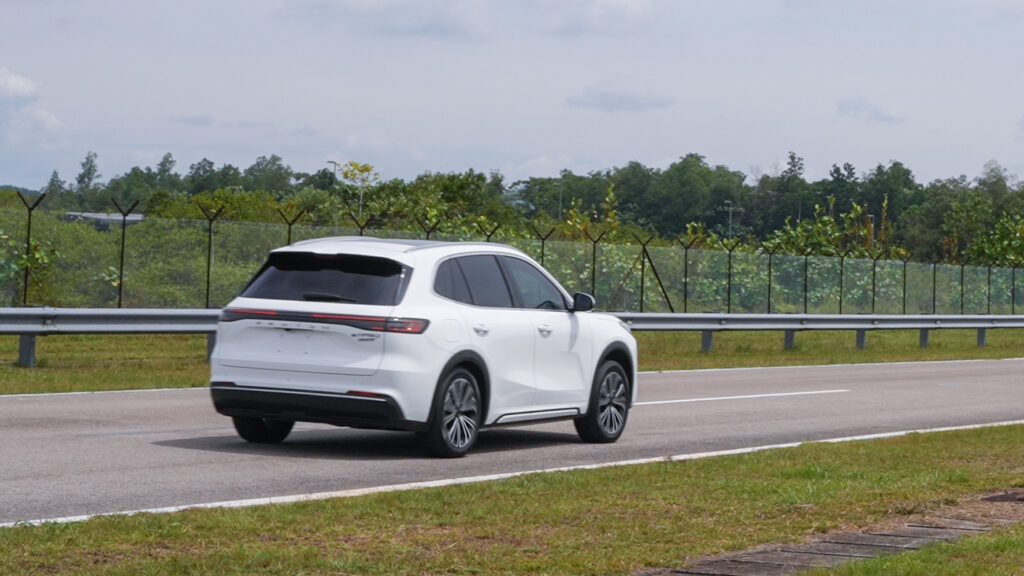
Like current day PHEVs, the Proton’s powertrain drives electric-first. Acceleration is characteristically smooth, since the motor does the brunt of the work. Once up to speed, the engine begins to ease into drive. As we were on Proton’s oval test circuit, I began to build speed. For the most part, the engine operates silently. But with my foot on the floor, the 4-cyl begins to get slightly vocal.
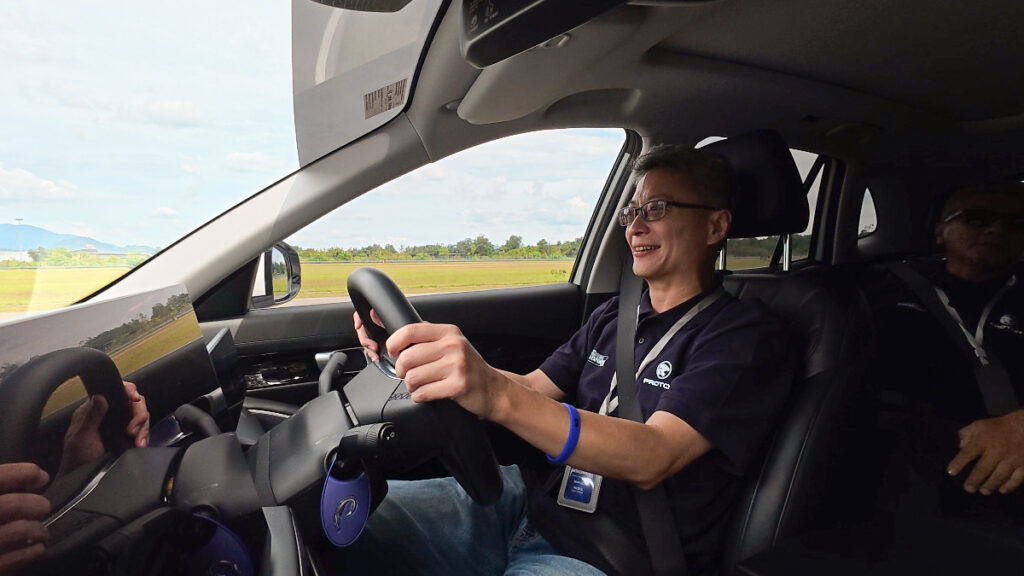
Aside from the powertrain, the other notable difference between the PHEV and electric e.MAS 7 model, would be that the steering here feels more weighted. The suspension too feels less floaty and slightly firmer. In-short, the e.MAS 7 PHEV actually feels more confident at higher speeds and more planted around turns than the EV.

Going the distance
With new battery and transmission technology, it is no surprise that modern PHEVs can clock way longer distances than the ones produced just a generation before. According to Proton, the e.MAS 7 PHEV is able to deliver up to 1,065km of range, which is the distance from Singapore to Songkhla in Thailand, with “spare change”.
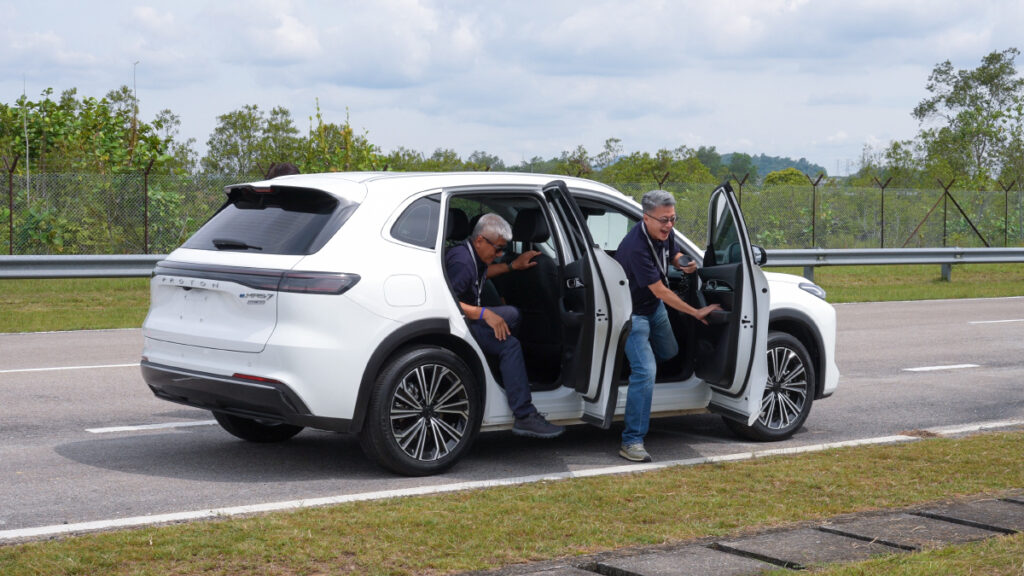
Just to provide contrast, older PHEVs I have sampled prioritised engines first, with the electric drive often doing the work when taking off from the lights. Some of these lacked charging via regenerative braking, and had EV-only ranges of under 50km; which would have meant that in order to take advantage of the electric drive, you’d need to plug the car in just about every day.
One generation… that is how far we have come.
- Mercedes-AMG GLC 53 4MATIC+ Arrives in Singapore from S$475,888
- McLaren Golf Tees Off in Singapore with Leonian
- Rolls-Royce Project Nightingale Begins Global Road Testing. Includes 15,000 Cycles of Opening and Closing its Piano Boot
- Deepal S05 68.82kWh Review: Above Expectations

- Maserati Grecale Gets Colourful with Devil Orange and Verde Royale