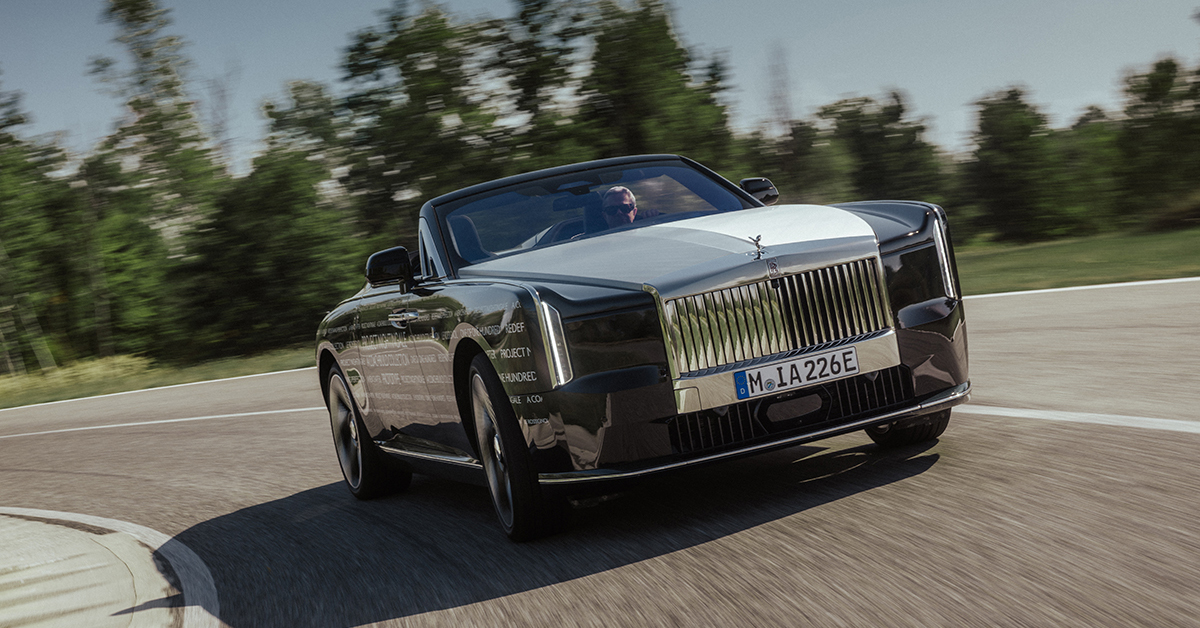


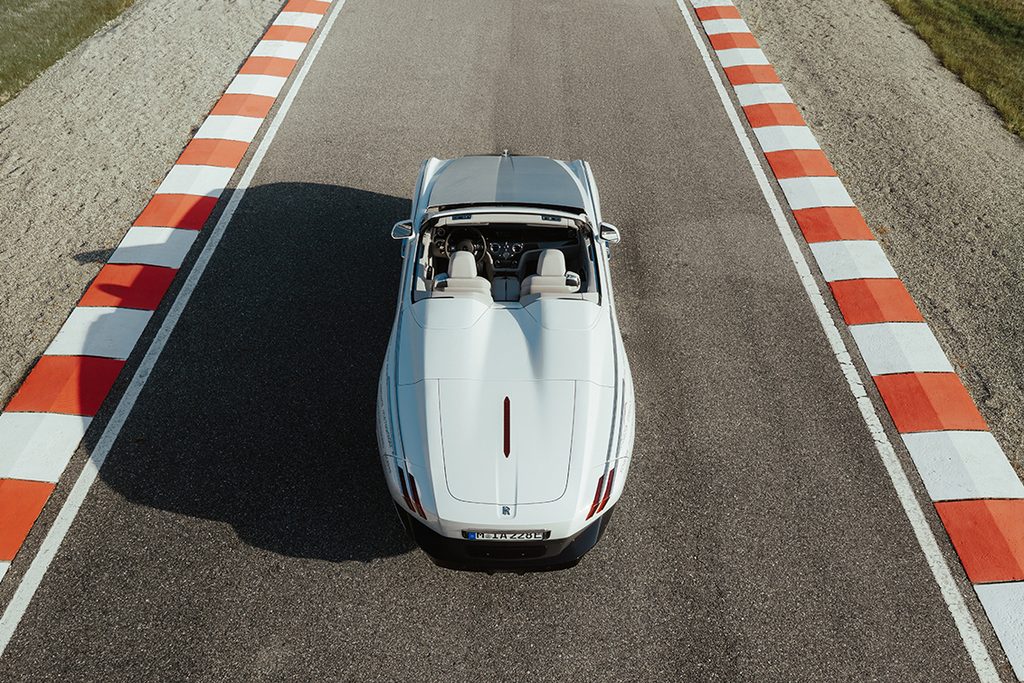
The ultra-exclusive, all-electric Rolls-Royce Coachbuild Collection will undergo 350 collective weeks of testing, including 15,000 cycles of opening and closing its rather theatrical Piano Boot.
Goodwood, UK — Building a Rolls-Royce is clearly not a matter of simply assembling a few expensive bits of leather, wood and metal, then calling it a day. With Project Nightingale, the British luxury marque is taking its obsession with perfection to another level, beginning a global on-road testing programme for its latest Coachbuild Collection.
Announced in April 2026, Project Nightingale will be limited to just 100 client motor cars. Combining bespoke coachbuilding with an all-electric powertrain, it represents Rolls-Royce’s most extravagant expression of its capabilities to date.
And apparently, making something this exclusive requires an extraordinary amount of homework. Rolls-Royce engineers will devote a collective 350 weeks to testing the car, ensuring it delivers the refinement and effortlessness expected of the marque, regardless of where its owners choose to drive it.
From the French Riviera to the Arctic Circle
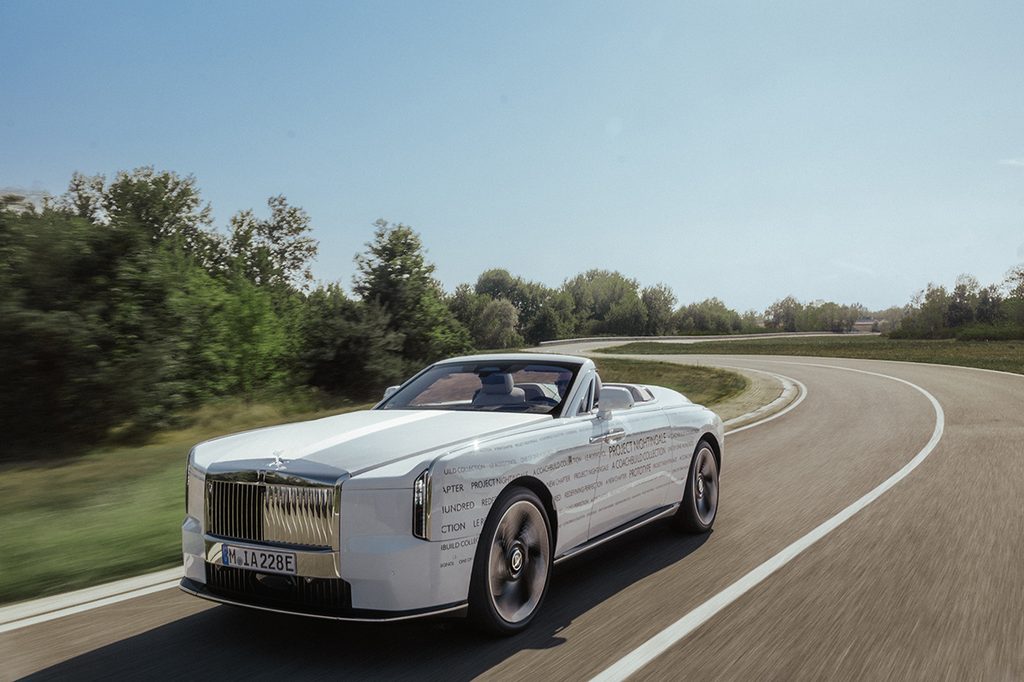
The testing programme begins in Southern Europe, returning Rolls-Royce to the roads where it established its rigorous approach to motor car development more than a century ago.
Project Nightingale takes its name from Le Rossignol, French for ‘the nightingale’. It was also the name of the house Sir Henry Royce built for his designers and engineers near his winter home on the French Riviera.
In the early 20th century, Rolls-Royce engineers conducted extensive speed and durability testing from this base, as well as at the marque’s test facility in Châteauroux and along the roads between Monte Carlo and London.
More than 100 years later, Project Nightingale will continue that tradition, although its testing itinerary is considerably more ambitious. Prototypes will travel from Mediterranean coastal roads to the Arctic Circle and the deserts of the Arabian Peninsula, experiencing extreme temperatures and altitudes of up to 2,750 metres.
The programme will assess how the car performs in the environments its future owners may encounter, rather than simply ensuring it behaves itself in the relatively civilised surroundings of a laboratory.
1,430 hours of aerodynamic homework
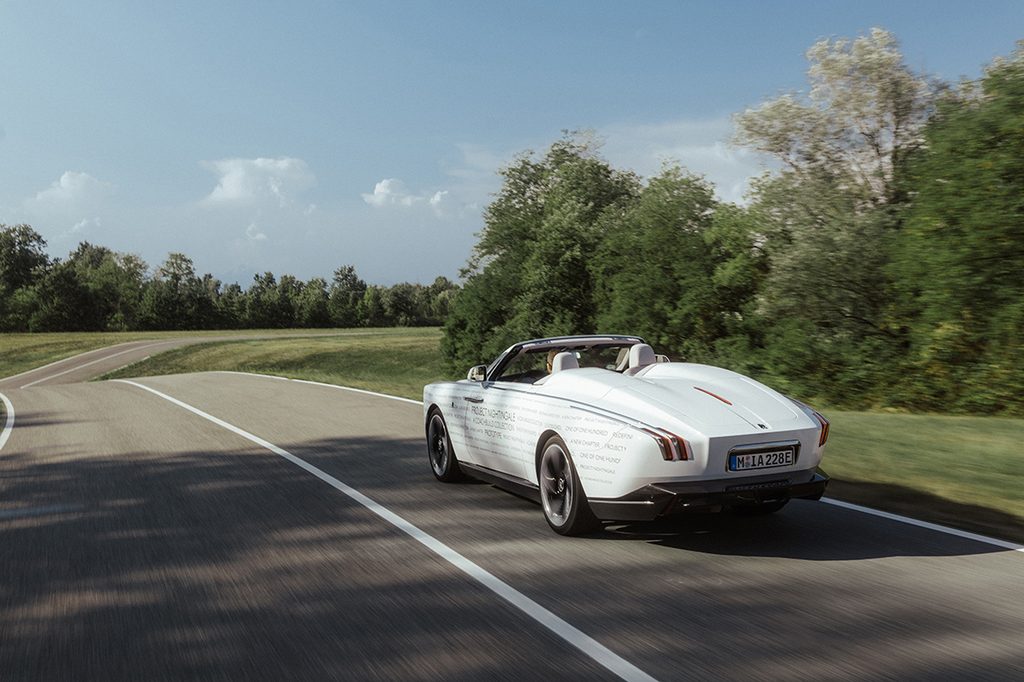
Project Nightingale’s development journey began almost three years ago, with static prototypes already having completed more than 1,430 hours of aerodynamic modelling, digital simulations and wind tunnel testing.
The next phase will validate these findings at a private high-speed testing facility, where the car will reach speeds of up to 155mph (249km/h).
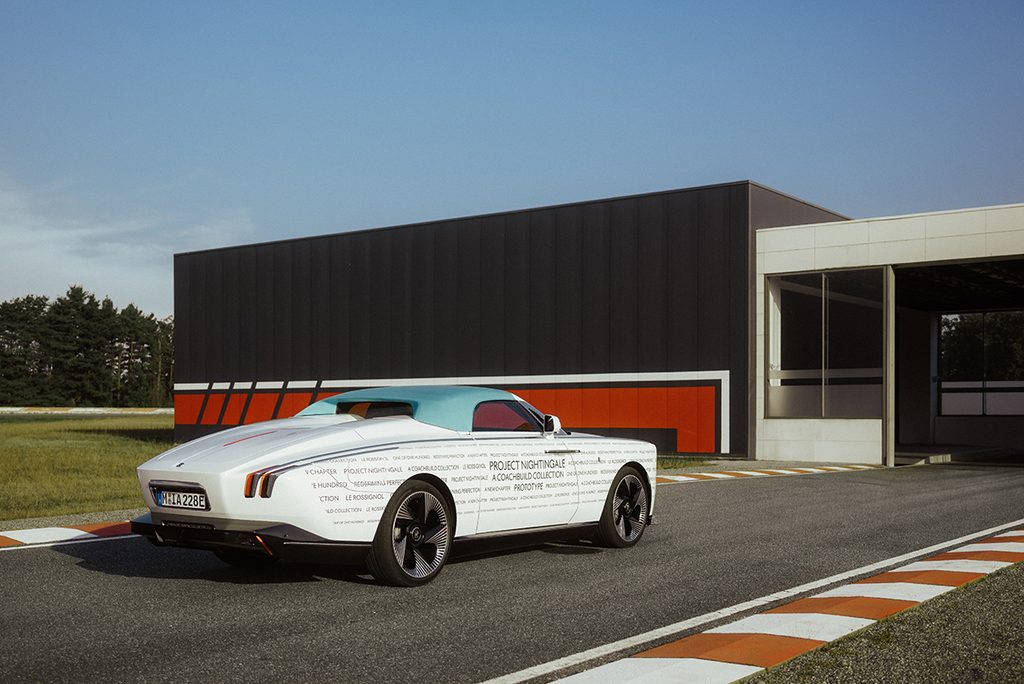
A key priority is suppressing wind noise to barely perceptible levels, preserving the quiet, effortless driving experience that defines a Rolls-Royce.
This is particularly important for a car designed to be enjoyed with its roof lowered. Rolls-Royce has developed and patented a fully electric wind deflector specifically for Project Nightingale, designed to prevent high-pressure air from swirling forwards into the cabin from behind.
The system will be tested at various speeds to minimise cabin turbulence while helping to retain warmth when the car is driven in colder climates with the roof down.
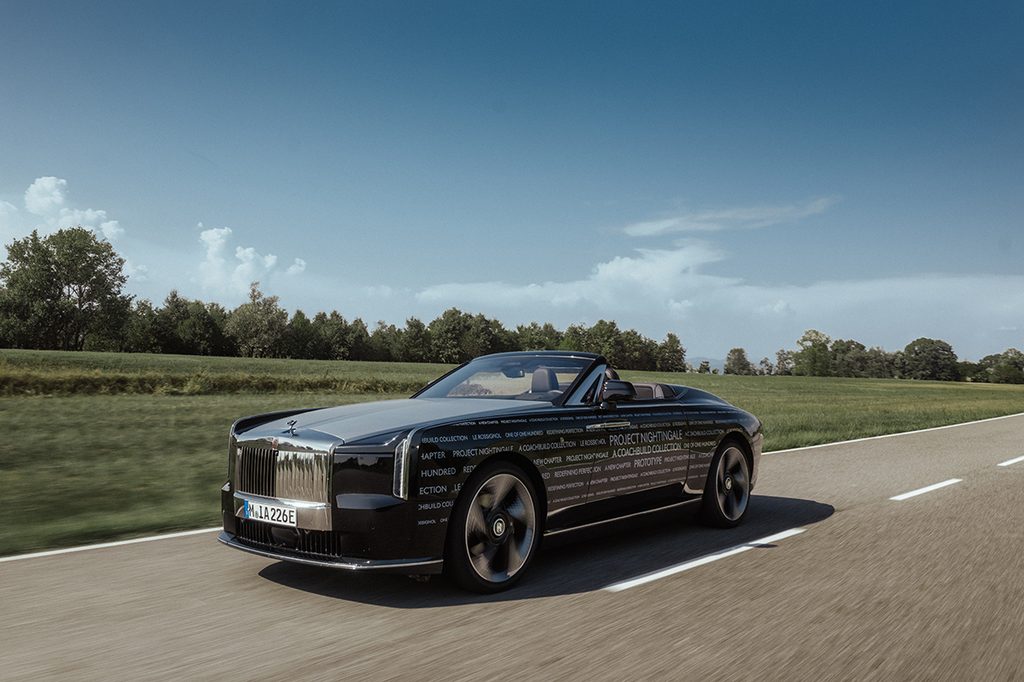
Keeping the elements out
The roof itself will undergo 10 separate tests covering its fabric, closing mechanism and performance at temperatures of up to 80 degrees Celsius.
Lined with a bespoke sound-deadening material combining cashmere, fabric and high-performance composites, it is designed to preserve the car’s refinement even when the weather has other ideas.
The testing reflects the expectations of Project Nightingale’s commissioning clients, who intend to drive their cars throughout the year, wherever in the world they happen to be.
Then there is the Piano Boot, a feature never before seen on a Rolls-Royce. Opening sideways on a cantilever, it is designed to turn accessing the luggage compartment into something of an occasion.
To ensure that the theatrical flourish does not become a theatrical failure, the mechanism will undergo up to 15,000 opening and closing cycles. The aim is to preserve its smooth, effortless operation for generations to come.
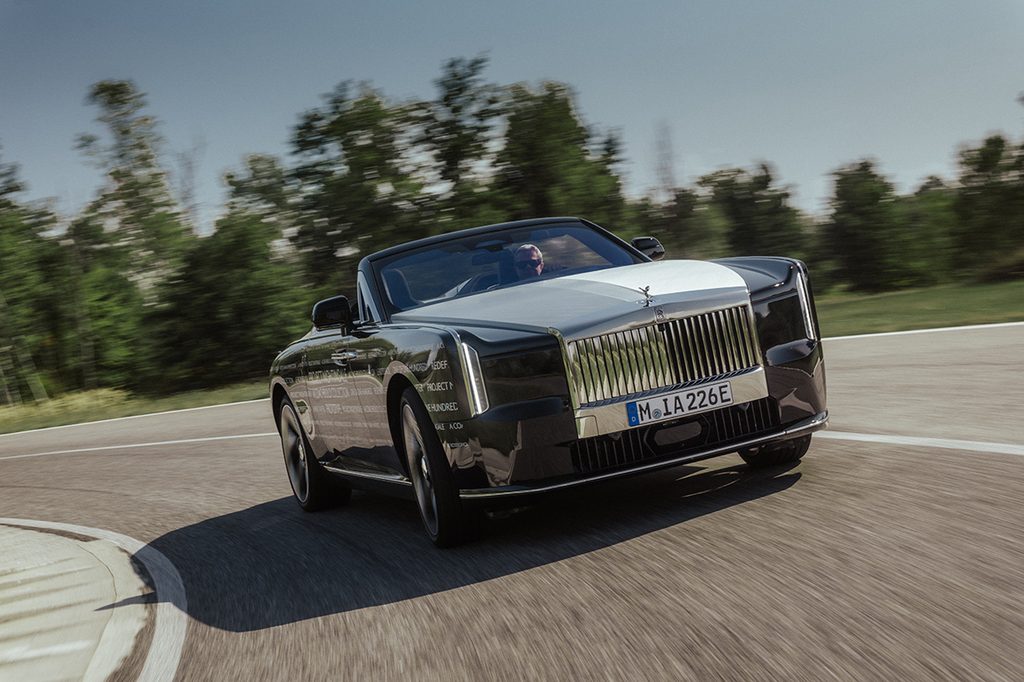
Engineering meets instinct
For all the digital modelling, instrumentation and endurance testing, Rolls-Royce insists that not everything can be measured.
The judgement and instinct of its most experienced engineers remain essential in determining whether Project Nightingale achieves the serenity, authority and refinement expected of the marque.
As Chris Brownridge, Chief Executive of Rolls-Royce Motor Cars, explains, the project draws on the same spirit of experimentation that inspired Sir Henry Royce’s ‘EX’ motor cars in the 1920s — a desire to discover what Rolls-Royce could achieve without being constrained by convention.
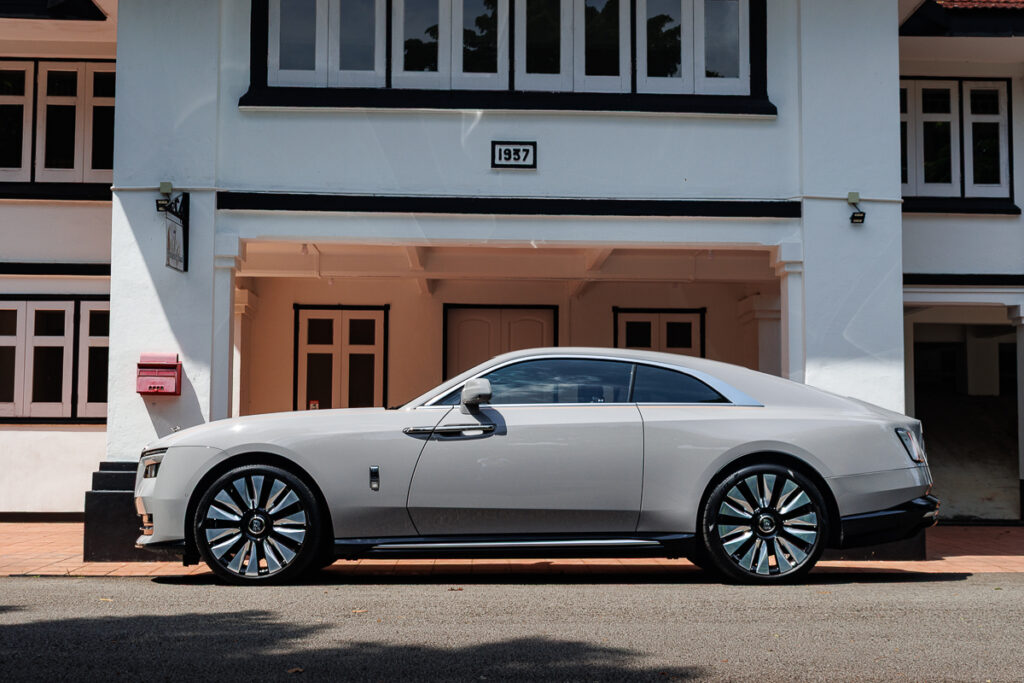
With just 100 examples planned, Project Nightingale is already an exercise in automotive exclusivity. But before these electric coachbuilt creations reach their owners, Rolls-Royce wants to ensure that every detail, from aerodynamic performance to the sound of the boot closing, lives up to the badge.
Photos: Rolls-Royce Singapore
- McLaren Golf Tees Off in Singapore with Leonian
- Rolls-Royce Project Nightingale Begins Global Road Testing. Includes 15,000 Cycles of Opening and Closing its Piano Boot

- Deepal S05 68.82kWh Review: Above Expectations

- Maserati Grecale Gets Colourful with Devil Orange and Verde Royale

- 2026 Volvo ES90 Electric Ultra 92kWh Review: A Scandi Flick