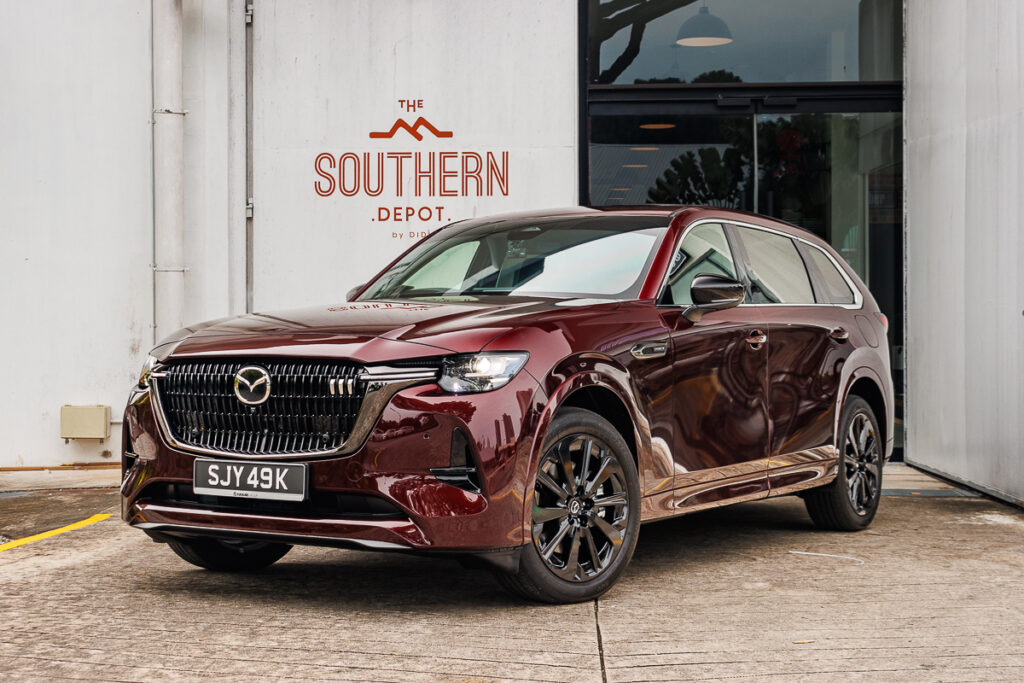
Mazda’s first PHEV, the CX-80 takes on the likes of the BMW X5, Mercedes-Benz GLE, Lexus RX and Volvo’s XC90, but just. It does, however, have one huge advantage over the competition.
Singapore – While the Mazda CX-80 and the smaller CX-60 mark the brand’s serious push into the luxury sector, some of you may remember Mazda’s creation of the Amati marque, back in the early 90s. But unfortunately for the Japanese carmaker, this ambitious move turned out to be a flash in the pan, when recession hit. But not all was lost. One of the cars which lived on, badged as the Mazda Millenia, was worthy competition to the Lexus ES.

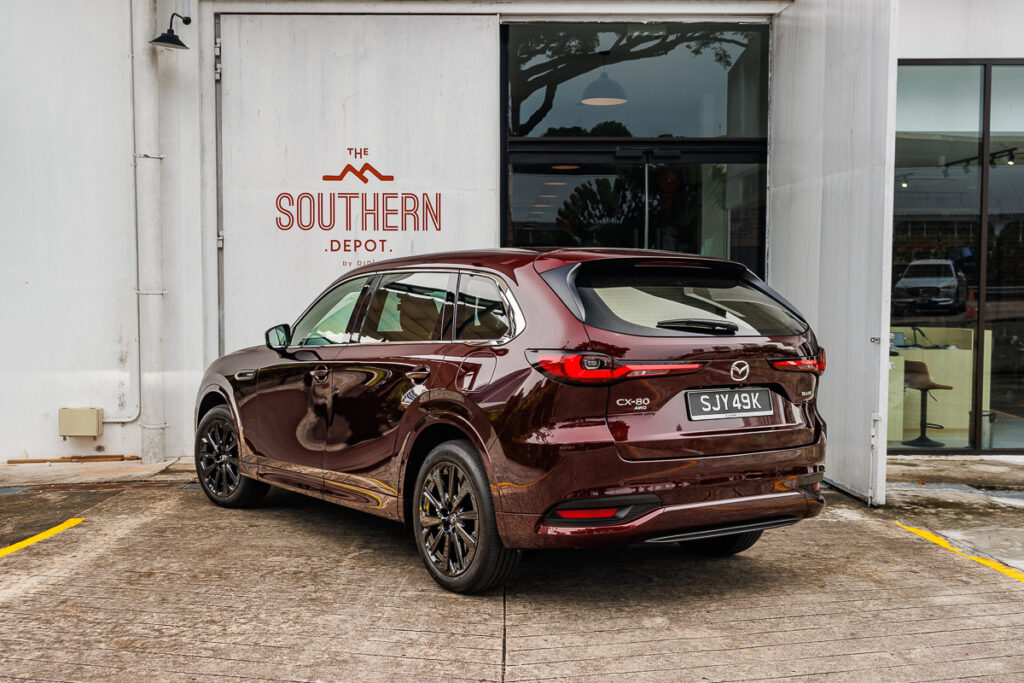
With their introduction of their Large Product Group architecture, where the engine is oriented North-South, Mazda seems to be going in the right direction (pun intended). The CX-80 is essentially a CX-60, stretched to accommodate three rows. Which is quite like how the BMW X7 is very much like a stretched X5.

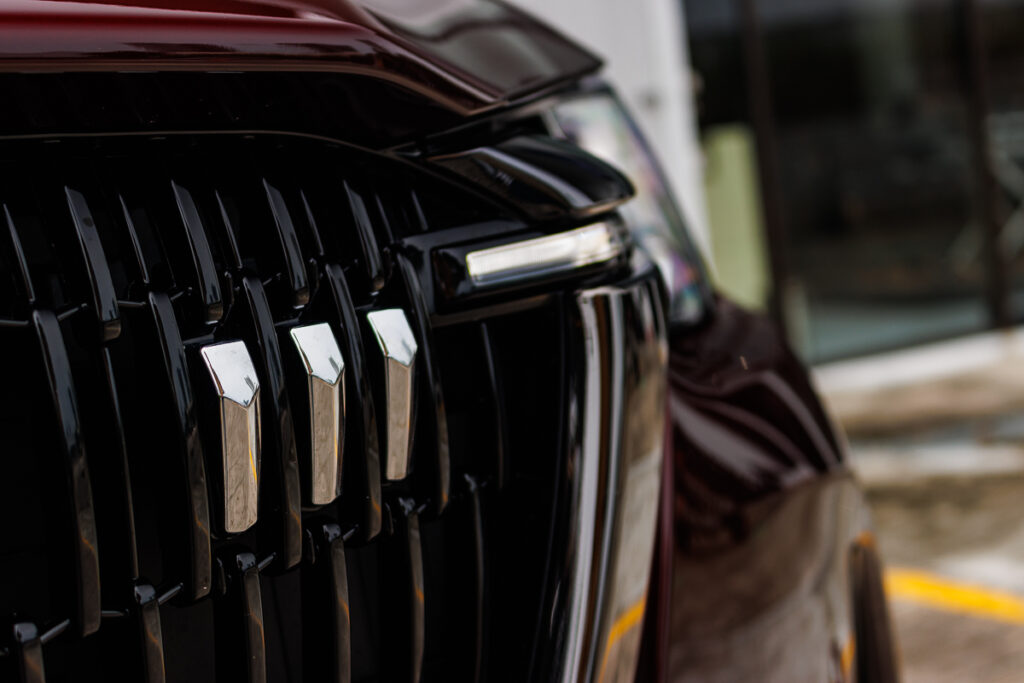
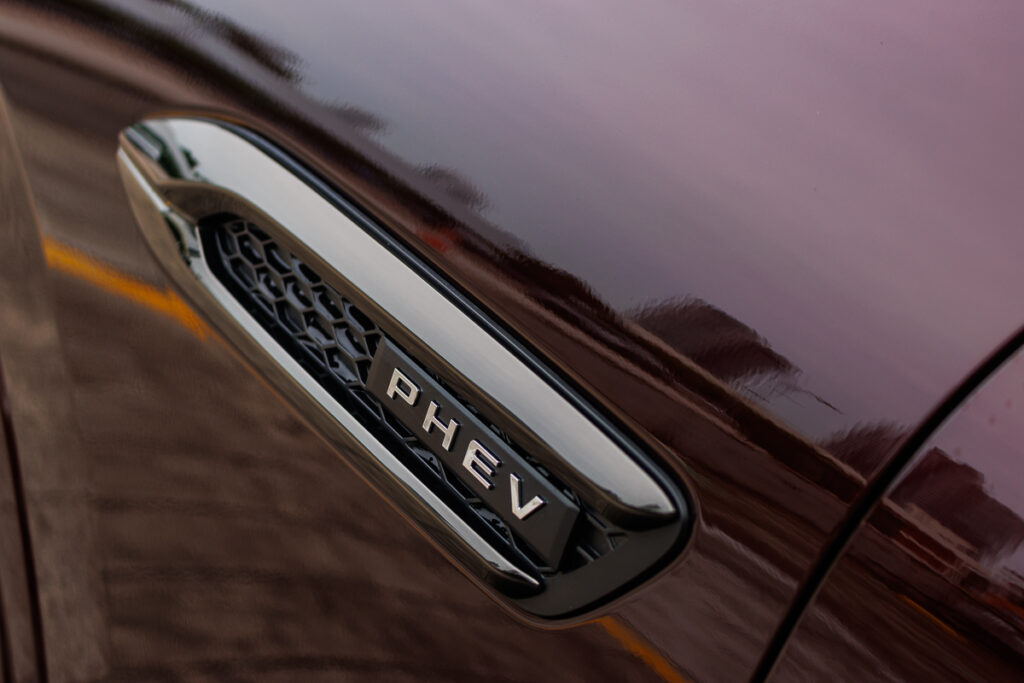
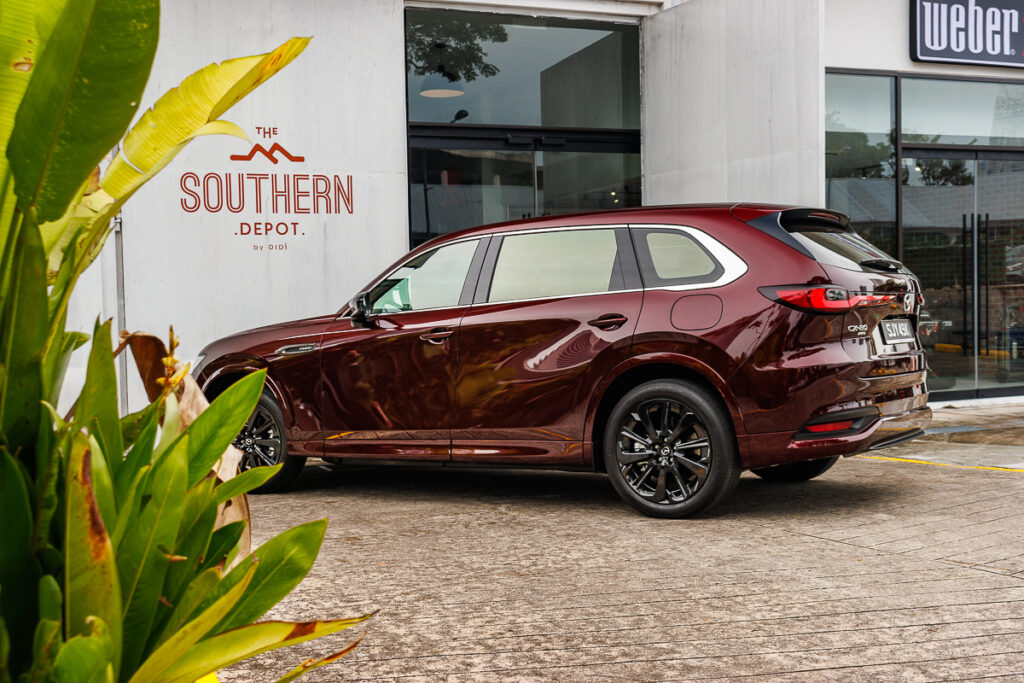
But while the CX-80 is an elongated CX-60, visually, it is still proportionate. Mazda’s Kodo design language, while emotional and extroverted, like on the smaller CX-60, is executed with restraint. A key element is the play on the use of negative space on the SUV’s doors, which delivers a certain fluidity and depth. The Artisan Red Metallic premium paint on this car (one of four premium paint options), brings about stronger highlights and shades, which in-turn amps-up the CX-80’s body contours.
Three is a Cloud
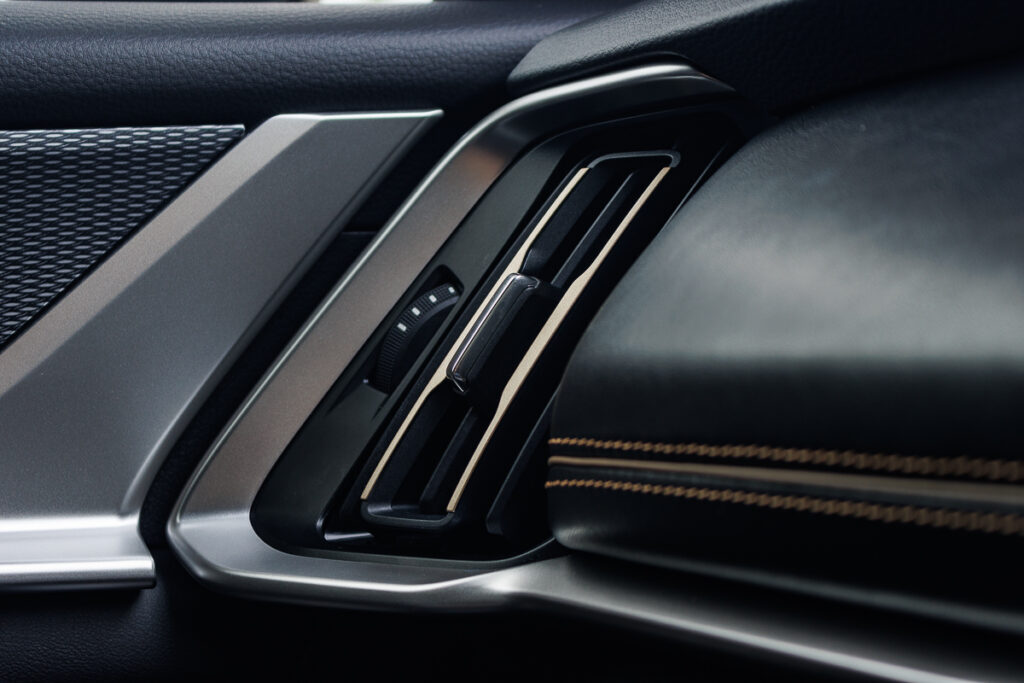
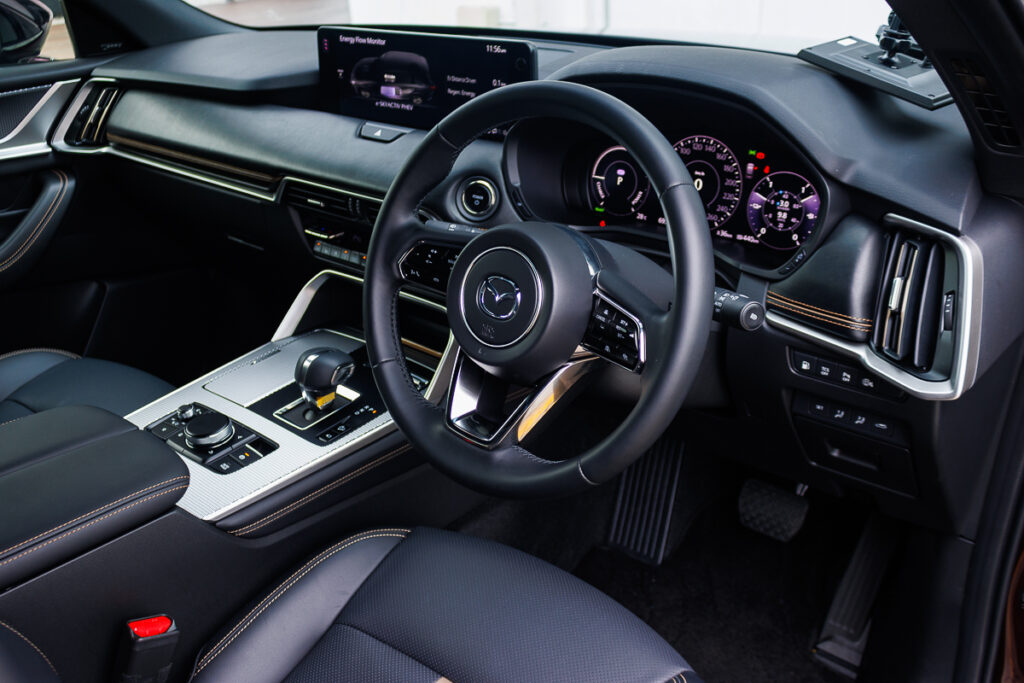
On the inside, the CX-80’s dashboard is a direct carry-over of the one found in the CX-60. This is not a bad thing at all, since materials are of high quality, while fit is very good. I would dare say that the Mazda’s interior is quite comparable in quality to what you’d find in its German counterparts, and also the Lexus RX.
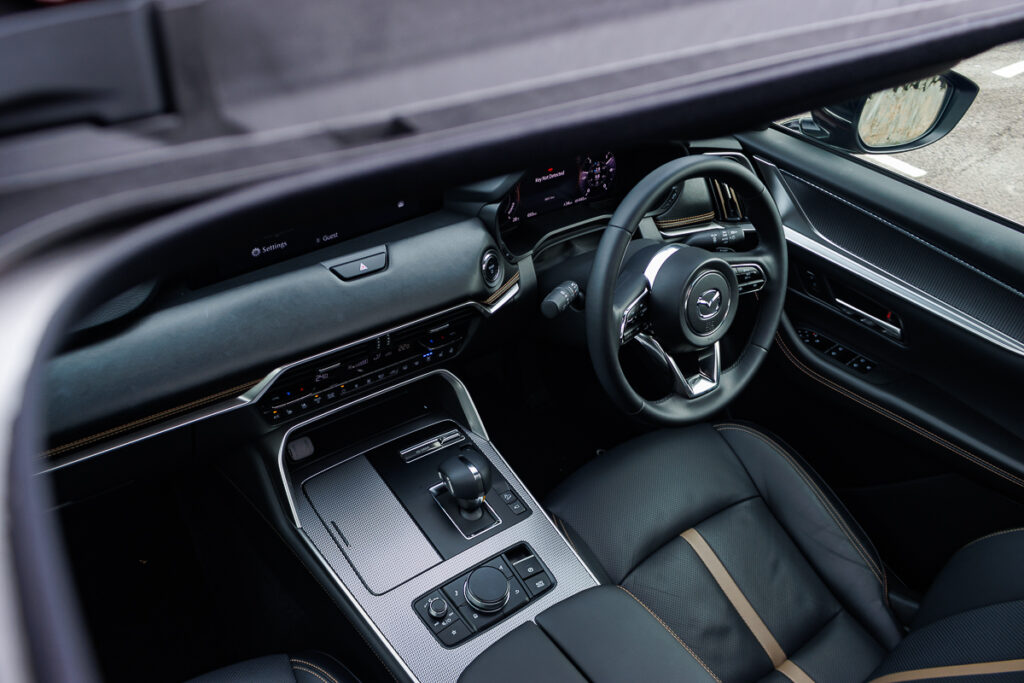
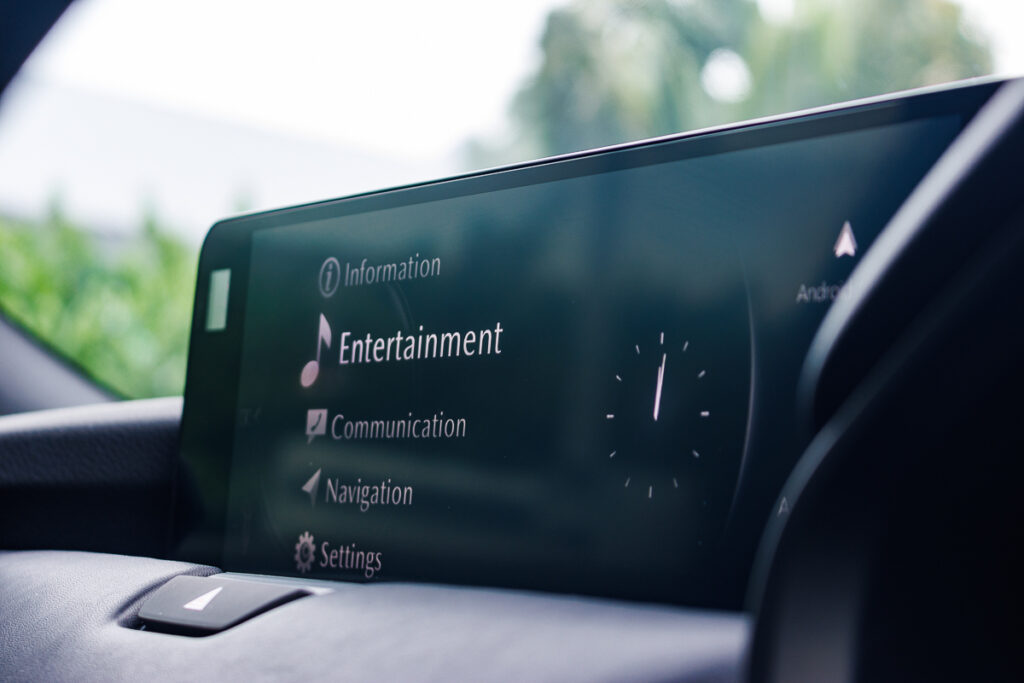
Mazda’s choice of a more rectangular format for its infotainment screen I feel, is clever, as the 12.3-inch unit, which displays in default white-on-black, distracts little, helping you to keep your eyes on the road. I do find it strange though, that till now, only Apple CarPlay is offered with wireless connectivity, while those who use Android Auto, still have to make-do with a cabled connection. Toggling the infotainment is via a rotary dial, located on the centre console. This may be one of the easiest systems to navigate, but the interface does come across as somewhat dated, and seemingly too simple, when compared to today’s feature-filled systems (especially in a time of screen size wars). However, I do like that it is probably also among the least intrusive.

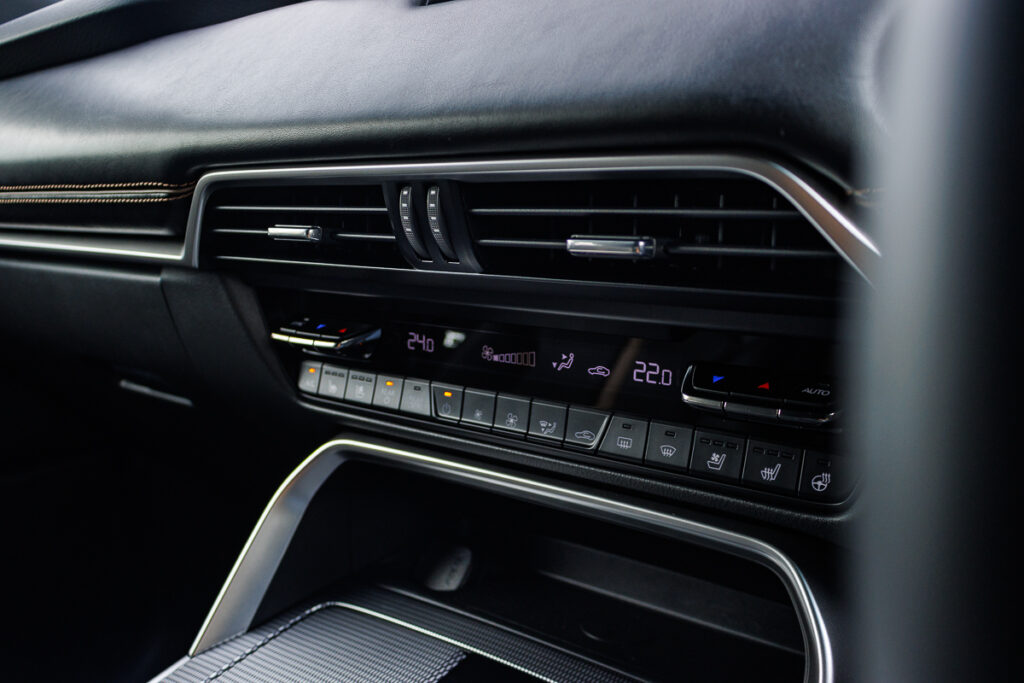
Unlike the many brands who have now embedded the climate control function into their screens – something which I see as a cost-cutting measure, Mazda has stayed on the right course, by keeping these functions as separate physical buttons.
While most of the upholstery is slathered in Nappa leather, the front seats are the best in the house. Over here, they are padded enough, offering very good comfort for your longer journeys; and for those warmer days, you need not worry since both seats are ventilated. There is a ‘Driver Personalisation System”, where you can input your height for the seat to be adjusted to the correct position, after which you can make fine adjustments to the seat, steering and mirrors. This works in tandem with face recognition, which adjusts the seat, wing mirrors and steering, in accordance to the person on the saved preset using the vehicle.

As the CX-80 has a wheelbase which is 250mm longer than its CX-60 sibling, middle row passengers will definitely appreciate the added leg space. Access to the third row, via a ‘one-touch walk-in’ button, located at the base of both middle row seats. At a touch, the corresponding middle row seat folds and rolls out of the way, making access a breeze.
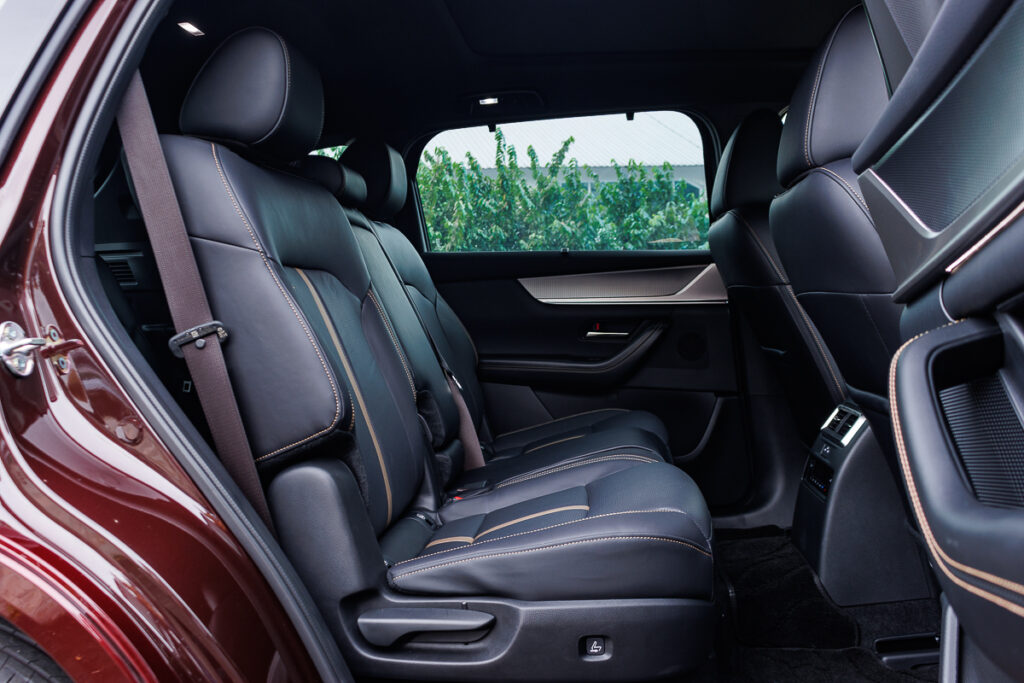
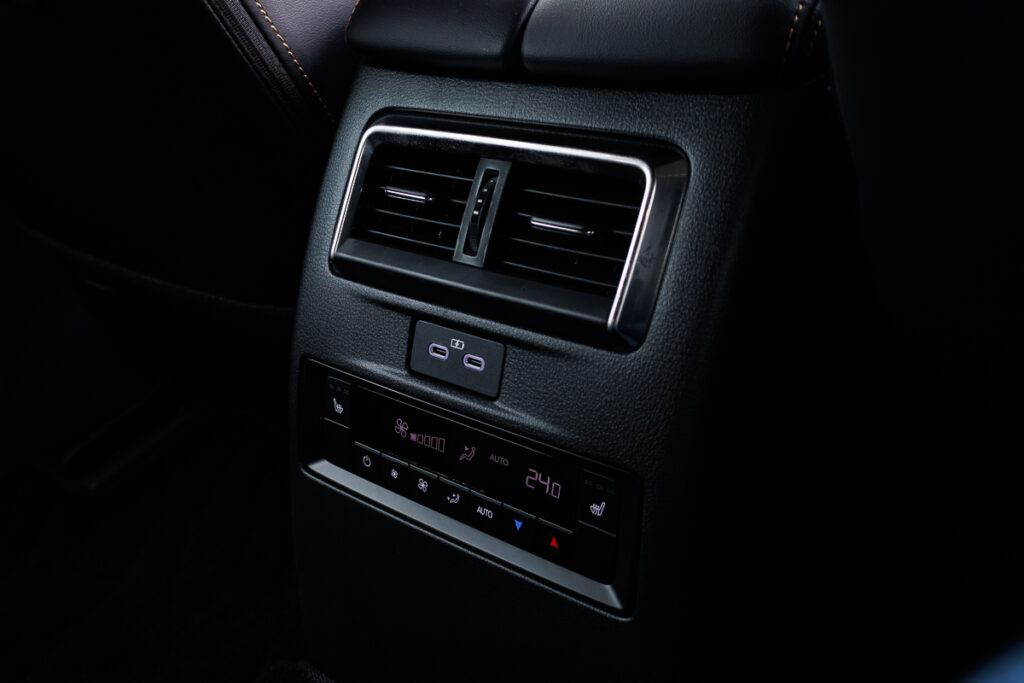
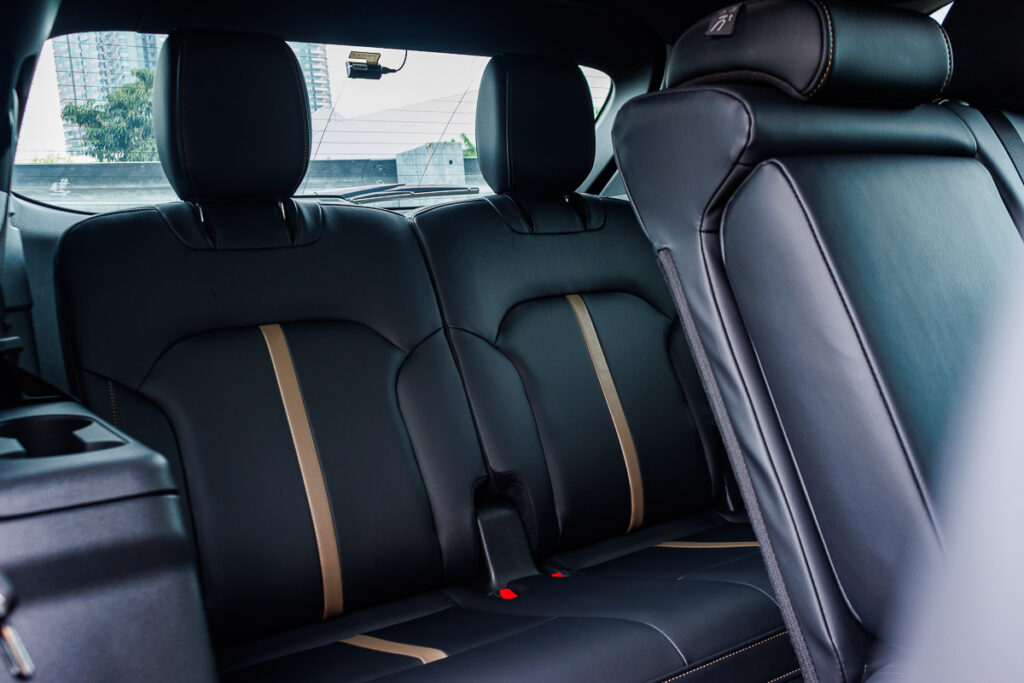
While you may not have heaps of space in the third row, the CX-80 is still a full seven-seater, therefore rear passengers will still travel in relative comfort. Head and hip room is sufficient for the average-sized person, and the seats do offer decent comfort. However on warmer days, you’d be held hostage to the middle row occupants when it comes to adjusting the air-conditioning.
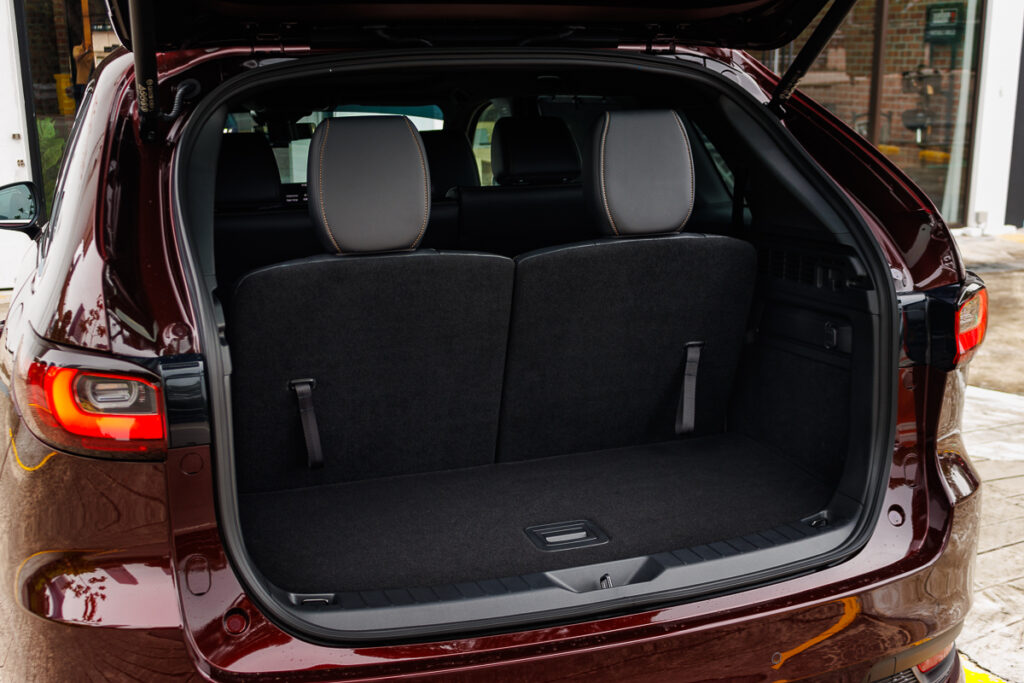
Cargo space, with the third row deployed, at 258-litres, is quite respectable, and is sufficient for a grocery run. With the rear seats folded, the CX-80’s boot expands to a generous 687-litres. For comparison, this is more than both the BMW X5’s 575-litres, and the Volvo XC90 Recharge T8’s 641 litres, when arranged in the same configuration.
Smooth-ish Operator
I like that while the Executive SUV does exude presence, it does not feel overly large for our roads. All-round visibility is very good, since it does have quite a bit of glass. Additionally, the wing mirrors, which are mounted on the doors, and sit away from the body, contribute little in the way of blind spots. Perhaps if there is anything blocking your view, it is LTA’s IU screen.
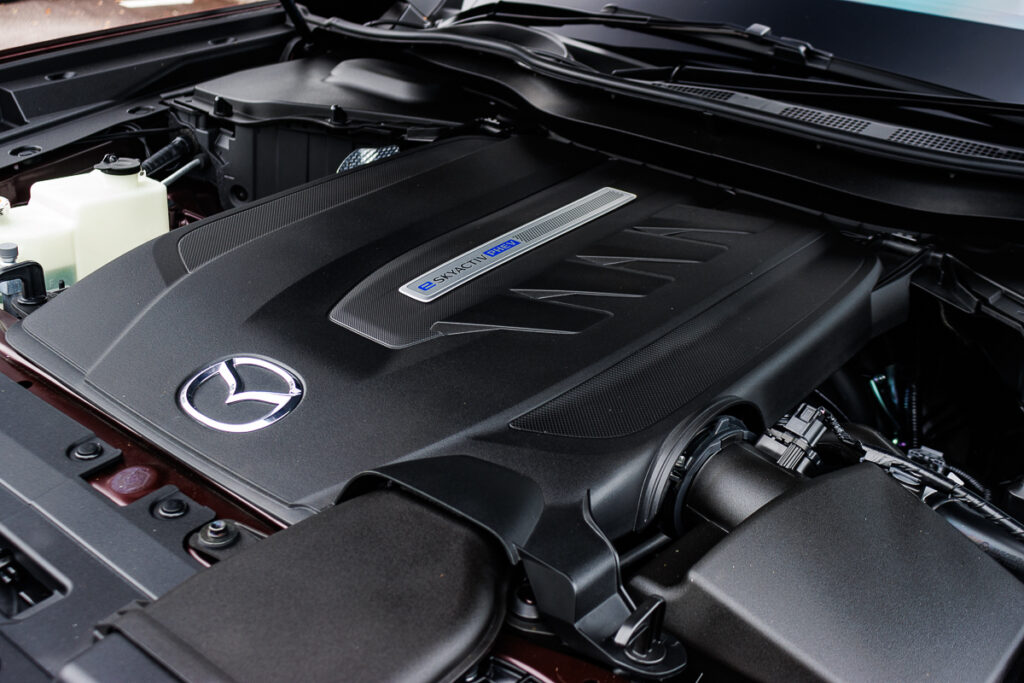
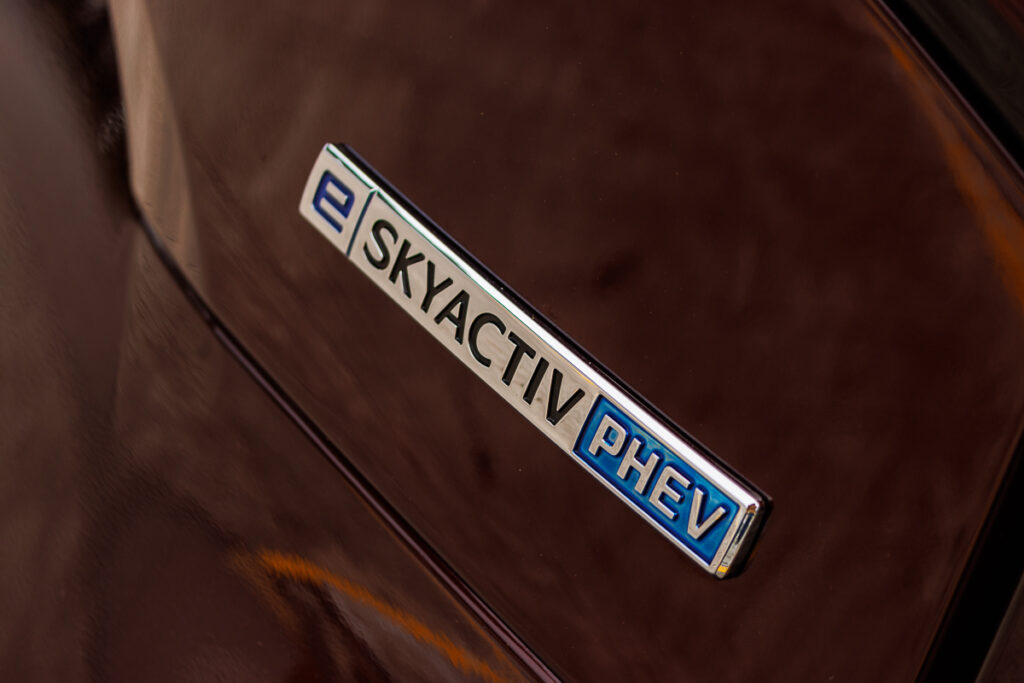
The CX-80’s high compression, naturally-aspirated 2.5-litre four-cylinder engine, is carried-over from the CX-60. Over here, it gets a significant boost from a Plug-in Hybrid system. The engine on its own delivers 189hp and 261Nm, while the electric motor puts out 173hp (129kW) and 400Nm.
Combined system output, which is rated at 319hp and 500Nm, is easily more than sufficient to lug you and six others around. In comparison, the Volvo XC90 Recharge T8 Plug-in Hybrid puts out 462hp and a whopping 709Nm. But of-course you will be paying significantly more for the Swedish beast.
Another carry-over from the CX-60, is the in-house developed Skyactiv-Drive 8-speed automatic transmission, which Mazda has designed without a torque converter. And since the CX-80’s gearbox does not “react-via-slush”, it does actually feel more responsive than other conventional automatics. Gear changes feel crisp, while kickdowns are not as hesitant. On the down side, since the transmission relies on a clutch pack, the car does bob around a bit when crawling in traffic. Most of the CX-80’s drive, however, is handled by the electric motor, hence it operates largely in a smooth and silent manner.
So-long-as the battery has charge, the CX-80 is easily able to deliver its posted fuel efficiency figures of 62.5km/l. Battery energy consumption is rated at 22.5kWh/100km, which we feel is quite reasonable, especially since the Midsize Executive SUV tips the scales at 2,267kg. However, when driven without the electric motor, the CX-80’s engine requires some work to get the car to speed. But in doing so, the four-cylinder does sound laboured. Of-course we would love to have the 3.3-litre turbocharged MHEV in-line six here, but that would be quite a bit more expensive.

Unlike the CX-60 which is RWD, the CX-80’s drivetrain is AWD. Therefore its handling does feel very slightly more neutral, though I’m glad that the system is set to be rear-biased. This would mean more drive to the wheels with more grip during acceleration, and of-course it feels more “RWD-ish” around bends.
Speaking of turns, Mazda says that the rear suspension, which is already designed to prevent lift, is further aided by Kinematic Posture Control (KPC), the latter which mildly brakes the inner rear wheel to reduce body roll. For its heft and height, the CX-80 sits quite level around bends, devoid of that pronounced roll you would often find in taller vehicles like SUVs. However, that rebound on that rear suspension can be quite jarring, whenever I go over speedbumps.
But rebound aside, I do find that the overall ride quality of the CX-80 quite satisfying. But of-course being a PHEV, apart from the occasional topping-up of the fuel tank, you still have to find a place to plug the SUV in.
I do wonder though, would the 2.5-litre, with a turbocharger (like in the CX-9), paired with MHEV architecture do better instead…
Priced to Win?
Equipped with a suite of safety and (some) luxury features, which are comparable to its European luxury counterparts, Mazda’s Midsize Luxury SUV sets itself apart by being at a lower price point.
Overall, I feel that Mazda’s current attempt at re-entering the luxury segment is going generally in the right direction. Their strategy, seemingly for the Singapore market, would be those who would like something like a GLE, X5 or XC90 for significantly less coin. But being somewhat at the midpoint, priced at around $100k less than the Lexus RX, and also approximately $100k more than cars like the three-row Hyundai Santa Fe, while the the KIA Sorento and the Skoda Kodiaq have an even wider gap in pricing, the Mazda dealership here might have quite cleverly found themselves some sort of pricing white space.
Words & Photos: Clifford Chow
| Pros | Cons |
|---|---|
| Absolutely beautiful | Laboured engine |
| Premium cabin | No wireless Android Auto |
| Drives well | Dated infotainment |
Mazda CX-80 Plug-In Hybrid 2.5 Luxury Sports
| Drivetrain | Petrol-Plug-in hybrid |
| Layout | 2,488cc, inline 4 |
| Power / torque | 189hp / 261Nm |
| Transmission | 8-speed automatic |
| Motor power / torque | 173hp / 400Nm |
| Efficiency | 62.5km/l |
| Fuel Capacity | 70 Litres |
| 0-100km/h | 6.8 seconds |
| Top Speed | 195km/h |
| VES Band | B |
| Dealer | Mazda Singapore (Eurokars Group) |
| Price | S$339,888 with COE and VES |
| Verdict | The Mazda CX-80 offers space, with a touch of luxury for larger families. |